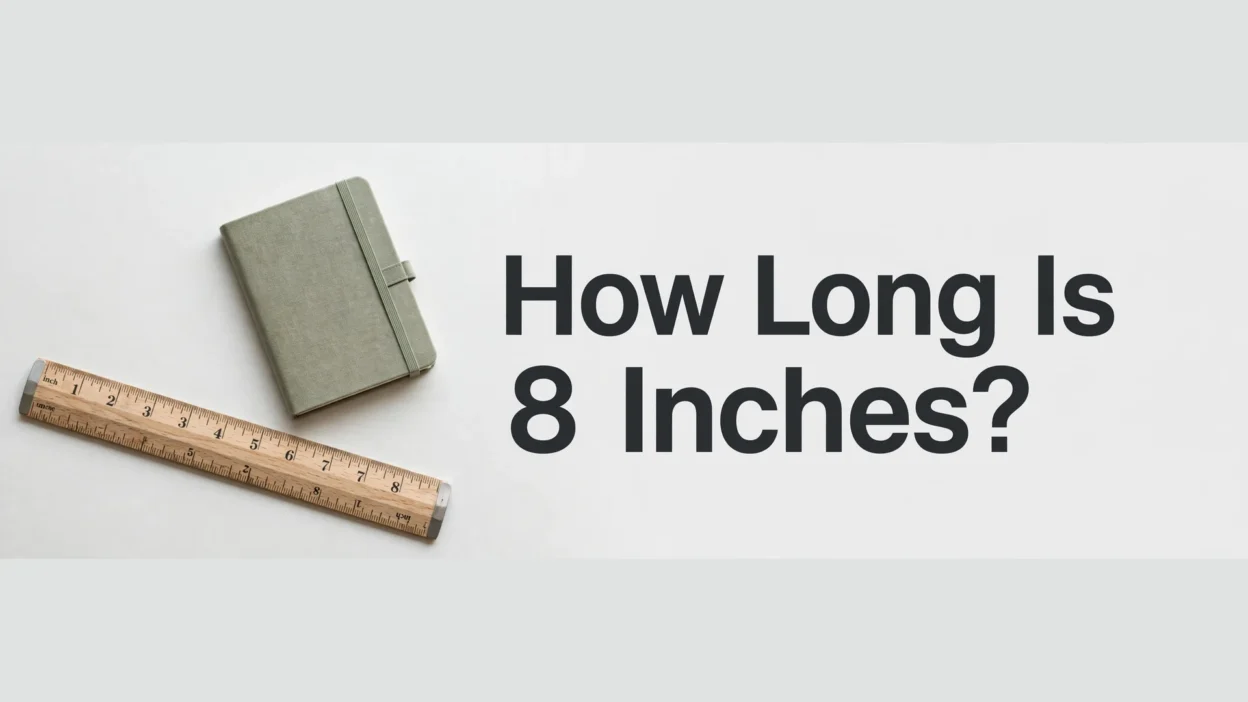
Understanding how long 8 inches is becomes much easier when you compare the measurement with familiar objects around your home, office, or school. Eight inches equals 20.32 centimeters, 203.2 millimeters, 0.6667 feet, and 0.2032 meters. Although it is less than a foot long, this measurement is large enough to describe many everyday items, including certain kitchen utensils, notebooks, small tools, and household accessories.
If you do not have a ruler nearby, recognizing the approximate length of common objects can help you visualize eight inches. You can also use simple conversion formulas to switch between inches, feet, centimeters, millimeters, meters, and yards.
This guide explains how long 8 inches is, provides a useful conversion chart, and explores 10 everyday objects that can help you estimate the length. You will also learn practical measuring techniques and answers to common questions about this familiar unit of length.
How Long Is 8 Inches?
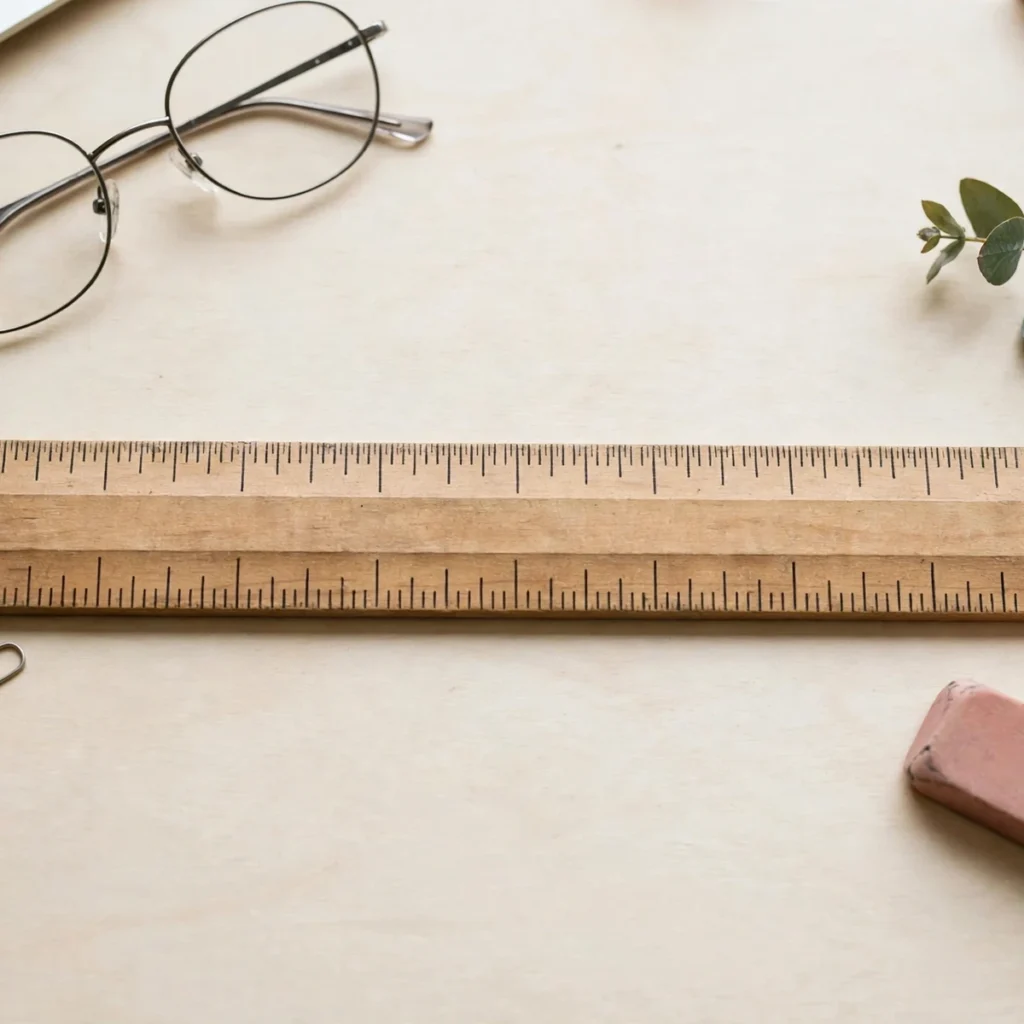
Eight inches is a measurement of length equal to two-thirds of a foot, or 20.32 centimeters. In everyday terms, it is approximately the length of a standard dinner fork, depending on its design, or a little longer than the short side of many small notebooks.
To picture the distance, imagine placing eight one-inch segments end to end. The resulting line measures exactly eight inches. Each segment adds another inch, making the total length straightforward to visualize.
Here are the most useful equivalents for quick reference:
| Inches | Equivalent to 8 inches |
| 8 in | 8 in |
| Feet | 0.6667 ft |
| Centimeters | 20.32 cm |
| Millimeters | 203.2 mm |
| Meters | 0.2032 m |
| Yards | 0.2222 yd |
The inch is commonly used in the United States for describing the dimensions of objects such as furniture, screens, clothing accessories, and tools. Centimeters and millimeters are widely used in many other countries and are especially convenient for precise measurements.
For example, if a package lists a component as 8 inches long, its metric length is 20.32 centimeters. Knowing both values helps you understand product dimensions regardless of which measurement system a manufacturer uses.
Eight inches can also describe a width, height, or depth rather than just a straight horizontal length. The meaning depends on the object being measured. A box might be eight inches tall, while a cutting board could be eight inches wide.
The key takeaway is simple: 8 inches is just over 20 centimeters, making it a convenient reference length for many small and medium-sized everyday objects.
8-Inch Conversion Chart
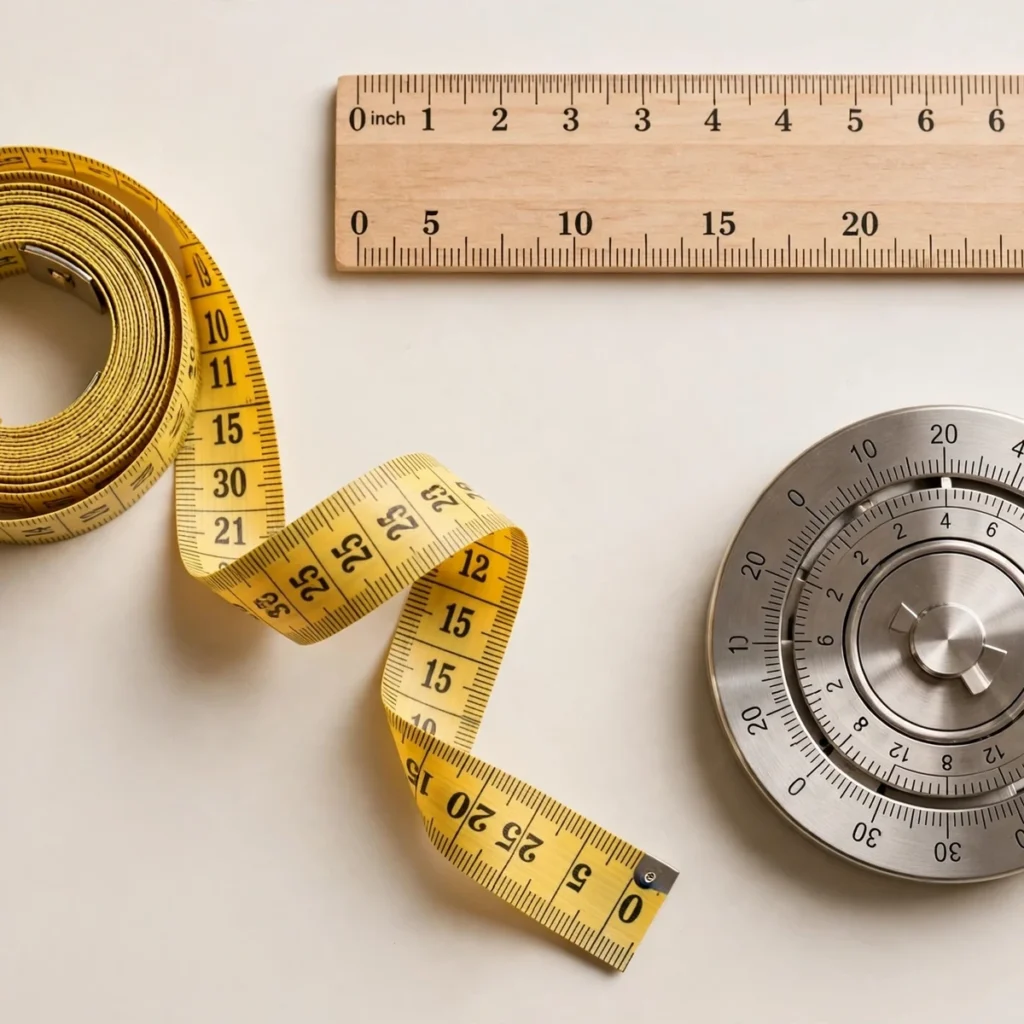
A conversion chart makes it easy to compare eight inches with other measurements or determine the equivalent of nearby lengths. The following table covers measurements from 0.5 inches to 12 inches, including the requested intermediate values.
| Inches | Feet | Centimeters | Millimeters | Meters | Yards |
| 0.5 | 0.0417 | 1.27 | 12.7 | 0.0127 | 0.0139 |
| 1 | 0.0833 | 2.54 | 25.4 | 0.0254 | 0.0278 |
| 1.5 | 0.1250 | 3.81 | 38.1 | 0.0381 | 0.0417 |
| 2 | 0.1667 | 5.08 | 50.8 | 0.0508 | 0.0556 |
| 2.5 | 0.2083 | 6.35 | 63.5 | 0.0635 | 0.0694 |
| 3 | 0.2500 | 7.62 | 76.2 | 0.0762 | 0.0833 |
| 3.5 | 0.2917 | 8.89 | 88.9 | 0.0889 | 0.0972 |
| 4 | 0.3333 | 10.16 | 101.6 | 0.1016 | 0.1111 |
| 4.5 | 0.3750 | 11.43 | 114.3 | 0.1143 | 0.1250 |
| 5 | 0.4167 | 12.70 | 127.0 | 0.1270 | 0.1389 |
| 5.5 | 0.4583 | 13.97 | 139.7 | 0.1397 | 0.1528 |
| 6 | 0.5000 | 15.24 | 152.4 | 0.1524 | 0.1667 |
| 6.5 | 0.5417 | 16.51 | 165.1 | 0.1651 | 0.1806 |
| 7 | 0.5833 | 17.78 | 177.8 | 0.1778 | 0.1944 |
| 7.5 | 0.6250 | 19.05 | 190.5 | 0.1905 | 0.2083 |
| 8 | 0.6667 | 20.32 | 203.2 | 0.2032 | 0.2222 |
| 8.5 | 0.7083 | 21.59 | 215.9 | 0.2159 | 0.2361 |
| 9 | 0.7500 | 22.86 | 228.6 | 0.2286 | 0.2500 |
| 9.5 | 0.7917 | 24.13 | 241.3 | 0.2413 | 0.2639 |
| 10 | 0.8333 | 25.40 | 254.0 | 0.2540 | 0.2778 |
| 10.5 | 0.8750 | 26.67 | 266.7 | 0.2667 | 0.2917 |
| 11 | 0.9167 | 27.94 | 279.4 | 0.2794 | 0.3056 |
| 11.5 | 0.9583 | 29.21 | 292.1 | 0.2921 | 0.3194 |
| 12 | 1.0000 | 30.48 | 304.8 | 0.3048 | 0.3333 |
Note: Values are rounded where necessary. Exact conversions may contain additional decimal places.
Simple Conversion Formulas
You do not need to memorize every row in the chart. A few basic formulas will help you convert eight inches or any other length into the unit you need.
Inches to centimeters: Multiply the number of inches by 2.54. For eight inches, 8 × 2.54 = 20.32 centimeters.
Inches to millimeters: Multiply by 25.4. Therefore, 8 × 25.4 = 203.2 millimeters.
Inches to feet: Divide by 12. The calculation 8 ÷ 12 = 0.6667 gives approximately two-thirds of a foot.
Inches to meters: Multiply by 0.0254. This produces 8 × 0.0254 = 0.2032 meters.
Inches to yards: Divide by 36. Eight inches is approximately 8 ÷ 36 = 0.2222 yards.
To reverse a conversion, divide centimeters by 2.54 to obtain inches or divide millimeters by 25.4. These formulas are useful when reading international product listings, preparing craft projects, or checking dimensions before buying an item.
Everyday Objects That Help You Visualize 8 Inches
Finding a familiar object that measures close to eight inches is one of the simplest ways to understand this length without relying on numbers alone. Many items found in kitchens, offices, bedrooms, and toolboxes provide useful visual references.
However, not every object of a particular type has the same dimensions. A fork may be shorter or longer than eight inches, and notebooks vary depending on their intended use. Treat these comparisons as starting points rather than exact measuring standards.
Here are 10 everyday objects that can help you picture an eight-inch length.
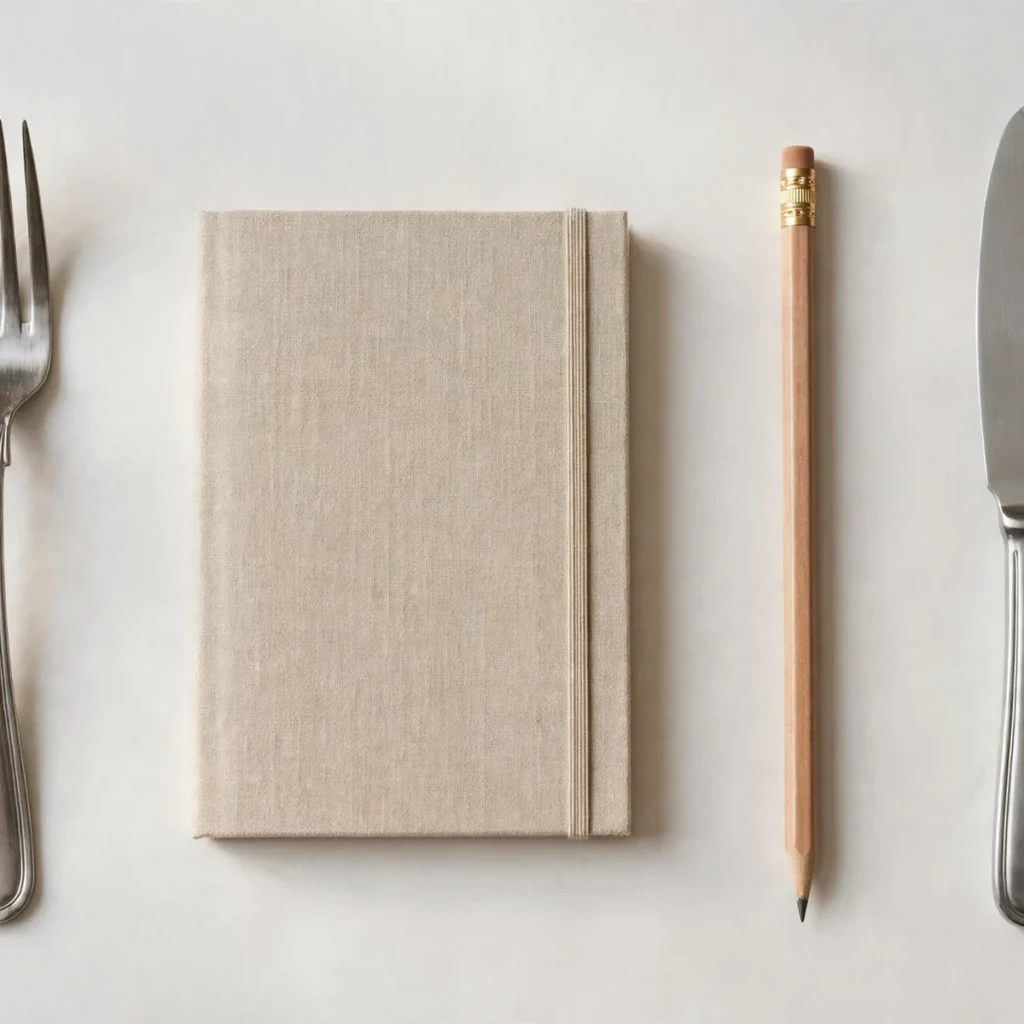
10 Everyday Objects That Are Approximately 8 Inches Long
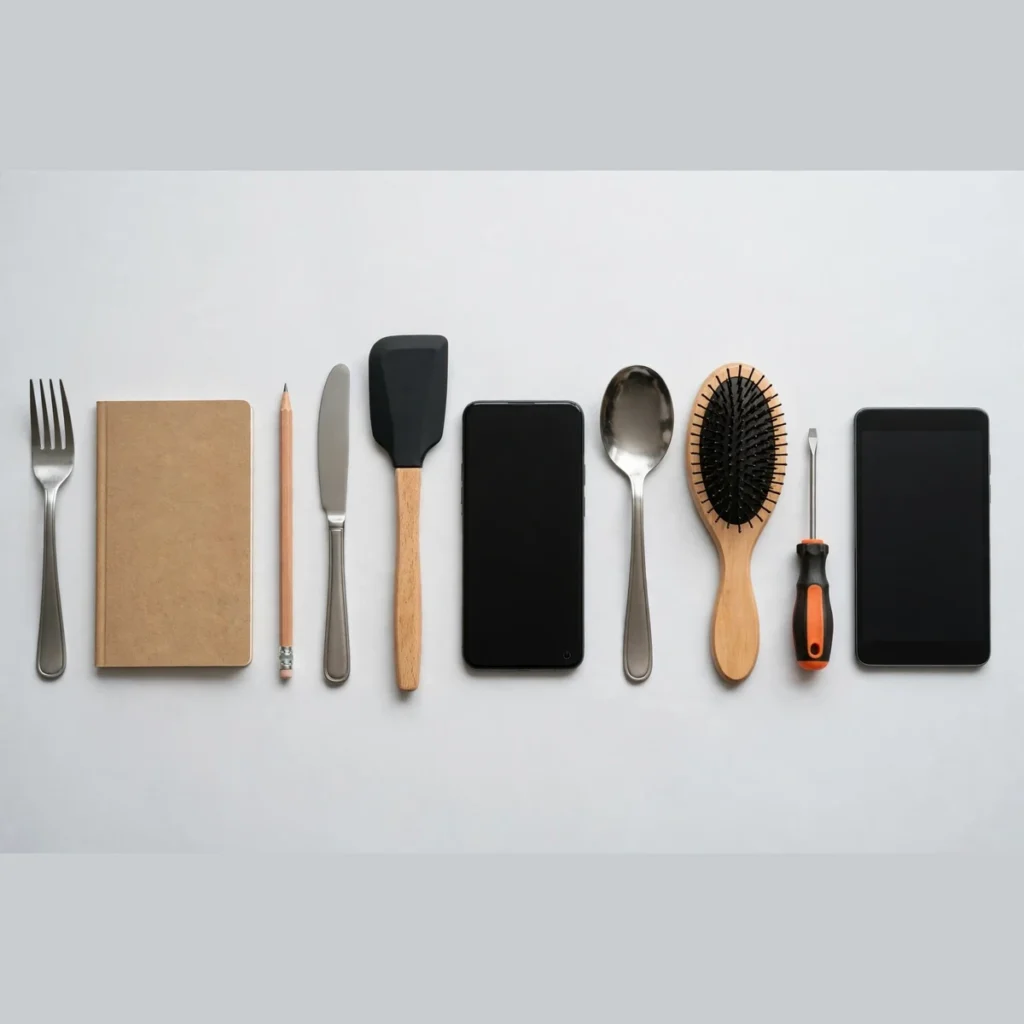
1. A Standard Dinner Fork
A dinner fork is a useful household reference because many common designs measure approximately seven to eight inches from the tips of the tines to the end of the handle. Its familiar shape also makes the overall length easy to recognize.
To compare a fork with eight inches, place it flat on a table and measure from its farthest tip to the opposite end of the handle. If you have a ruler, align the fork with the zero mark and check where the handle ends.
The comparison is especially useful in a kitchen when you need a quick visual estimate for a small object or package. A fork measuring eight inches provides a close reference without requiring specialized equipment.
Manufacturer and design variation: Dinner forks come in different sizes, including compact dessert forks, traditional dinner forks, and oversized serving forks. Decorative handles can also increase the total length. Measure your particular fork before treating it as an accurate eight-inch reference.
2. A Small Notebook
Some small notebooks measure close to eight inches along their longer edge, making them convenient references for this length. Their rectangular shape provides a clear starting point and endpoint, which is useful when estimating the dimensions of other flat objects.
Place the notebook on a desk and examine its longest side. If it measures around eight inches, you can use it to visualize the length of a small shelf, craft component, or storage compartment.
A notebook also helps demonstrate why orientation matters. The longer edge might be eight inches while the shorter edge measures considerably less. Always identify which dimension you are comparing.
Manufacturer and design variation: Notebook sizes vary by format, brand, binding, and intended use. Pocket notebooks are often shorter than eight inches, while larger writing pads may exceed it. Check the manufacturer’s listed dimensions or measure the cover directly to confirm its length.
3. A Wooden Pencil
A wooden pencil is a familiar object that can help you estimate eight inches, particularly if you use a standard full-size pencil. Many traditional pencils measure approximately seven to eight inches when new, although some are shorter or longer.
To make the comparison, lay the pencil horizontally on a flat surface. Imagine the distance from the sharpened point to the eraser as your reference line. If the pencil is close to eight inches, it gives you a quick mental picture of the measurement.
This method works well for school supplies, stationery, and small craft projects. You can also place two pencils end to end to estimate a longer distance, although the combined length will depend on the pencils you use.
Manufacturer and design variation: Pencil lengths differ according to brand, age, and style. Mechanical pencils, golf pencils, carpenter’s pencils, and novelty designs can be substantially different from standard wooden pencils. Sharpening also reduces the length of a pencil over time, so use a ruler if accuracy matters.
4. A Butter Knife
A table butter knife can be another useful comparison for eight inches. Many ordinary table knives have an overall length near this measurement, particularly when measured from the tip of the blade to the end of the handle.
Lay the knife on a clean, flat surface and compare its full length with a ruler or measuring tape. Notice that the handle and blade together form the complete measurement; measuring the blade alone will give you a shorter result.
This example is useful because a butter knife is generally easy to find in a household kitchen. It can help you visualize the length of utensils, small kitchen accessories, or objects that need to fit inside a drawer.
Manufacturer and design variation: Table knives are available in compact, standard, and oversized designs. Blade shape, handle thickness, and decorative features can change their overall dimensions. A steak knife or specialty spreader may not be the same length as a conventional butter knife, so check the specific item.
5. A Small Kitchen Spatula
Some compact kitchen spatulas measure approximately eight inches from the end of the handle to the tip of the working head. This makes them useful for visualizing a length that is slightly shorter than a standard foot-long object.
To check the comparison, place the spatula on a countertop and measure its complete length. Keep the utensil straight rather than following the curved edge of the head. The goal is to measure the straight-line distance between its two farthest endpoints.
Spatulas are practical examples because they combine a long handle with a wider head. They also demonstrate the difference between length and width: a spatula can be eight inches long without being eight inches wide.
Manufacturer and design variation: Mini spatulas, jar scrapers, baking spatulas, and full-size cooking tools can have very different dimensions. Flexible silicone heads and curved handles may also make visual estimates less reliable. Verify the listed product length if you need an exact eight-inch utensil.
6. A Large Smartphone
A large smartphone can help you understand eight inches, although most standard smartphones are shorter than this measurement in their overall height. Depending on the model, a large phone may measure around six to seven inches tall, making eight inches noticeably longer.
Imagine placing the phone vertically on a table. An eight-inch line would extend beyond its top by a noticeable amount on many devices. This comparison can help you distinguish between a familiar phone-sized length and a full eight inches.
You can also use a smartphone to measure a line digitally if you have a suitable measuring application. However, a visual comparison with the phone’s body is only approximate unless its physical dimensions are known.
Manufacturer and design variation: Smartphone dimensions differ across brands, generations, and models. Cases, protective covers, and camera protrusions can change the phone’s external dimensions. Check the manufacturer’s height specification rather than assuming every large phone has the same length.
7. A Small Serving Spoon
A small serving spoon can provide another familiar reference for an eight-inch measurement. Some serving spoons fall close to this length, especially compact designs intended for serving side dishes, sauces, or small portions.
To compare the spoon, place it on a table with the handle and bowl aligned along the same general direction. Measure from the tip of the handle to the farthest point on the bowl. That gives you the spoon’s overall length rather than just the length of its handle.
This is particularly helpful when estimating the dimensions of kitchen drawers, utensil organizers, or small storage containers. A spoon is also easy to handle and position next to a ruler for a direct comparison.
Manufacturer and design variation: Teaspoons, dessert spoons, tablespoons, and serving spoons have different dimensions. Even two serving spoons designed for similar tasks may differ in overall length. A large serving spoon might be longer than eight inches, while a compact one could be considerably shorter.
8. A Small Hairbrush
Some compact hairbrushes measure close to eight inches from the end of the handle to the opposite edge of the brush head. Their elongated shape makes them convenient for visualizing the measurement, especially when placed beside a ruler.
Set the brush on a flat surface with the handle extending in a straight line away from the head. Compare the total distance between its two endpoints with an eight-inch ruler marking. This helps you estimate whether the brush is close to the target length.
A hairbrush can also serve as a reference when organizing bathroom drawers or selecting storage pouches for personal-care accessories. Knowing its approximate length can help you determine whether a container is likely to accommodate similar items.
Manufacturer and design variation: Hairbrush dimensions depend on the type of brush, handle design, bristle arrangement, and intended use. Travel brushes are often shorter, while paddle brushes may be wider or longer. Measure the full external length rather than judging the brush by its head alone.
9. A Small Hand Tool
A compact hand tool, such as a small screwdriver, can offer a useful reference for eight inches. Some screwdrivers measure around this length when the handle and shaft are considered together.
Place the tool horizontally on a workbench or table. Measure from the back of the handle to the tip of the shaft. This gives you the overall tool length, which is the relevant dimension when comparing it with an eight-inch line.
The example is useful for home repairs, DIY projects, and workshop organization. For instance, estimating the length of a tool can help you decide whether it will fit inside a toolbox compartment or a narrow storage tray.
Manufacturer and design variation: Screwdrivers vary significantly in total length. A short precision screwdriver may be only a few inches long, while a long-shaft model can extend well beyond eight inches. Handle shape and shaft length both influence the total, so check the specific tool before using it as a reference.
10. A Small Tablet or E-Reader
A compact tablet or e-reader can help you picture an eight-inch measurement, especially because screen sizes are often advertised in inches. Some smaller devices have screen diagonals near eight inches, which sounds similar but describes a different dimension.
For an accurate comparison, distinguish between the screen’s diagonal measurement and the device’s height or width. An eight-inch screen measured diagonally does not mean the tablet itself is eight inches tall. Its outer dimensions depend on the screen’s aspect ratio and surrounding bezel.
This distinction is useful when shopping for electronics or comparing device sizes. If you are trying to determine whether a tablet will fit in a bag or storage compartment, the manufacturer’s height and width specifications matter more than its advertised screen size.
Manufacturer and design variation: E-readers and tablets differ in screen size, aspect ratio, bezel thickness, and overall body design. Protective cases can add further dimensions. Check the complete device measurements and not just the diagonal screen specification when comparing it with eight inches.
How to Estimate 8 Inches Without a Ruler
You can make a reasonable estimate of eight inches even when you do not have a measuring tool nearby. The best method depends on what you have available and how accurate the measurement needs to be.
For everyday tasks, a familiar object or a repeated hand measurement may be sufficient. For construction, product fitting, or other tasks that require precision, use a proper ruler or measuring tape whenever possible.
Method 1: Use Your Hand as a Reference
Your hand can provide a convenient starting point for estimating eight inches. The width of your palm, the length of your fingers, and the distance between your fingertips can all help you visualize a short measurement.
Open your hand and compare the distance you want to estimate with a familiar part of your palm. You can also measure your hand once with a ruler and remember the result for future reference.
For example, if the distance across your palm is approximately four inches, two palm-widths placed side by side would equal roughly eight inches. The important point is to use a measurement you have checked rather than assuming everyone’s hands are the same size.
Accuracy tip: Hand measurements are useful for rough estimates, but differences in hand size can produce noticeable errors. Avoid using this technique when precise dimensions are necessary.
Method 2: Compare the Length With a Sheet of Paper
A standard US letter-size sheet of paper measures 11 inches along its longer edge and 8.5 inches along its shorter edge. That makes the short side an especially useful reference for estimating eight inches.
Place the paper flat on a table and look at its shorter edge. Eight inches is half an inch less than this side, so an eight-inch line would end slightly before the paper’s corner if measured from the opposite corner along that edge.
This method works well at home, at school, or in an office because letter-size paper is widely available. It is particularly helpful when estimating the dimensions of photographs, small packages, notebooks, and craft materials.
Accuracy tip: Confirm that the paper is US letter size. A4 paper, commonly used in many other countries, measures approximately 8.27 inches wide and 11.69 inches long, so its shorter edge provides a slightly different reference.
Method 3: Use a Smartphone’s Known Dimensions
A smartphone can be a helpful reference if you know its actual height or width. Look up the device’s official dimensions, then compare the length you want to estimate with the phone’s body.
For example, imagine that your phone is 6.5 inches tall. Eight inches would be 1.5 inches longer. You can visualize that difference by placing the phone alongside the object and estimating the extra distance.
This approach is more dependable than guessing from a phone’s appearance because you are using a known dimension. It can be useful when shopping online or checking whether a small object will fit into a storage space.
Accuracy tip: Measure the phone with its case if you are comparing against the external dimensions of the cased device. A protective case can add to its height or width.
Method 4: Use Two Shorter Lengths
Another way to estimate eight inches is to combine smaller known measurements. Four inches plus four inches equals eight inches, while six inches plus two inches also equals eight inches.
If you have a ruler marked in inches but need to measure a longer object, mark the first section, reposition the ruler, and continue from the endpoint. Make sure the zero mark begins exactly where the previous section ended.
This technique also works with a measuring strip or another object whose length you have verified. Repeating a known distance can be easier than estimating the entire length at once.
Accuracy tip: Small alignment errors can accumulate when you repeat a measurement. Keep the ruler straight and avoid leaving gaps or overlapping sections.
Method 5: Visualize a Standard US Letter Envelope or Paper Edge
Paper products can provide useful references because their dimensions are standardized more often than those of household utensils. A US letter-size sheet is 8.5 inches wide, so its short edge is very close to eight inches.
If you need to estimate eight inches quickly, imagine a line slightly shorter than the short side of a letter-size sheet. This gives you a more dependable visual reference than an unfamiliar household object.
You can also keep a sheet of paper nearby while arranging small items or planning a simple craft project. Comparing an object with the paper’s short edge gives you a practical starting point without performing a complicated calculation.
Accuracy tip: Paper edges are useful for approximate comparisons, but folding, trimming, or damage can affect their dimensions. For an exact measurement, use a ruler.
Frequently Asked Questions About 8 Inches
How long is 8 inches in centimeters?
Eight inches equals 20.32 centimeters. To convert inches to centimeters, multiply the inch measurement by 2.54. This exact conversion is useful when comparing products or following instructions that use metric measurements.
How many millimeters are in 8 inches?
Eight inches equals 203.2 millimeters. Since one inch contains 25.4 millimeters, multiplying eight by 25.4 gives the result.
Is 8 inches longer than half a foot?
Yes. Half a foot is six inches because one foot contains 12 inches. Eight inches is two inches longer than half a foot and represents approximately two-thirds of a foot.
Is 8 inches close to 20 centimeters?
Yes. Eight inches is 20.32 centimeters, which is only 0.32 centimeters longer than 20 centimeters. For rough estimates, the two lengths are very close, but use 20.32 centimeters when you need the precise conversion.
What common household object is 8 inches long?
A standard dinner fork, a compact kitchen utensil, or certain small tools may measure close to eight inches. However, dimensions vary by product and manufacturer. Check the actual length of an object before relying on it for an exact measurement.
How do I measure 8 inches without a ruler?
You can compare the length with the short side of a US letter-size sheet of paper, which measures 8.5 inches. A phone with known dimensions or a hand measurement that you have previously checked can also provide an approximate reference.
Is 8 inches the same as 8 inches diagonally?
Both measurements represent eight inches, but they describe different directions. A straight length of eight inches measures the distance between two endpoints along a line. A diagonal measurement runs between opposite corners or endpoints across a shape. For screens, the advertised diagonal can be longer than either the height or the width.
How many feet is 8 inches?
Eight inches equals two-thirds of a foot, or approximately 0.6667 feet. To convert inches into feet, divide the number of inches by 12.
How many meters is 8 inches?
Eight inches equals 0.2032 meters. Multiply the inch measurement by 0.0254 to convert it to meters.
Can I use an everyday object for an exact eight-inch measurement?
Only if you have verified that the object measures exactly eight inches and can use it consistently. Household objects vary in size, so they are better suited to rough estimates than precision work. A ruler or measuring tape is the more reliable choice when exact dimensions matter.
Final Thoughts
Understanding how long 8 inches is becomes easier when you combine a precise conversion with familiar everyday comparisons. At 20.32 centimeters, eight inches is a little more than the short side of a US letter-size sheet of paper and roughly two-thirds of a foot. These references make the measurement easier to visualize when a ruler is not immediately available.
Everyday objects such as dinner forks, pencils, kitchen utensils, small tools, and compact electronic devices can help you develop a better sense of length. However, their dimensions vary, so use them as visual guides rather than guaranteed standards.
When accuracy matters, remember the essential conversions: eight inches equals 203.2 millimeters, 0.2032 meters, and approximately 0.6667 feet. Applying these values makes it easier to interpret product dimensions, complete household projects, and compare measurements across different systems.
Learning basic measurement principles can also help you understand how lengths are expressed and compared in everyday situations. With a few reliable reference points and simple conversion formulas, estimating eight inches becomes a straightforward task.

Grace is a lifestyle writer from California who loves starting mornings with positivity. At Mornetic, she shares uplifting quotes and cheerful messages to brighten your day.