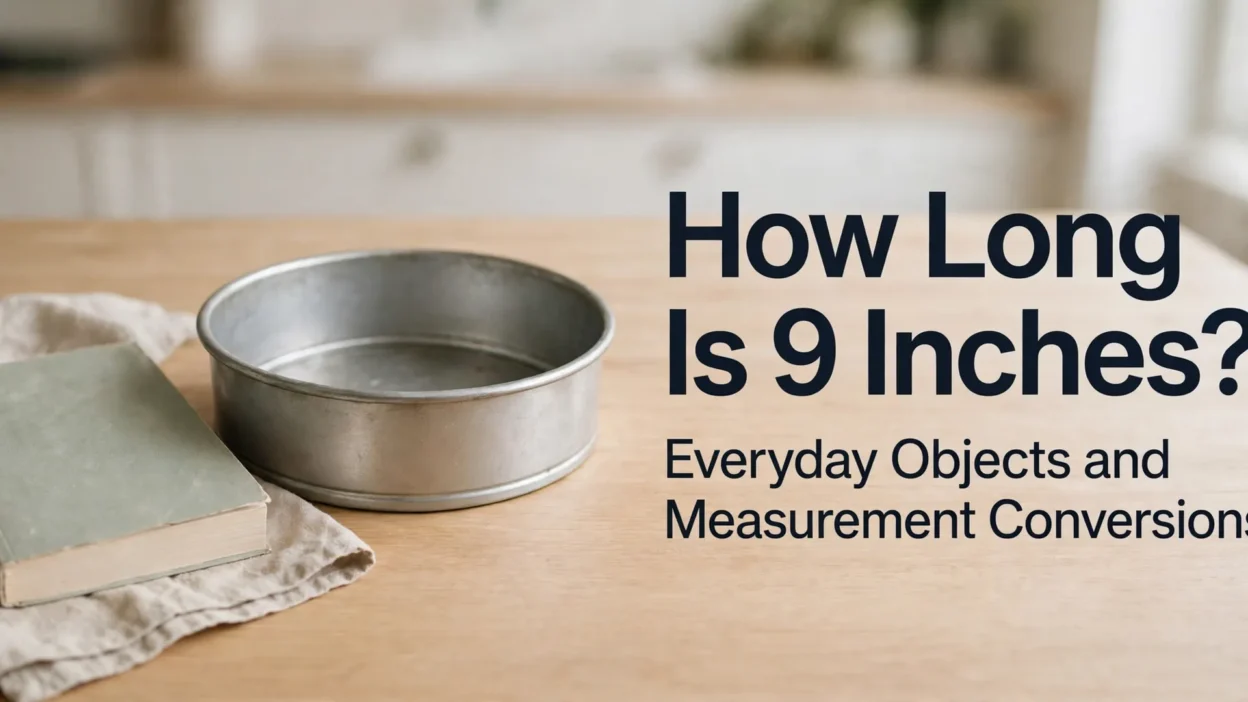
Nine inches is equal to 22.86 centimeters, 228.6 millimeters, 0.75 feet, and 0.2286 meters. It is a useful length to understand because it is close to the size of many common household items. Although nine inches can be hard to picture without a ruler, comparing it with familiar things such as a dinner plate, paperback book, or kitchen tool makes it easier to see.
Knowing how long nine inches is can help when shopping for household items, checking product sizes, or working on a home project. It can also help when you need to estimate an object’s size without a ruler. In addition, knowing how to convert inches into other units is useful when a product listing gives its size in centimeters or millimeters.
This guide explains the length of nine inches and includes a detailed conversion chart. You will also find ten everyday objects that are close to this size. Finally, you will learn six ways to estimate nine inches without a ruler and find answers to common measurement questions.
How Long Is 9 Inches?
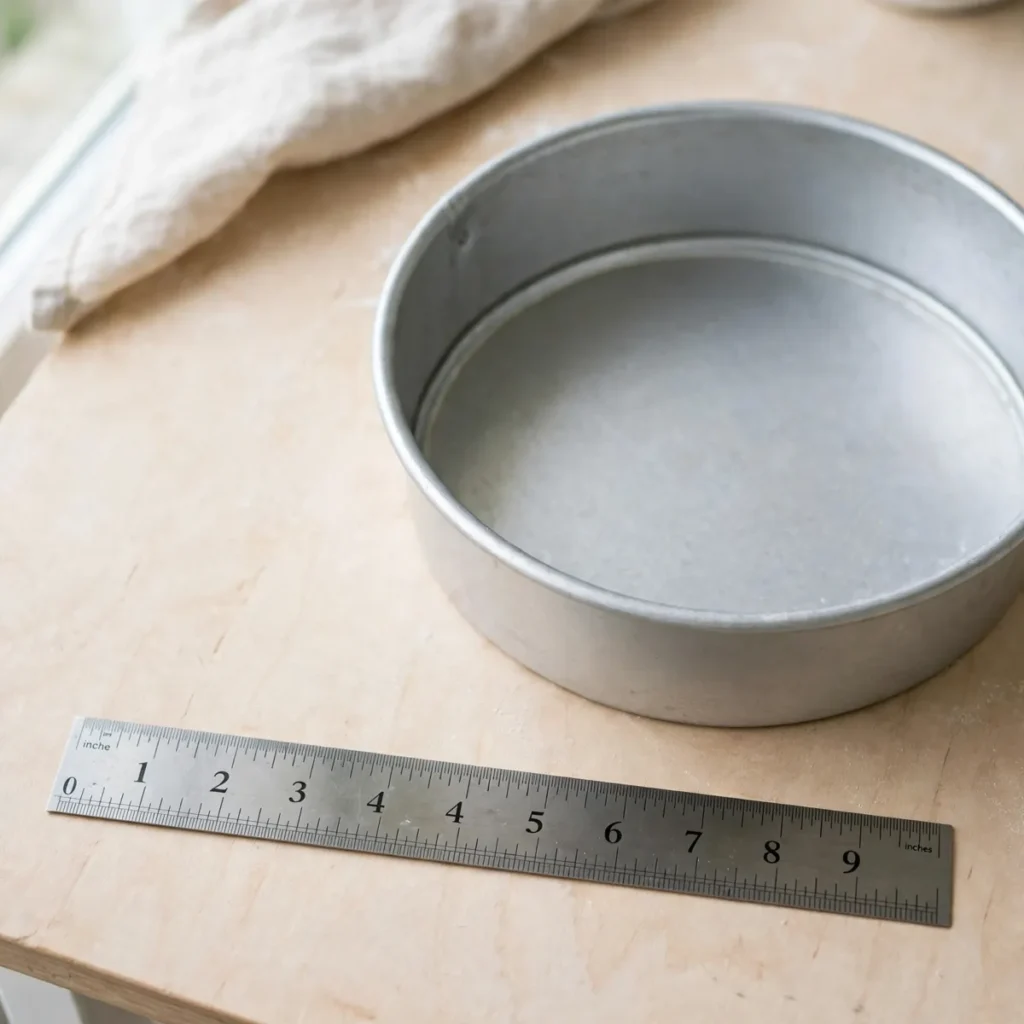
Nine inches is equal to three-quarters of a foot. It is slightly longer than the shorter side of a standard sheet of US letter paper. That shorter side measures 8.5 inches, while the longer side measures 11 inches. This gives you a simple way to picture nine inches.
Another way to understand this length is to imagine placing nine one-inch sections in a straight line. Each section adds one more inch until the total reaches nine inches. One inch may seem small on its own. However, nine inches in a row creates a length that is easy to notice when you compare it with household items.
Nine inches is also a useful size for many everyday objects. For example, a round cake pan may have a nine-inch diameter. A small cutting board may measure about nine inches across. Some paperback books may also have a height or width close to this length.
Nine-Inch Measurement Equivalents
Here are the main equivalents for nine inches:
- Inches: 9 inches
- Feet: 0.75 feet
- Centimeters: 22.86 centimeters
- Millimeters: 228.6 millimeters
- Meters: 0.2286 meters
- Yards: 0.25 yards
These units are useful in different places. Inches and feet are common in the United States. However, centimeters, millimeters, and meters are standard metric units. Yards are another imperial unit, and they are often used to measure longer lengths.
For example, a kitchen tool may be listed as 9 inches long in a US store. The same item may be listed as 22.86 cm by a seller in another country. Both numbers describe exactly the same length.
Length, Width, Height, and Diameter
It is also important to know which part of an object is being measured. Length, width, height, and diameter do not mean the same thing.
An object described as nine inches long may not be nine inches wide or tall. For example, a round plate with a nine-inch diameter measures nine inches from one outside edge to the opposite edge through its center. A rectangular item, on the other hand, may measure nine inches along its longest side.
This difference matters when you need to check whether an item will fit inside a drawer, cabinet, storage box, or other space. So, always check which side or part of an item the measurement describes before comparing sizes.
9 Inches Conversion Chart
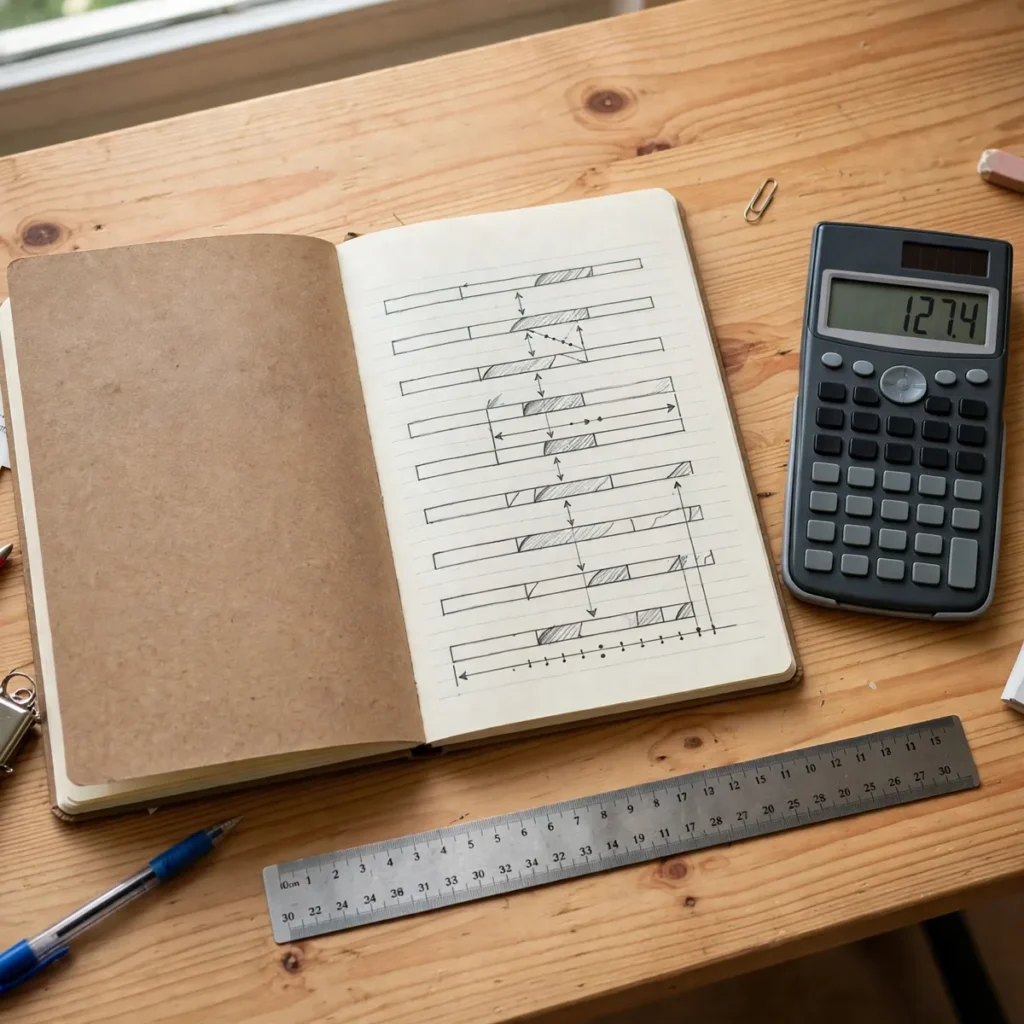
A conversion chart makes it easy to compare nine inches with other lengths. The table below covers measurements from 0.5 inches to 12 inches, with each row increasing by half an inch.
It includes feet, centimeters, millimeters, meters, and yards. You can use it to check nine inches or find the matching value for another length.
| Inches | Feet | Centimeters | Millimeters | Metres | Yards |
|---|---|---|---|---|---|
| 0.5 | 0.0417 | 1.27 | 12.7 | 0.0127 | 0.0139 |
| 1 | 0.0833 | 2.54 | 25.4 | 0.0254 | 0.0278 |
| 1.5 | 0.1250 | 3.81 | 38.1 | 0.0381 | 0.0417 |
| 2 | 0.1667 | 5.08 | 50.8 | 0.0508 | 0.0556 |
| 2.5 | 0.2083 | 6.35 | 63.5 | 0.0635 | 0.0694 |
| 3 | 0.2500 | 7.62 | 76.2 | 0.0762 | 0.0833 |
| 3.5 | 0.2917 | 8.89 | 88.9 | 0.0889 | 0.0972 |
| 4 | 0.3333 | 10.16 | 101.6 | 0.1016 | 0.1111 |
| 4.5 | 0.3750 | 11.43 | 114.3 | 0.1143 | 0.1250 |
| 5 | 0.4167 | 12.70 | 127.0 | 0.1270 | 0.1389 |
| 5.5 | 0.4583 | 13.97 | 139.7 | 0.1397 | 0.1528 |
| 6 | 0.5000 | 15.24 | 152.4 | 0.1524 | 0.1667 |
| 6.5 | 0.5417 | 16.51 | 165.1 | 0.1651 | 0.1806 |
| 7 | 0.5833 | 17.78 | 177.8 | 0.1778 | 0.1944 |
| 7.5 | 0.6250 | 19.05 | 190.5 | 0.1905 | 0.2083 |
| 8 | 0.6667 | 20.32 | 203.2 | 0.2032 | 0.2222 |
| 8.5 | 0.7083 | 21.59 | 215.9 | 0.2159 | 0.2361 |
| 9 | 0.7500 | 22.86 | 228.6 | 0.2286 | 0.2500 |
| 9.5 | 0.7917 | 24.13 | 241.3 | 0.2413 | 0.2639 |
| 10 | 0.8333 | 25.40 | 254.0 | 0.2540 | 0.2778 |
| 10.5 | 0.8750 | 26.67 | 266.7 | 0.2667 | 0.2917 |
| 11 | 0.9167 | 27.94 | 279.4 | 0.2794 | 0.3056 |
| 11.5 | 0.9583 | 29.21 | 292.1 | 0.2921 | 0.3194 |
| 12 | 1.0000 | 30.48 | 304.8 | 0.3048 | 0.3333 |
The nine-inch row is especially useful because it shows how this length compares across common units. For instance, if a product listing gives a width of 228.6 millimeters, you can see that it is the same as nine inches.
The chart also shows that nine inches is three-quarters of a foot and one-quarter of a yard. These simple links are easy to remember. As a result, they can help when you work with imperial measurements.
Conversion Formulas
You do not need to memorize every possible unit conversion. Instead, you can use a few simple formulas to change inches into other units whenever you need to.
Below are five useful formulas. Each one includes a worked example using nine inches.
1. Inches to centimeters
To convert inches into centimeters, multiply the number of inches by 2.54.
Formula:
Centimeters = Inches × 2.54
Example:
9 × 2.54 = 22.86 cm
Therefore, 9 inches equals 22.86 centimeters.
This formula is useful when comparing product sizes in the United States with sizes listed in other countries.
2. Inches to millimeters
To convert inches into millimeters, multiply the measurement by 25.4.
Formula:
Millimeters = Inches × 25.4
Example:
9 × 25.4 = 228.6 mm
Therefore, 9 inches equals 228.6 millimeters.
Millimeters are useful when measuring small objects or checking exact sizes. They are also common in manufacturing, engineering, and building work.
3. Inches to feet
There are 12 inches in one foot. To find the length in feet, divide the number of inches by 12.
Formula:
Feet = Inches ÷ 12
Example:
9 ÷ 12 = 0.75 ft
Therefore, 9 inches equals 0.75 feet.
This is also three-quarters of a foot, so it is fairly easy to remember. You can use this formula when measuring furniture, rooms, and other items listed in feet.
4. Inches to meters
One inch equals 0.0254 meters. Multiply the inch measurement by this number to convert it into meters.
Formula:
Meters = Inches × 0.0254
Example:
9 × 0.0254 = 0.2286 m
Therefore, 9 inches equals 0.2286 meters.
Meters are often used for larger lengths. However, converting inches into meters can help when reading product details or working with metric measurements.
5. Inches to yards
There are 36 inches in one yard. To find the length in yards, divide the number of inches by 36.
Formula:
Yards = Inches ÷ 36
Example:
9 ÷ 36 = 0.25 yards
Therefore, 9 inches equals 0.25 yards, or one-quarter of a yard.
This formula can help when measuring fabric, cloth, and other materials sold by the yard.
Everyday Objects That Are About 9 Inches Long
One easy way to understand a measurement is to compare it with things you already know. Many household items are close to nine inches in at least one direction. So, they can help you picture this length when you do not have a ruler.
Some objects are about nine inches from one end to the other. Others have a width or diameter close to nine inches. For example, a cake pan may measure nine inches across, while a kitchen knife may have a blade about nine inches long.
The examples below offer useful ways to picture this size. However, they are not exact standards because items come in many sizes. They can still help you get a better sense of what nine inches looks like.
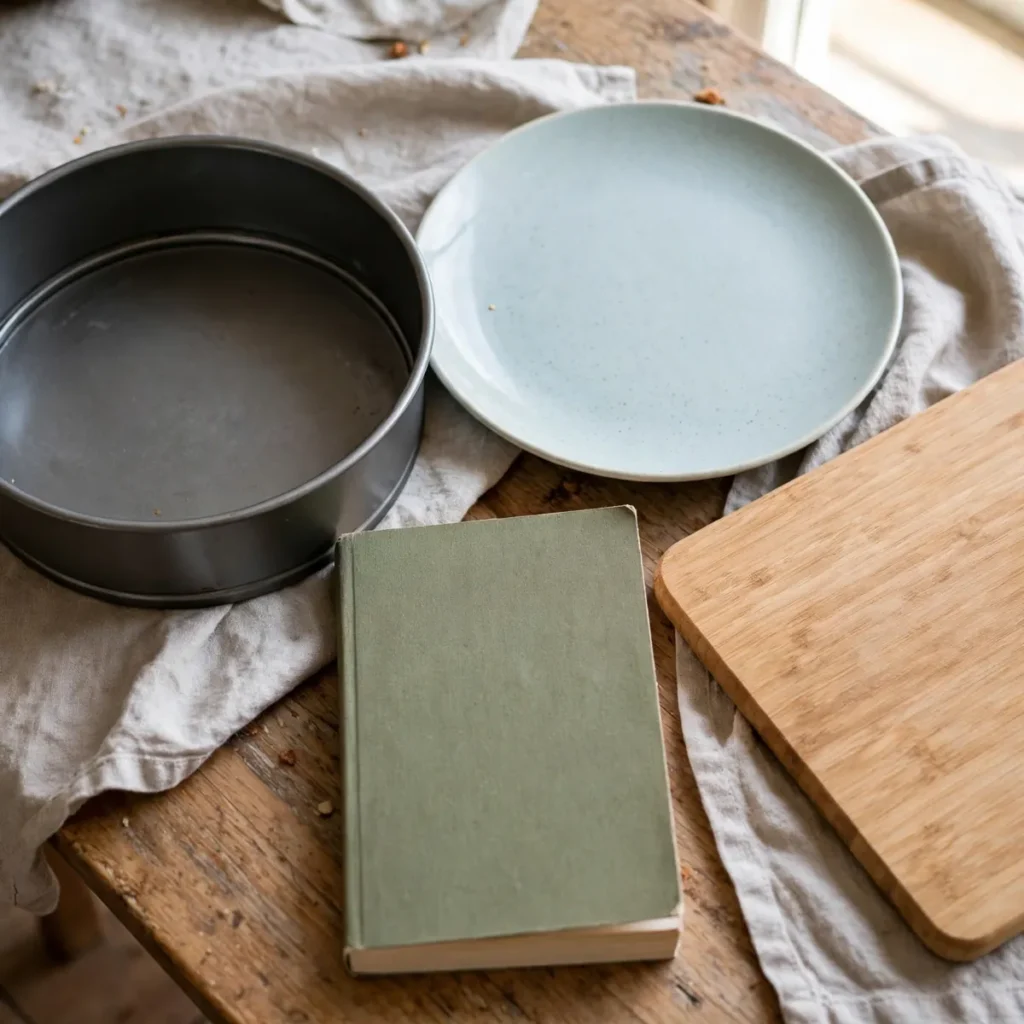
10 Everyday Objects That Are About 9 Inches Long
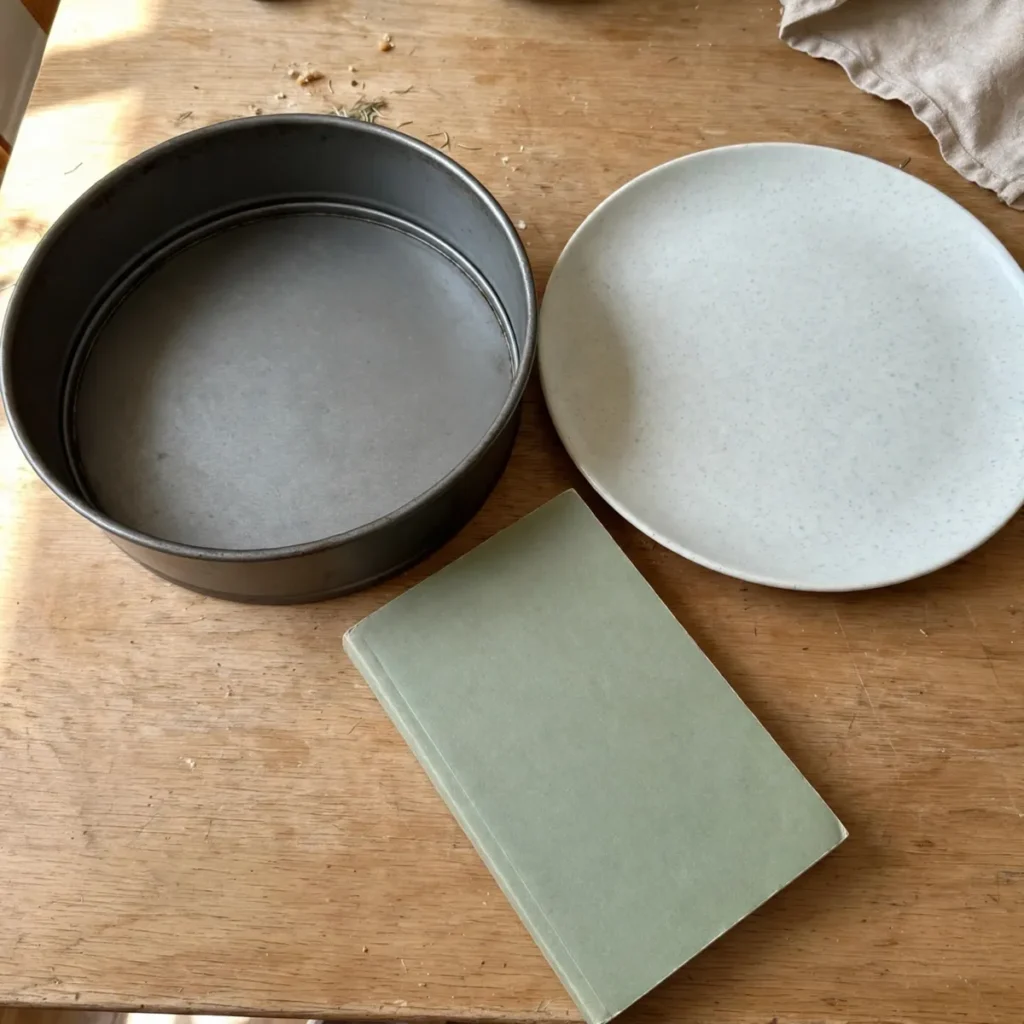
1. A 9-Inch Round Cake Pan
A nine-inch round cake pan is one of the clearest examples of this measurement. Its diameter is about nine inches, so it gives you a good idea of the distance from one side of a round item to the other.
These pans are often used to bake cakes, layered desserts, and other treats. The diameter is measured across the top opening, through the center of the pan. To check whether your pan is nine inches wide, place a measuring tape across the opening. Start at the inside edge on one side and measure to the opposite inside edge.
Remember that the listed size usually means the pan’s diameter, not its height or depth. Also, the inside and outside sizes may be a little different because of the pan’s shape and build. Sizes can vary by maker and design, so check the product details before buying a replacement.
2. A 9-Inch Pie Plate
A nine-inch pie plate is another familiar example. Many classic pie recipes use plates with a diameter of about nine inches. However, smaller and larger versions are also available.
A pie plate is usually round and shallow. It has a flat or slightly sloped base with raised edges. To measure it, place a ruler or measuring tape across the top opening. Measure from one outside edge to the opposite edge through the center. This gives you the full diameter.
Be careful not to mix up the plate’s diameter and depth. For example, a pie plate may measure nine inches across but be much less than nine inches tall. Glass, ceramic, metal, and disposable plates can also come in different sizes. So, check the listed size to confirm the actual diameter.
3. A Large Salad Plate
Some large salad plates measure about nine inches across. These plates are smaller than many dinner plates, but they still have room for salads, sandwiches, snacks, and light meals.
A round salad plate is a helpful example because its diameter is easy to compare with nine inches. Imagine a straight line running from one side of the plate to the other through the center. On a larger salad plate, that line may be close to nine inches.
To measure it, place a ruler across the center of the plate. Start at one outside edge and measure to the opposite edge. Do not measure around the curved rim. That would give you the distance around the plate, not its diameter.
Plate sizes are not all the same. Some salad plates are smaller, while others are closer to the size of dinner plates. Their shape and rim can also affect the final size. Therefore, check the product details if you need the exact diameter.
4. A Small Tablet
A small tablet can help you picture nine inches, especially when its screen measures about eight or nine inches diagonally. However, screen size and the full size of the tablet are not the same thing.
Tablet screen sizes are usually measured diagonally. This means the measurement runs from one corner of the display to the opposite corner. So, a tablet with a nine-inch screen does not have to be nine inches wide or nine inches tall.
To find its actual size, measure the width and height of the device separately. Start at one outside edge and measure straight across to the other edge. Leave out any case or other accessory unless you want to measure the full setup.
Tablets come with different screen shapes, borders, and body sizes. As a result, two models with nine-inch screens may have different overall sizes. Always check the size details for the exact model instead of treating the screen size as the tablet’s full length.
5. A Paperback Book
A paperback book may be close to nine inches tall, especially if it is a larger trade paperback or has a wide page layout. Books come in many sizes, but some are useful examples of this length.
For example, a book that measures about nine inches from its bottom edge to its top edge gives you a simple comparison. Its height is usually greater than its thickness, so make sure you measure the right side.
To check its height, close the book and lay it flat on a table. Place a ruler along one side, then measure from the bottom of the cover to the top. Keep the ruler straight instead of following the curve of the spine.
Paperback sizes vary by publisher, type of book, and page layout. Some novels are much shorter than nine inches. On the other hand, textbooks and picture books may be larger. If the size matters for storage or packing, check the listed height and width of that book.
6. A Large Kitchen Knife Blade
Some large kitchen knives have blades that are about nine inches long. These longer blades are often found on special kitchen knives and some tools made for professional use.
This is a useful example because the blade length runs from the heel near the handle to the tip. It does not include the handle, which adds more length to the full knife.
To measure the blade, place the knife on a stable, flat surface. Keep the sharp edge pointed away from your hands. Measure in a straight line from where the blade meets the handle to the tip. Do not follow the curved cutting edge, because that would measure along the blade’s shape rather than its straight-line length.
Kitchen knives come in many sizes and shapes. Their blade lengths depend on the job, design, and maker. Also, some product listings give the full knife length instead of the blade length. Check the size details so you know which measurement is listed.
7. A Standard Water Bottle
A tall water bottle may be about nine inches high, especially if it has a slim, upright shape. Reusable bottles made from steel, plastic, and other materials come in many sizes. Still, some are close to this height.
This comparison works best with a bottle that stands upright on a flat surface. Its height may be close to nine inches from the bottom of the base to the top of the lid. However, a large cap, handle, or built-in drinking part may change the full height.
To measure it, stand the bottle upright. Then, place a measuring tape from the bottom to the highest point. Include the lid if you want the full height. If you only need the height of the main bottle, measure from the base to the top of the container body.
Bottle sizes vary by capacity, shape, insulation, and brand. For example, two bottles that hold the same amount of water may have different heights. One may be wider, while the other is taller and thinner. So, check the maker’s measurements before choosing a bottle for a bag, shelf, or storage space.
8. A Large Pair of Scissors
Some large household or craft scissors measure about nine inches from the end of one handle to the tip of the blades. They are often used to cut fabric, paper, packaging, and other materials.
Scissors are a useful example because their full length and blade length are different. A pair of scissors that measures nine inches from end to end will have blades that are much shorter.
To measure the full pair, close the scissors and lay them flat on a table. Measure from the farthest point of the handle to the tip of the closed blades. Keep the tape in a straight line along the longest side.
Scissors come in many styles, including sewing, office, kitchen, and craft scissors. Their handles, blades, and full lengths can all vary. In addition, some product listings give the blade length on its own. Check the size details so you do not mix up the blade length and the full length.
9. A Hairbrush
A large hairbrush may measure about nine inches from the end of its handle to the far edge of its brush head. Many paddle brushes and other full-sized styling brushes are close to this size.
Hairbrushes are useful household examples because their long shape makes the length easy to picture. Some have short handles and wide heads. Others are thinner and longer.
To measure a hairbrush, lay it flat with the bristles facing up or to the side. Measure from the bottom of the handle to the farthest edge of the brush head. Do not follow the curve of the handle or measure around the bristles.
The full length depends on the brush type, handle shape, and maker. A small travel brush may be much shorter than nine inches. However, a full-sized styling brush may be close to or longer than this length. Check the product size if you need a brush that fits in a drawer or travel bag.
10. A Small Cutting Board
A small kitchen cutting board may measure about nine inches along its longest side. These boards are often used to slice fruit, prepare small amounts of food, and handle quick kitchen tasks. They also take up less counter space than larger boards.
Some cutting boards are rectangular, while others are round or have less common shapes. For example, a rectangular board that is nine inches long may be about six or seven inches wide, depending on its design.
To measure a cutting board, place it on a flat surface. Then, measure along its longest straight edge. For a round board, measure across the center to find its diameter. If the board has a handle or hanging hole, decide whether you want to include that part in the full measurement.
Cutting boards are made from wood, plastic, bamboo, and other materials. Their thickness and surface sizes can vary a lot. Also, a board listed as nine inches may be longer overall if it has an extended handle. Check the exact product size before buying one for a certain storage space.
How to Estimate 9 Inches Without a Ruler

Sometimes, you may need to estimate nine inches when you do not have a ruler or measuring tape. Fortunately, you can use everyday objects and parts of your body to make a useful estimate.
These methods can help with quick checks, simple home tasks, and times when an exact size is not needed. However, use a proper measuring tool when the size must be exact.
1. Use Your Hand Span
Your hand span is the distance between the tip of your thumb and the tip of your little finger when you spread your hand as wide as you can.
For some adults, this distance may be close to eight or nine inches. If your hand span is about nine inches, it can help you estimate the length of an object.
To try this method, spread your fingers and place your thumb at one end of the area you want to measure. Then, stretch your little finger toward the other end. If the distance is close to your usual hand span, it may be around nine inches.
However, hand sizes differ from person to person. Children and adults may have very different hand spans. Even two adults of a similar height can have different hand sizes. So, use this method as your own guide, not as a standard that works for everyone.
2. Compare It With a Standard Sheet of Paper
A standard US letter-size sheet of paper measures 8.5 by 11 inches. This makes it a useful item when you need to estimate nine inches.
The shorter side measures 8.5 inches, which is only half an inch less than nine inches. So, if you imagine adding another half-inch to that side, you have a length of exactly nine inches.
The longer side measures 11 inches. Therefore, nine inches is two inches shorter than that side.
You can place a sheet of printer paper beside an object and compare their lengths. Look at how much shorter or longer the object seems next to the paper’s edges.
This method is usually more reliable than using your hand because standard US letter paper has set sizes. However, make sure you are using letter-size paper rather than another paper size. Keep in mind that this is still an estimate unless you can mark or measure the extra half-inch.
3. Use a Dollar Bill and Coins or Cards
A US dollar bill measures about 6.14 inches in length. This makes it a helpful starting point when you need to estimate nine inches.
Imagine placing a dollar bill beside an object. Its length is a little more than two-thirds of nine inches. You would need about another 2.86 inches to reach the full nine-inch length.
You can also use a standard payment card as a guide. Most standard bank and credit cards measure about 3.37 inches along their longer edge. Two cards placed end to end would make a length of about 6.74 inches.
Adding one more small section would bring the total closer to nine inches.
For a quick estimate, compare the object with these familiar items and judge the space left over. However, do not rely on coins alone. Their diameters are small, and stacking or lining them up can lead to errors. Also, money and card sizes can differ between countries, and some cards may not be standard size.
4. Use Your Forearm as a Reference
Your forearm can give you another personal way to estimate length. The distance from your wrist toward your elbow is often longer than nine inches. So, you can use part of it as a guide.
Place your forearm beside the object and compare the object’s length with the space between your wrist and elbow. You can also use the distance from your wrist to another point on your arm if you have measured it before.
This method works better when you know your own body measurements. For example, if you have measured part of your forearm in the past, you can use that length as a guide when you do not have a ruler.
However, arm lengths and body shapes differ from person to person. Do not assume that everyone has the same forearm or wrist-to-elbow length. Use this method as a rough visual guide, not an exact way to measure.
5. Use Your Foot as a Reference
Your foot can help you estimate nine inches, especially if you know its length.
Some adults have feet that measure close to nine or ten inches, although this can vary a lot. If your foot is about nine inches from heel to toe, it can serve as a useful guide.
To try this method, place your foot beside the object and compare their lengths. If they look about the same, the object may be close to nine inches long.
You can also use a shoe as a guide. However, remember that the outside of a shoe is not the same length as the foot inside it. The sole, toe shape, and heel can all add extra length.
Foot sizes differ from person to person, so this method is best for a rough estimate. Do not rely on it when measuring spaces for furniture, building materials, or items that need an exact fit.
6. Divide a Longer Known Measurement
Another useful method is to start with an object or distance that has a known size. Then, divide that length in your mind.
For example, one foot equals 12 inches. Nine inches is three-quarters of that length. If you can picture a one-foot length, imagine splitting it into four equal parts. Then, use three of those parts.
This gives you a simple way to picture nine inches without finding a separate object that is exactly nine inches long.
You can also use a yard as a guide. A yard contains 36 inches, and nine inches is exactly one-quarter of that length. Imagine splitting the yard into four equal parts. Each part represents nine inches.
This method can help when measuring fabric, furniture, or other items where you already know a longer size.
The main limit is that your estimate depends on how well you can picture or find the starting length. It is a useful shortcut, but it cannot match the accuracy of a ruler or tape measure.
Frequently Asked Questions About 9 Inches
1. How Many Centimeters Are in 9 Inches?
Nine inches equals 22.86 centimeters. To work out this conversion, multiply nine by 2.54 because one inch is exactly 2.54 centimeters.
The calculation is:
9 × 2.54 = 22.86 cm
This conversion is useful when comparing product sizes or instructions that use the metric system.
2. How Many Millimeters Are in 9 Inches?
Nine inches equals 228.6 millimeters.
Since one inch contains 25.4 millimeters, multiply nine by 25.4 to get the answer.
The calculation is:
9 × 25.4 = 228.6 mm
Millimeters are especially useful for small measurements that need more detail than centimeters usually provide.
3. How Many Feet Are in 9 Inches?
Nine inches equals 0.75 feet, or three-quarters of a foot.
There are 12 inches in one foot, so divide nine by 12.
The calculation is:
9 ÷ 12 = 0.75 ft
This is easy to remember because nine inches makes up three of the four equal parts in a foot.
4. How Many Meters Are in 9 Inches?
Nine inches equals 0.2286 meters.
To convert inches into meters, multiply the number of inches by 0.0254.
The calculation is:
9 × 0.0254 = 0.2286 m
This means nine inches is slightly less than one-quarter of a meter.
5. How Many Yards Are in 9 Inches?
Nine inches equals 0.25 yards, which is one-quarter of a yard.
Since one yard contains 36 inches, divide nine by 36.
The calculation is:
9 ÷ 36 = 0.25 yards
This conversion is useful when working with fabric, clothing materials, and other items measured in yards.
6. Is 9 Inches Considered Big?
Nine inches is a medium length for many everyday household items. It is longer than the height of a typical smartphone but shorter than the long side of a standard US letter-size sheet of paper.
Whether nine inches is big depends on what you are measuring. For a dinner plate, it may be a fairly small diameter. For a kitchen tool or handheld item, it can be a good amount of length.
The best way to judge the size is to compare it with familiar objects and think about what you are measuring.
7. What Common Objects Are About 9 Inches Long?
Several familiar items may measure about nine inches in one of their directions.
Examples include:
- A nine-inch round cake pan.
- A nine-inch pie plate.
- A large salad plate.
- A small tablet with a screen close to nine inches diagonally.
- A larger paperback book.
- A kitchen knife with a long blade.
- A tall reusable water bottle.
- A large pair of scissors.
- A full-sized hairbrush.
- A small kitchen cutting board.
These are close comparisons, not fixed sizes. Actual measurements depend on the maker, model, and design.
8. How Can I Measure 9 Inches Without a Ruler?
You can estimate nine inches by comparing the length with familiar items such as a standard sheet of paper, a US dollar bill, or your hand span.
A standard sheet of US letter paper measures 8.5 inches along its shorter side, making it especially useful. Nine inches is just half an inch longer.
You can also use your hand, forearm, or foot as a personal guide if you know its rough size.
These methods are useful for quick estimates. However, a ruler or measuring tape is a better choice when you need an exact result.
9. How Many Inches Are in 9 Centimeters?
Nine centimeters equals about 3.54 inches.
To convert centimeters into inches, divide the centimeter measurement by 2.54.
The calculation is:
9 ÷ 2.54 = 3.5433 inches
This means nine centimeters is much shorter than nine inches. The two measurements use different units, so be careful not to mix them up when reading product sizes.
10. Is 9 Inches the Same as 22.86 Centimeters?
Yes. Nine inches and 22.86 centimeters describe exactly the same length.
The conversion uses the fixed rule that one inch equals 2.54 centimeters.
Therefore:
9 inches = 22.86 cm
The only difference is the unit used to show the measurement. For example, you may see inches on US product packaging and centimeters on product listings from other countries.
11. Is 9 Inches a Quarter of a Yard?
Yes. Nine inches is exactly one-quarter of a yard.
One yard contains 36 inches. Divide 36 by four to get nine inches.
The calculation is:
36 ÷ 4 = 9 inches
This makes nine inches a useful length when working with fabric, cloth, and other materials sold by the yard. Four sections of nine inches each make up one full yard.
Final Thoughts
Nine inches is a useful everyday measurement that becomes easier to picture when you compare it with familiar household items. It equals 22.86 centimeters, 228.6 millimeters, 0.75 feet, 0.2286 meters, and one-quarter of a yard. Items such as a nine-inch cake pan, a large salad plate, a paperback book, and a small cutting board can help you picture this length without relying only on numbers. Also, knowing how to convert inches into other units makes it easier to read product sizes, follow instructions, and estimate lengths when shopping or working on home projects.
Hand spans, paper, dollar bills, and other everyday items can help you estimate nine inches. However, a ruler or measuring tape is still the best choice when an exact measurement matters. By learning these simple examples and conversion formulas, you can feel more confident when working with lengths in daily life. For more background on how this familiar unit developed, you can explore the history of the inch.

Grace is a lifestyle writer from California who loves starting mornings with positivity. At Mornetic, she shares uplifting quotes and cheerful messages to brighten your day.