Twelve inches is equal to 1 foot, 30.48 centimeters, 304.8 millimeters, and 0.3048 meters. It is also equivalent to one-third of a yard. Although 12 inches may sound like a simple measurement, understanding its actual length can be helpful when measuring household items, checking product dimensions, completing DIY projects, or estimating distances without a ruler.
A length of 12 inches is approximately the distance from the tip of an adult’s thumb to the tip of the little finger when the hand is fully spread, although hand sizes vary. It is also comparable to the length of a standard school ruler, making it an easy measurement to visualize.
This guide explains how long 12 inches is, provides a conversion chart, and compares the measurement with ten familiar everyday objects. You will also learn practical methods for estimating 12 inches without measuring tools and find answers to common questions about this length.
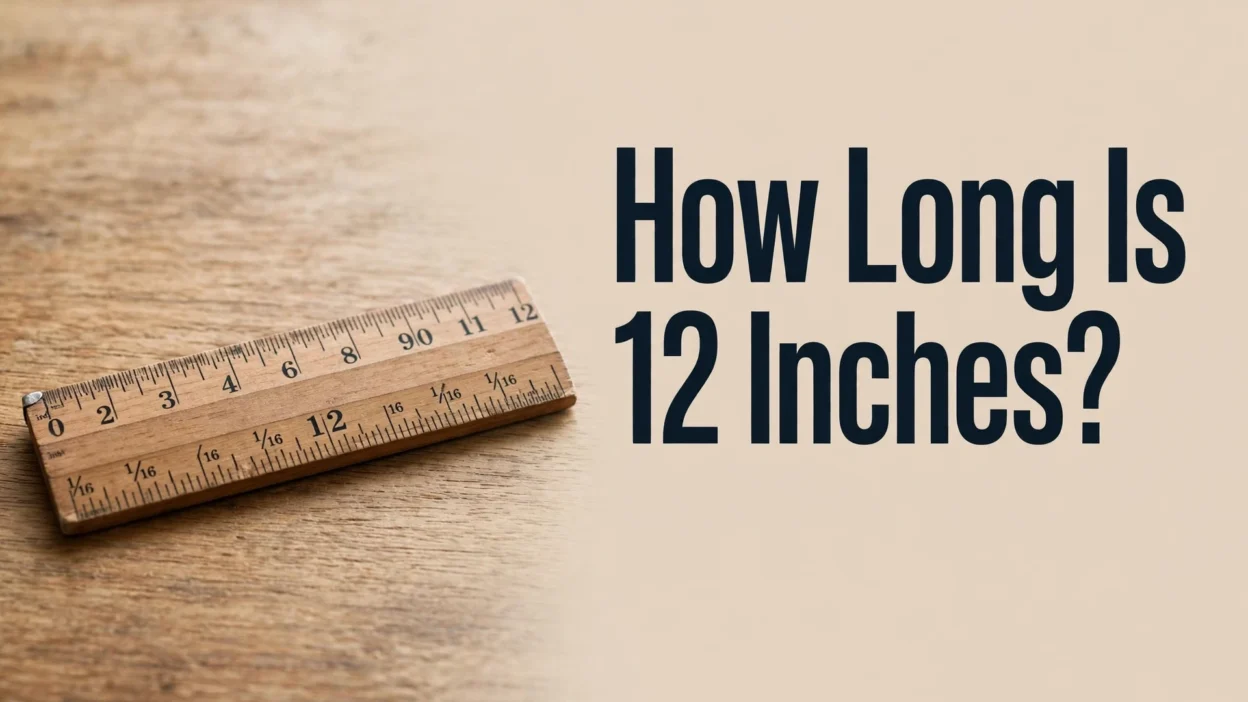
How Long Is 12 Inches?
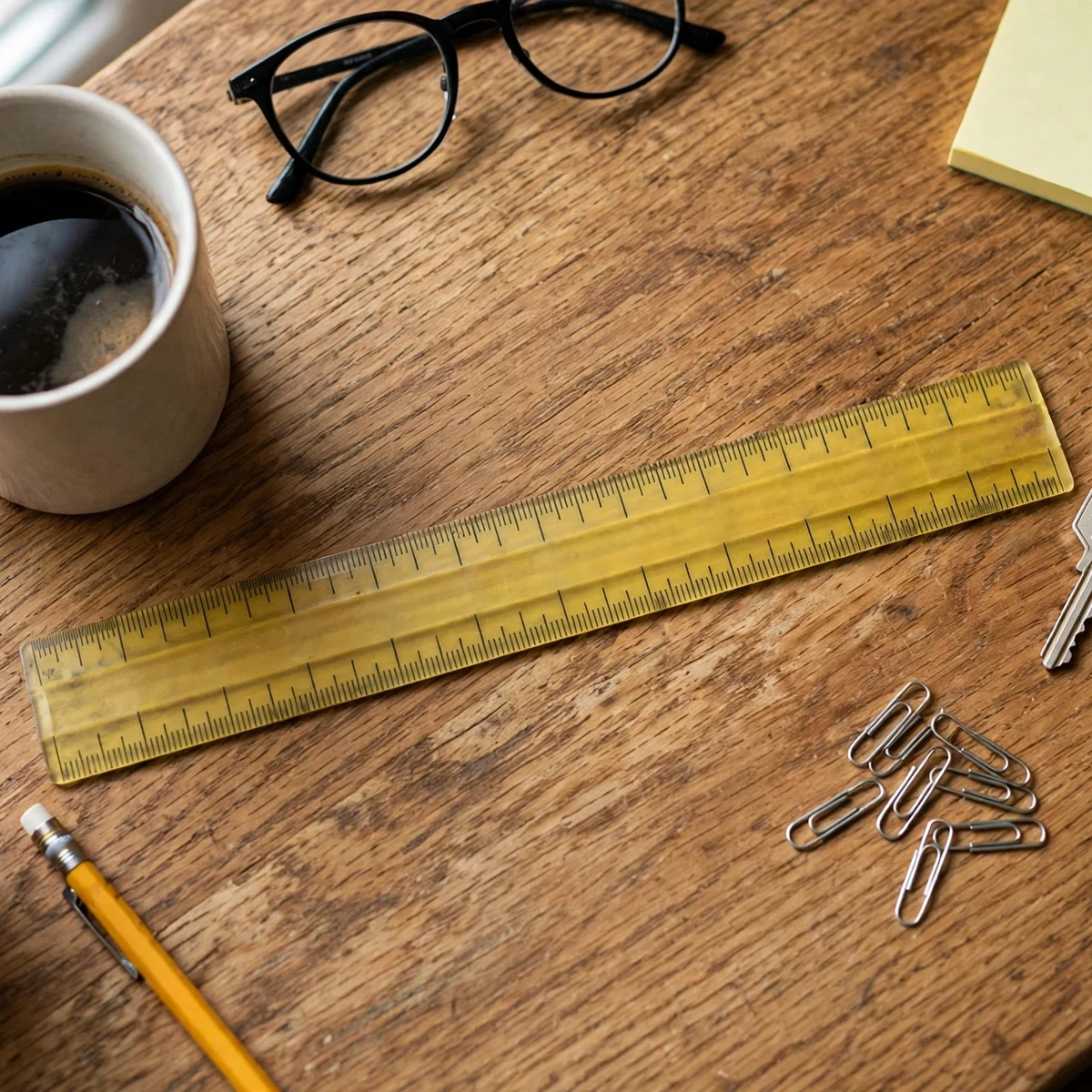
Twelve inches measures exactly one foot. In the customary measurement system used in the United States, every foot contains 12 inches, so the two measurements describe precisely the same length.
Imagine a standard 12-inch ruler placed flat on a desk. The distance from its starting mark to its final mark represents 12 inches. This makes a ruler one of the simplest references for understanding the measurement.
Here are the most useful equivalents for 12 inches:
- Feet: 1 foot
- Centimeters: 30.48 cm
- Millimeters: 304.8 mm
- Meters: 0.3048 m
- Yards: 0.3333 yard, approximately one-third of a yard
In everyday situations, 12 inches is long enough to span a sheet of paper’s longer dimension in some common formats, measure a small section of furniture, or describe the length of a household object. However, the comparison depends on the specific object’s dimensions.
The measurement is especially useful when shopping online. Product listings may show inches, centimeters, or millimeters depending on the manufacturer and marketplace. Knowing that 12 inches equals 30.48 centimeters helps you compare products without repeatedly searching for conversions.
It is also important to distinguish length from other dimensions. A box described as 12 inches long might be much wider or taller, while a screen advertised as 12 inches typically refers to its diagonal measurement rather than its width.
Understanding these distinctions makes the measurement easier to apply accurately in real-world situations.
12 Inches Conversion Chart
The following chart shows common inch measurements from 0.5 inch through 12 inches, with their approximate equivalents in feet, centimeters, millimeters, meters, and yards.
Values are rounded for readability where necessary. The conversion factors themselves are exact, so small differences may appear if you calculate using rounded figures.
| Inches | Feet | Centimeters | Millimeters | Meters | Yards |
|---|---|---|---|---|---|
| 0.5 | 0.0417 | 1.27 | 12.7 | 0.0127 | 0.0139 |
| 1 | 0.0833 | 2.54 | 25.4 | 0.0254 | 0.0278 |
| 1.5 | 0.125 | 3.81 | 38.1 | 0.0381 | 0.0417 |
| 2 | 0.1667 | 5.08 | 50.8 | 0.0508 | 0.0556 |
| 2.5 | 0.2083 | 6.35 | 63.5 | 0.0635 | 0.0694 |
| 3 | 0.25 | 7.62 | 76.2 | 0.0762 | 0.0833 |
| 3.5 | 0.2917 | 8.89 | 88.9 | 0.0889 | 0.0972 |
| 4 | 0.3333 | 10.16 | 101.6 | 0.1016 | 0.1111 |
| 4.5 | 0.375 | 11.43 | 114.3 | 0.1143 | 0.125 |
| 5 | 0.4167 | 12.7 | 127 | 0.127 | 0.1389 |
| 5.5 | 0.4583 | 13.97 | 139.7 | 0.1397 | 0.1528 |
| 6 | 0.5 | 15.24 | 152.4 | 0.1524 | 0.1667 |
| 6.5 | 0.5417 | 16.51 | 165.1 | 0.1651 | 0.1806 |
| 7 | 0.5833 | 17.78 | 177.8 | 0.1778 | 0.1944 |
| 7.5 | 0.625 | 19.05 | 190.5 | 0.1905 | 0.2083 |
| 8 | 0.6667 | 20.32 | 203.2 | 0.2032 | 0.2222 |
| 8.5 | 0.7083 | 21.59 | 215.9 | 0.2159 | 0.2361 |
| 9 | 0.75 | 22.86 | 228.6 | 0.2286 | 0.25 |
| 9.5 | 0.7917 | 24.13 | 241.3 | 0.2413 | 0.2639 |
| 10 | 0.8333 | 25.4 | 254 | 0.254 | 0.2778 |
| 10.5 | 0.875 | 26.67 | 266.7 | 0.2667 | 0.2917 |
| 11 | 0.9167 | 27.94 | 279.4 | 0.2794 | 0.3056 |
| 11.5 | 0.9583 | 29.21 | 292.1 | 0.2921 | 0.3194 |
| 12 | 1 | 30.48 | 304.8 | 0.3048 | 0.3333 |
Simple Conversion Formulas
You can convert 12 inches into other units using a few straightforward formulas. These calculations are useful when working with building materials, crafting supplies, furniture dimensions, or international product specifications.
Inches to feet: Divide the number of inches by 12. For example, 12 ÷ 12 = 1 foot.
Inches to centimeters: Multiply the number of inches by 2.54. For example, 12 × 2.54 = 30.48 centimeters.
Inches to millimeters: Multiply the number of inches by 25.4. For example, 12 × 25.4 = 304.8 millimeters.
Inches to meters: Multiply the number of inches by 0.0254. For example, 12 × 0.0254 = 0.3048 meters.
Inches to yards: Divide the number of inches by 36. For example, 12 ÷ 36 = approximately 0.3333 yard.
To reverse these calculations, divide centimeters by 2.54 to obtain inches, divide millimeters by 25.4, or multiply feet by 12. These formulas make it easy to move between customary and metric measurements without needing a conversion application.
Everyday Objects That Help You Visualize 12 Inches

Everyday objects provide practical references for understanding a measurement when a ruler is unavailable. Instead of trying to imagine an abstract length, you can compare it with items you regularly see at home, school, or work.
A standard ruler is the most direct reference, but other objects can help you develop a useful visual estimate. A sheet of paper, a laptop, a cutting board, or a small household item may have one dimension close to a foot.
The important distinction is that these comparisons are estimates rather than universal standards. Manufacturers produce objects in different sizes, and items that look similar may differ by several inches.
For a quick mental picture, imagine a line running along the long edge of a typical 12-inch ruler. That line measures exactly one foot. Other objects can then be compared against it to estimate whether they are shorter, longer, or approximately the same length.
The following ten examples explain how to use familiar items as visual references. Each comparison includes an approximate dimension, a practical way to measure it, and a reminder about variations that could affect accuracy.
10 Everyday Objects That Are Approximately 12 Inches Long
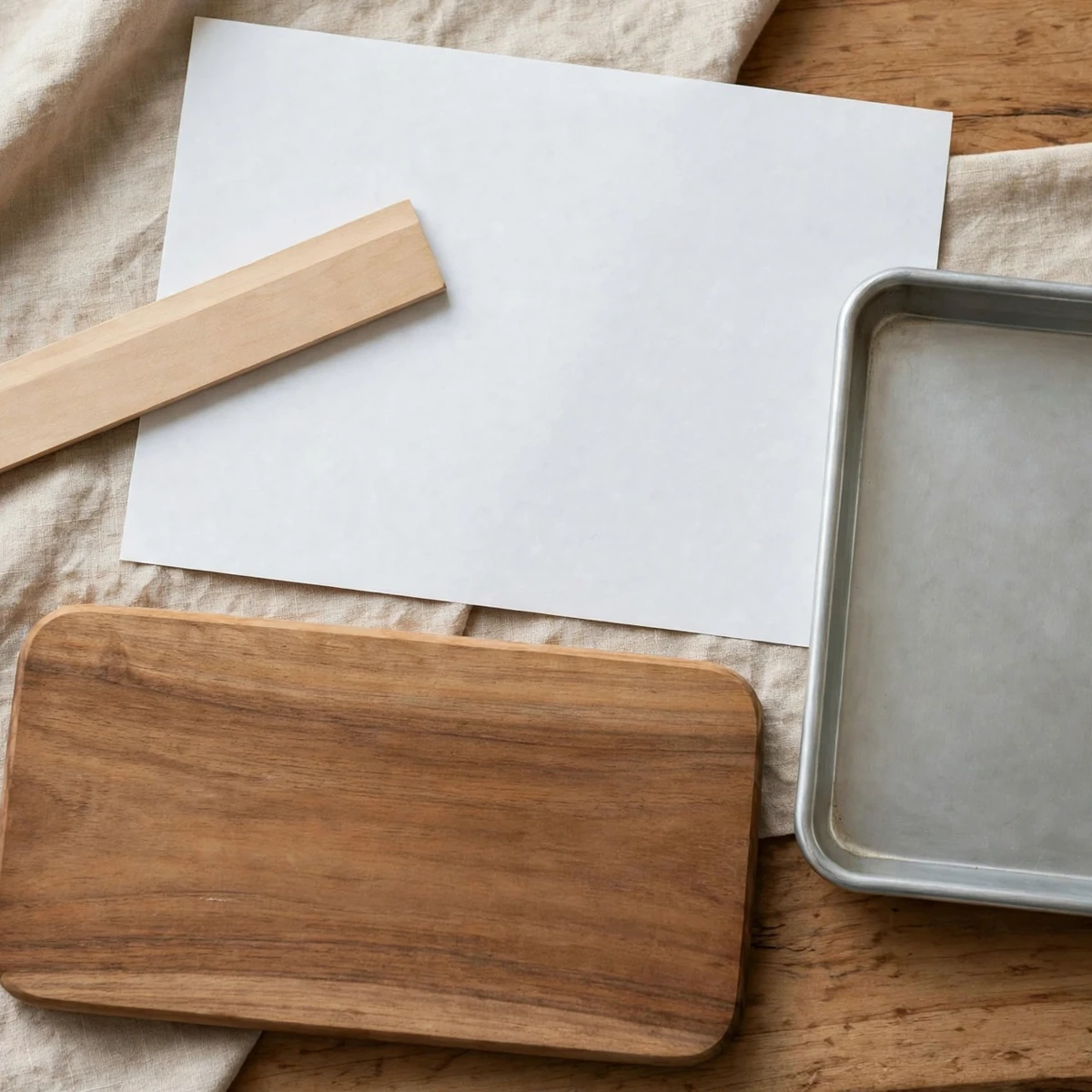
1. A Standard 12-Inch Ruler
A standard 12-inch ruler is the most straightforward example because it is designed to measure exactly one foot. Its numbered markings make it possible to see the full length rather than estimate it from appearance.
Place the ruler on a flat surface and locate the zero mark. The distance from zero to the 12-inch mark represents the complete measurement. Remember that the physical edge may extend slightly beyond the first or last marking, so use the printed graduations rather than the plastic ends.
This reference is particularly helpful for students, home decorators, crafters, and anyone who needs to measure small objects. It can also help you check whether another item is close to 12 inches long.
Manufacturer and design variations: Rulers may have different overall lengths, even when they contain a 12-inch measuring scale. Some include extra space beyond the markings, while others have metric and customary scales printed on opposite sides. Flexible rulers and retractable measuring tools may also have different shapes. Always check the marked scale to confirm the intended length.
2. A Sheet of Letter-Size Paper
Standard US letter-size paper measures 8.5 inches wide and 11 inches long. Its longer edge is therefore close to 12 inches, making it a useful reference for visualizing a foot.
To understand the difference, place a sheet of letter paper beside a ruler. The paper’s longer edge ends one inch short of the 12-inch mark. If you imagine extending that edge by another inch, you have a good approximation of one foot.
Paper is convenient because it is commonly available in homes, offices, classrooms, and print shops. You can also use it to estimate other small dimensions, provided you know which standard paper size you have.
Manufacturer and design variations: Paper dimensions depend on the format. US letter paper measures 8.5 by 11 inches, whereas legal paper measures 8.5 by 14 inches and A4 paper measures approximately 8.27 by 11.69 inches. Specialty paper, handmade sheets, and trimmed printing stock can differ further. Do not assume that every sheet has the same dimensions as US letter paper.
3. A Foot-Long Kitchen Utensil
Some kitchen utensils, including wooden spoons, spatulas, and serving tools, measure around 12 inches from end to end. Their length makes them convenient for reaching into deep pots, stirring ingredients, and serving food.
A utensil close to one foot long offers a familiar way to picture the measurement. Place it on a counter and compare its full length with a ruler or another known reference. If the handle and working end together span roughly the same distance as a 12-inch ruler, it is a reasonable visual match.
Kitchen tools can also help when estimating the dimensions of drawers, storage containers, or sections of countertop. However, their shape may make exact comparisons difficult.
Manufacturer and design variations: Cooking utensils come in many lengths depending on their intended purpose. A compact spatula may be much shorter than a long-handled serving spoon, while professional kitchen tools can exceed a foot. Handle thickness, curved designs, and hanging loops also affect overall dimensions. Check the product specifications if an exact measurement matters.
4. A Small Cutting Board
A small rectangular cutting board may measure approximately 12 inches along its longer side. This is a useful household comparison because cutting boards are often designed around practical countertop space and food-preparation needs.
Imagine a board that is about one foot long and somewhat narrower than that length. Its long edge provides a visual reference for the distance from one end of a ruler to the other. You can use the same comparison when considering whether a board will fit inside a kitchen drawer or storage cabinet.
If you already own a cutting board, measuring its longest dimension can also help you identify a reliable reference object for future estimates. Once you know its actual length, you can compare it with similar household items.
Manufacturer and design variations: Cutting boards are available in compact, medium, and oversized formats. Wooden boards may have thick handles or juice grooves, while plastic versions can be thinner and lighter. Some are square rather than rectangular, and others include hanging holes or extended grips. A board described as small does not necessarily measure 12 inches, so verify its dimensions before relying on it for a project.
5. A Laptop’s Approximate Width
The width of some compact laptops can be close to 12 inches, depending on the screen size, body design, and bezel dimensions. This makes a small laptop a potentially useful reference for estimating a foot.
Place the device on a desk and look at the distance from its left edge to its right edge. If the laptop is approximately 12 inches wide, its horizontal span can help you visualize the measurement. However, screen size alone cannot confirm the device’s actual width.
Laptop dimensions are especially relevant when shopping for protective sleeves, desk accessories, or travel bags. A computer advertised with a 12-inch screen may be narrower or wider than expected because screen measurements typically refer to the diagonal distance across the display.
Manufacturer and design variations: Laptop widths differ according to the screen size, keyboard layout, hinge design, bezel thickness, and chassis shape. Two computers with similarly sized displays can have noticeably different exterior dimensions. Convertible laptops and devices with rounded edges may also measure differently from conventional clamshell models. Consult the manufacturer’s width specification instead of using the display size as a substitute.
6. A Long Smartphone or Large Mobile Device
Most conventional smartphones are considerably shorter than 12 inches, but a large mobile device or compact tablet can approach or exceed a foot in one dimension. Such devices offer a useful comparison when the specific model is known.
A compact tablet placed vertically may have a height close to 12 inches, although many popular models are shorter. If you own a device with published dimensions, you can compare its longest side with a ruler to establish whether it is a suitable reference.
This comparison is helpful when thinking about portable electronics, tablet cases, storage compartments, and bags. It also illustrates why knowing the difference between screen size and exterior length is important.
Manufacturer and design variations: Device dimensions vary with screen proportions, corner curvature, bezel size, camera protrusions, and protective cases. A tablet with a 12-inch diagonal display does not necessarily measure 12 inches from top to bottom. Foldable devices can also change dimensions depending on whether they are open or closed. For accuracy, use the listed height and width for the exact model.
7. A Small Throw Pillow
A small decorative pillow may measure approximately 12 inches along one side. Square cushions of this size are sometimes used on accent chairs, small sofas, benches, and decorative arrangements.
To visualize the length, look at one edge of the pillow rather than its diagonal. A side measuring 12 inches represents one foot, even if the cushion appears smaller because it is soft or compressed.
This comparison can be useful when shopping for cushion covers or planning a seating arrangement. If a cover is intended for a 12-inch pillow, the stated dimensions can help you determine whether it is likely to fit.
Manufacturer and design variations: Throw pillows are available in numerous shapes and sizes, from small accent cushions to large floor pillows. Their dimensions may refer to the cover before filling, the finished cushion, or the nominal insert size. Soft materials can bulge, compress, or stretch, changing the apparent dimensions. Measure the side seam or consult the manufacturer’s sizing information when a close fit is necessary.
8. A Small Picture Frame
Some small tabletop picture frames measure around 12 inches along their longer exterior edge. Their rigid shape makes them easier to compare with a ruler than flexible household objects.
For example, a rectangular frame with an exterior length of 12 inches spans one foot from one outer edge to the other. Its photograph opening may be smaller, so distinguish between the frame’s outside dimensions and the size of the image it holds.
Picture frames can be helpful when arranging wall art, organizing shelves, or deciding whether a decorative object will fit into a particular space. If you know the frame’s length, it becomes a convenient reference for estimating nearby objects.
Manufacturer and design variations: Frame dimensions depend on the photograph format, border width, material, and construction. A frame designed for an 8-by-10-inch photograph may have exterior dimensions greater than 10 inches, but that does not guarantee a 12-inch overall length. Wooden frames, metal frames, and frames with decorative molding can differ significantly. Use the published exterior measurements when planning a precise arrangement.
9. A Small Desk Organizer
A wide desk organizer may have a length close to 12 inches. Organizers designed to hold pens, sticky notes, stationery, or small office accessories sometimes occupy roughly one foot of desk space.
Look at the organizer’s longest horizontal dimension. If it extends across approximately the same distance as a standard ruler, it can serve as a useful visual reference. This is particularly convenient when arranging office supplies or deciding how much room remains on a desk.
A desk organizer can also provide a practical reminder that length and capacity are separate considerations. Two organizers may have similar exterior lengths but very different depths, heights, and internal compartments.
Manufacturer and design variations: Desk accessories vary according to the number of compartments, intended contents, and overall design. Some models are narrow and elongated, while others are square or expandable. Rounded corners, integrated pen holders, and protruding handles may affect the total length. Always measure the outside edges rather than estimating from the number of compartments or the product’s appearance.
10. A Small Baking Tray
Some compact baking trays have a longer dimension near 12 inches. Their flat, rectangular shape makes them easy to compare with a foot-long ruler or another known reference.
Imagine a tray that stretches approximately one foot from one end to the other. You can use that dimension to visualize the length of a countertop section, a shelf, or a small storage space. If the tray has raised edges, measure across the outermost points when determining its total length.
This example is particularly useful for understanding how a 12-inch measurement applies to practical kitchen equipment. It can also help you distinguish between a tray’s exterior dimensions and the usable area inside it.
Manufacturer and design variations: Baking trays are produced in different lengths, widths, and depths depending on the oven, recipe, and intended use. Some product descriptions list the pan’s exterior dimensions, while others emphasize its cooking surface. Handles, rolled edges, and sloped sides can affect the overall measurement. Check the manufacturer’s specifications before purchasing a tray for a particular oven or storage space.
How to Estimate 12 Inches Without a Ruler

You can estimate a foot-long distance even when a measuring tool is unavailable. The most reliable approach is to use a familiar reference whose dimensions are already known or to combine smaller estimated lengths.
These techniques are useful for quick household decisions, shopping, crafting, and rough planning. However, they should not replace an actual measurement when accuracy is important, such as cutting expensive materials or installing fixtures.
Use a Standard Sheet of Paper
A US letter-size sheet is 11 inches long. Place it beside the object you want to estimate, then imagine extending the longer edge by one additional inch.
This gives you a convenient approximation of 12 inches without needing a ruler. The method works best when you know the paper is standard letter size rather than A4, legal, or another format.
Compare the Object With Your Hand
Spread your thumb and little finger apart and estimate the distance between their tips. Some adults have a hand span near 8 or 9 inches, while others have a smaller or larger span.
If your measured hand span is known, you can use it as a personal reference. For example, a span of 6 inches repeated twice would total 12 inches, although keeping the two lengths aligned requires care.
Hand-based estimates are convenient, but individual differences mean this technique is not universally accurate.
Use Two Six-Inch Sections
Six inches is half a foot. If you can identify a reference measuring approximately 6 inches, placing two equal sections end to end gives you a rough estimate of 12 inches.
This method works well for comparing short objects or estimating a distance on a tabletop. Marking the first section with a removable note can help you keep the lengths aligned.
The result depends on the accuracy of the original six-inch estimate. Small errors can accumulate when you repeat an approximate measurement.
Count Familiar Repeated Objects
Some objects can be arranged end to end to approximate a foot. For instance, two objects that each measure about 6 inches will span approximately 12 inches when aligned.
You could also use several smaller items if their lengths are known. The main requirement is to avoid gaps or overlaps between them, because these can distort the total.
This technique is best for rough comparisons rather than precise construction work.
Use a Phone With a Measuring Application
Some smartphones support augmented-reality measuring applications that estimate distances using the camera and device sensors. Depending on the phone and the conditions, an application may help you estimate a length of 12 inches.
Place the device steadily, follow the application’s instructions, and check that the measurement begins and ends at the intended points. Lighting, surface texture, camera calibration, and movement can affect the result.
A digital measuring application is useful when no physical ruler is available, but its output should not automatically be treated as exact. Verify important measurements with a conventional measuring tool whenever possible.
Learn the Length of a Familiar Object
Choose a household object that you can measure accurately once, such as a ruler, cutting board, or picture frame. Remembering its actual length gives you a dependable visual reference for future estimates.
For example, if a particular board measures exactly 12 inches, you can compare other objects against it whenever you need a quick approximation. This is more useful than assuming that all boards of the same general type have identical dimensions.
Over time, familiar references make it easier to judge whether an object is close to one foot long or noticeably shorter or longer.
Frequently Asked Questions About 12 Inches
Is 12 Inches the Same as 1 Foot?
Yes. Twelve inches equals exactly 1 foot. Both measurements describe the same length, so they can be used interchangeably when the context does not require a particular unit.
How Many Centimeters Are in 12 Inches?
Twelve inches equals exactly 30.48 centimeters. The conversion uses the standard relationship of 1 inch to 2.54 centimeters.
How Many Millimeters Are in 12 Inches?
There are exactly 304.8 millimeters in 12 inches. Since one centimeter contains 10 millimeters, 30.48 centimeters equals 304.8 millimeters.
How Many Meters Are in 12 Inches?
Twelve inches equals 0.3048 meters. This is slightly more than 0.3 meters and is a convenient conversion when comparing product dimensions listed in metric units.
Is 12 Inches a Long Distance?
Twelve inches is a relatively short distance in everyday life. It equals one foot, which is useful for describing small household objects, furniture components, craft materials, and other compact dimensions. Whether it seems long or short depends on the object being measured.
What Common Object Is Exactly 12 Inches Long?
A standard ruler with a 12-inch scale measures exactly 12 inches between its zero and 12-inch marks. Many other objects can be close to this length, but their dimensions depend on the particular model or design.
Is a 12-Inch Screen Actually 12 Inches Long?
Not necessarily. Screen sizes are usually measured diagonally from one corner of the display area to the opposite corner. A screen measuring 12 inches diagonally can have a width and height that are both less than 12 inches.
How Can I Measure 12 Inches Without a Measuring Tape?
Use a standard 12-inch ruler if one is available, or compare the length with a known object such as an 11-inch sheet of US letter paper plus an additional inch. A measuring application can also provide an estimate, although its accuracy varies.
Is 12 Inches the Same as 30 Centimeters?
Not exactly. Twelve inches equals 30.48 centimeters, making it 0.48 centimeters longer than 30 centimeters. The difference is small, but it can matter in projects requiring precise dimensions.
How Many Yards Are in 12 Inches?
Twelve inches equals one-third of a yard because a yard contains 36 inches. In decimal form, this is approximately 0.3333 yard.
Why Are Some Products Measured in Inches and Others in Centimeters?
Product dimensions often reflect the measurement conventions used by a manufacturer, marketplace, or intended customer base. Inches are common in US product listings, while centimeters and millimeters are widely used in metric-based markets. Knowing the conversion makes it easier to compare specifications across different listings.
Can I Use My Hand to Estimate 12 Inches?
Yes, but only as a rough estimate unless you know your hand span’s actual length. Hand sizes differ considerably, so measuring your thumb-to-little-finger span once can make it a more useful personal reference.
Final Thoughts
Twelve inches is exactly one foot, equivalent to 30.48 centimeters, 304.8 millimeters, and 0.3048 meters. This makes it a practical measurement to understand when comparing household objects, planning storage, shopping for products, or completing simple DIY tasks.
A standard 12-inch ruler provides the clearest reference, while letter-size paper, kitchen utensils, small cutting boards, picture frames, and other familiar objects can help you visualize the length. Remember that these everyday comparisons are approximate unless the object’s actual dimensions are known.
For quick estimates, you can combine shorter lengths, use a familiar object as a reference, or try a digital measuring application. When precision matters, however, a ruler or measuring tape remains the better choice.
Understanding this measurement also makes conversions easier. Whether a product listing uses inches, centimeters, or millimeters, a few basic formulas can help you compare dimensions confidently. For further background on how people standardize and compare lengths, explore the development of scientific knowledge and its role in modern measurement practices.

Grace is a lifestyle writer from California who loves starting mornings with positivity. At Mornetic, she shares uplifting quotes and cheerful messages to brighten your day.