Sixteen inches is a length you can picture by comparing it with common household items, school supplies, and everyday accessories. It equals 40.64 centimeters, 406.4 millimeters, 1.3333 feet, or 0.4064 meters. Although 16 inches is shorter than a standard yardstick, it is long enough to describe many objects you encounter at home, at work, or while shopping.
Understanding this measurement can help when choosing furniture, checking package dimensions, measuring craft materials, or estimating the size of an item without a ruler. Everyday comparisons also make it easier to visualize the distance when inches are not your preferred unit.
This guide explains how long 16 inches is, provides a practical conversion chart, and compares the measurement with 10 familiar objects. You will also learn simple ways to estimate 16 inches without measuring tools and find answers to common questions about this length.
How Long Is 16 Inches?
Sixteen inches measures exactly 1 foot and 4 inches. Since one foot contains 12 inches, adding another 4 inches gives you a total of 16 inches. This makes the measurement relatively easy to understand if you are familiar with feet and inches.
In metric measurements, 16 inches equals 40.64 centimeters or 406.4 millimeters. Expressed in meters, the same length is 0.4064 meters. These conversions are useful when following product specifications, international instructions, or measurements listed on websites that use metric units.
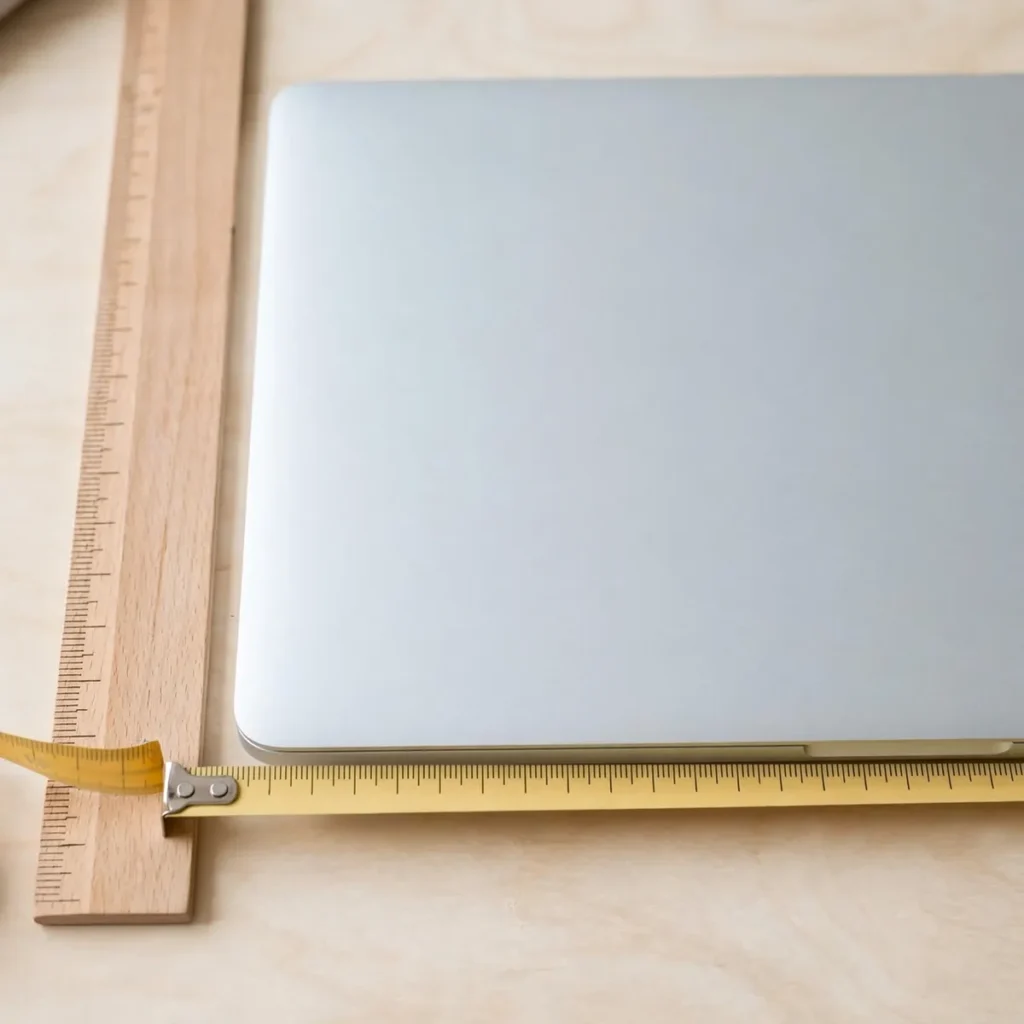
Imagine a standard 12-inch ruler. If you place another 4 inches beyond its end, you will have a total length of 16 inches. That extra section represents one-third of a foot, so 16 inches is approximately 1.33 feet.
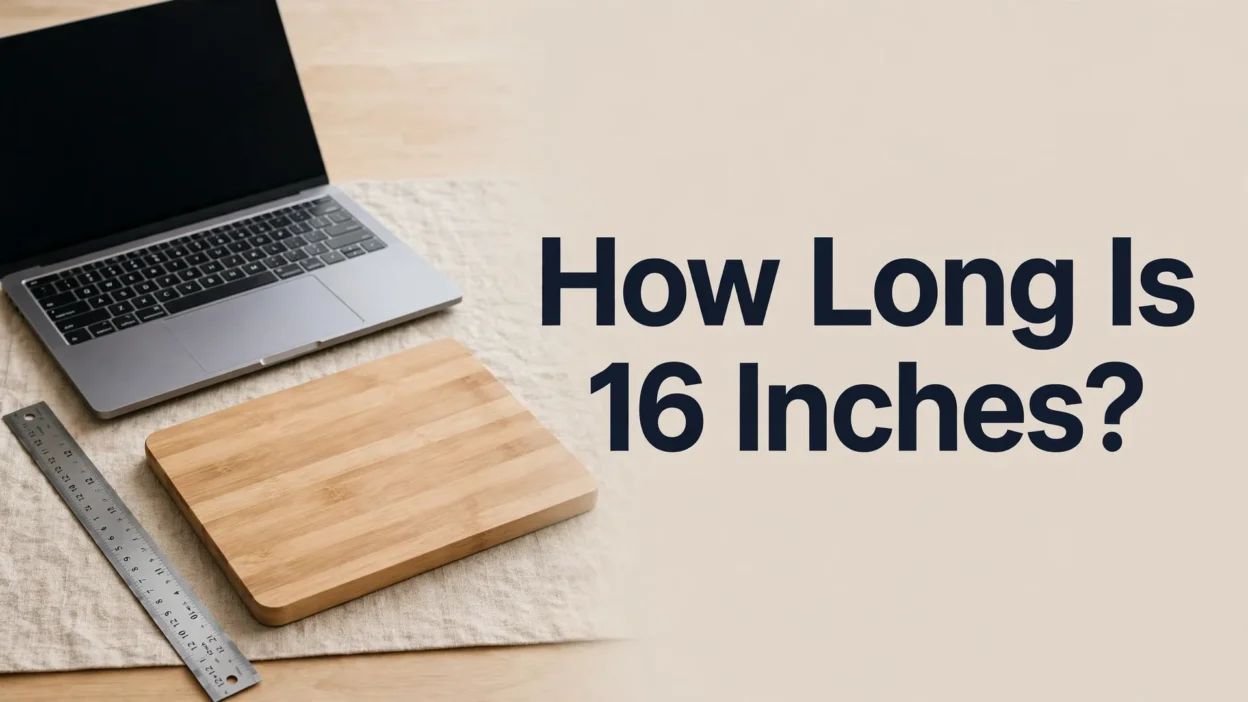
The measurement can also be visualized using everyday objects. A medium-sized laptop screen, a long kitchen knife with its handle included, or a large cutting board may have a dimension close to 16 inches, although actual sizes vary considerably. A typical school ruler combined with a short additional segment is another straightforward comparison.
Keep in mind that an object’s overall length, width, height, and diagonal measurement are different things. For example, a laptop described as 16 inches usually refers to its screen’s diagonal, not the width of the entire device. Checking which dimension is being measured helps prevent confusion.
16 Inches Conversion Chart
The table below shows how several inch measurements convert into feet, centimeters, millimeters, meters, and yards. It includes values from 0.5 inches through 24 inches, making it useful for comparing 16 inches with shorter and longer lengths.
| Inches | Feet | Centimeters | Millimeters | Meters | Yards |
|---|---|---|---|---|---|
| 0.5 | 0.0417 | 1.27 | 12.7 | 0.0127 | 0.0139 |
| 1 | 0.0833 | 2.54 | 25.4 | 0.0254 | 0.0278 |
| 2 | 0.1667 | 5.08 | 50.8 | 0.0508 | 0.0556 |
| 3 | 0.25 | 7.62 | 76.2 | 0.0762 | 0.0833 |
| 4 | 0.3333 | 10.16 | 101.6 | 0.1016 | 0.1111 |
| 5 | 0.4167 | 12.7 | 127 | 0.127 | 0.1389 |
| 6 | 0.5 | 15.24 | 152.4 | 0.1524 | 0.1667 |
| 7 | 0.5833 | 17.78 | 177.8 | 0.1778 | 0.1944 |
| 8 | 0.6667 | 20.32 | 203.2 | 0.2032 | 0.2222 |
| 9 | 0.75 | 22.86 | 228.6 | 0.2286 | 0.25 |
| 10 | 0.8333 | 25.4 | 254 | 0.254 | 0.2778 |
| 11 | 0.9167 | 27.94 | 279.4 | 0.2794 | 0.3056 |
| 12 | 1 | 30.48 | 304.8 | 0.3048 | 0.3333 |
| 13 | 1.0833 | 33.02 | 330.2 | 0.3302 | 0.3611 |
| 14 | 1.1667 | 35.56 | 355.6 | 0.3556 | 0.3889 |
| 15 | 1.25 | 38.1 | 381 | 0.381 | 0.4167 |
| 16 | 1.3333 | 40.64 | 406.4 | 0.4064 | 0.4444 |
| 17 | 1.4167 | 43.18 | 431.8 | 0.4318 | 0.4722 |
| 18 | 1.5 | 45.72 | 457.2 | 0.4572 | 0.5 |
| 19 | 1.5833 | 48.26 | 482.6 | 0.4826 | 0.5278 |
| 20 | 1.6667 | 50.8 | 508 | 0.508 | 0.5556 |
| 21 | 1.75 | 53.34 | 533.4 | 0.5334 | 0.5833 |
| 22 | 1.8333 | 55.88 | 558.8 | 0.5588 | 0.6111 |
| 23 | 1.9167 | 58.42 | 584.2 | 0.5842 | 0.6389 |
| 24 | 2 | 60.96 | 609.6 | 0.6096 | 0.6667 |
The values are rounded where necessary, particularly for feet and yards. Metric conversions are based on the exact relationship between inches and centimeters.
Simple Conversion Formulas
You do not need an online calculator to convert 16 inches into other units. A few basic formulas are enough to handle most everyday measurements.
Inches to feet: Divide the number of inches by 12.
16 ÷ 12 = 1.3333 feet, or 1 foot and 4 inches.
Inches to centimeters: Multiply the number of inches by 2.54.
16 × 2.54 = 40.64 centimeters.
Inches to millimeters: Multiply the number of inches by 25.4.
16 × 25.4 = 406.4 millimeters.
Inches to meters: Multiply by 0.0254.
16 × 0.0254 = 0.4064 meters.
Inches to yards: Divide the number of inches by 36.
16 ÷ 36 = approximately 0.4444 yards.
For conversions in the opposite direction, divide centimeters by 2.54 to obtain inches. Similarly, multiply feet by 12 when converting feet into inches.
Everyday Objects That Help You Visualize 16 Inches
A familiar object can make an unfamiliar measurement easier to imagine. Instead of trying to picture an abstract number, you can compare 16 inches with something you already recognize.
The following examples provide practical reference points. Some objects may be close to 16 inches in one dimension, while others can be combined or measured along a particular edge to illustrate the length.
Remember that these comparisons are estimates rather than universal product specifications. Manufacturers produce different sizes, and an object’s stated dimension may refer to its height, width, depth, diagonal, or total length.
1. A Large Laptop Screen
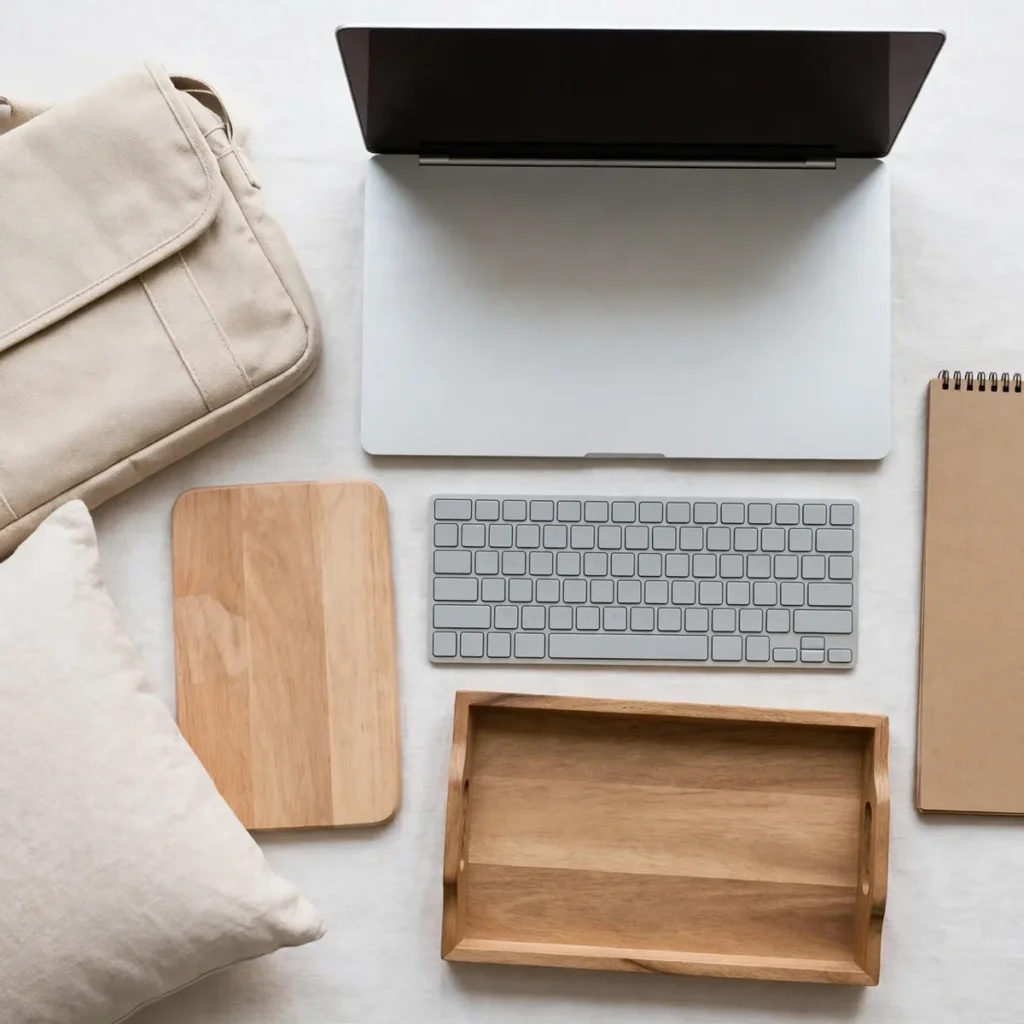
A laptop marketed as having a 16-inch screen provides a useful way to understand this measurement. Many modern laptops are available with displays described by their diagonal measurement, making 16 inches a familiar specification in consumer electronics.
However, a 16-inch laptop screen does not mean the laptop is exactly 16 inches wide or long. The screen measurement runs diagonally between opposite corners of the visible display area. The complete laptop also includes a frame, keyboard, and other components.
How to measure it: Measure diagonally across the visible screen from one corner to the opposite corner. Avoid including the outer frame unless you specifically want the overall diagonal dimension.
Manufacturer variation: Display aspect ratios, bezels, and chassis designs vary. Two laptops with 16-inch screens can have different overall widths, depths, and thicknesses.
This comparison is especially helpful when shopping for electronics or estimating how much desk space a laptop may need. For precise fit, check the manufacturer’s listed body dimensions instead of relying on screen size alone.
2. A Standard School Ruler Plus Four Inches
A standard 12-inch ruler is one of the easiest reference objects for visualizing 16 inches. Since 12 inches equal exactly 1 foot, you only need to imagine an additional 4 inches to reach the target length.
This comparison is more reliable than many object-based estimates because the ruler is already marked in inches. It also gives you a convenient starting point for measuring furniture edges, craft materials, or small household items.
How to measure it: Place the ruler at the beginning of the object and mark its 12-inch endpoint. Continue measuring another 4 inches from that point. If the ruler has clear inch markings, you can check the full length directly.
Manufacturer variation: School rulers may differ in material, shape, and thickness, but a properly manufactured 12-inch ruler should have a measuring scale that represents 12 inches. Check that the scale starts at zero rather than at the physical edge.
For anyone learning customary measurements, this is one of the simplest ways to understand why 16 inches equals 1 foot and 4 inches.
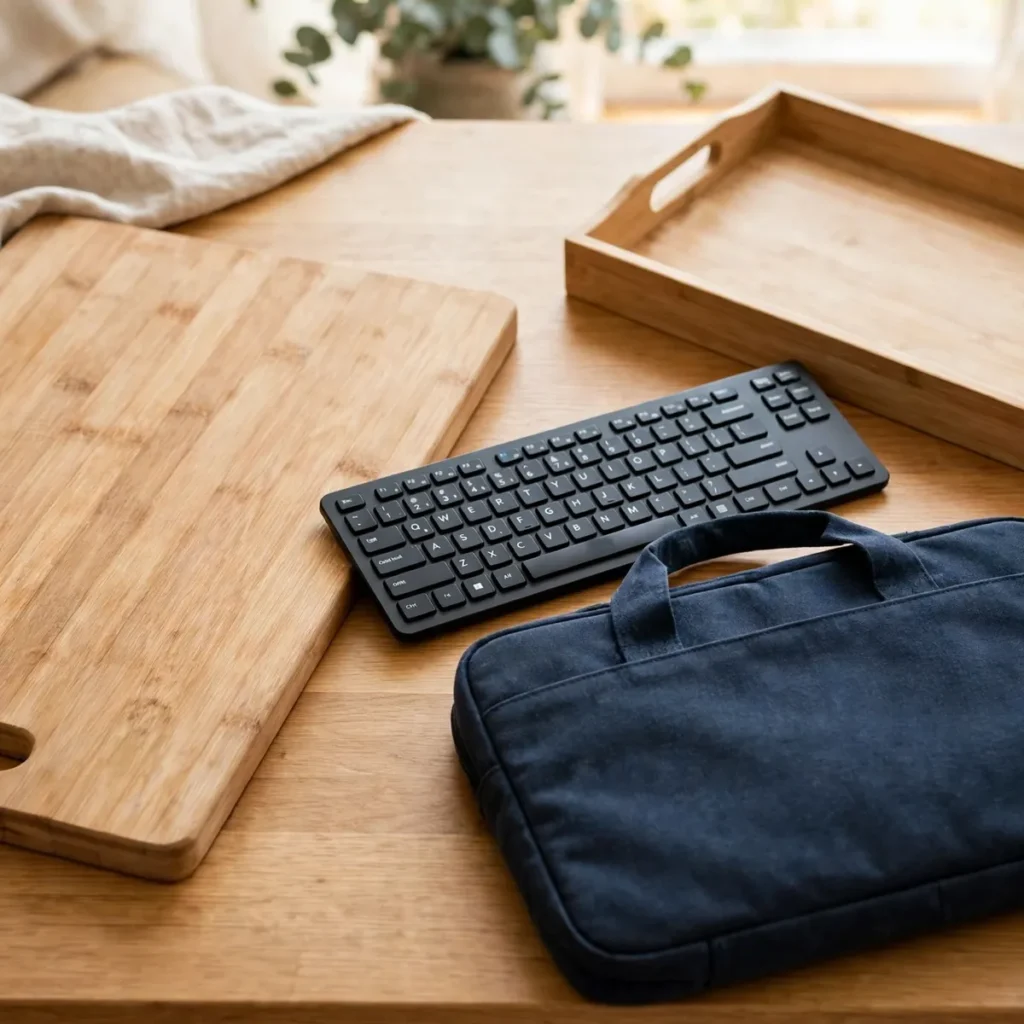
3. A Large Cutting Board
Some large cutting boards have a length or width close to 16 inches. These boards provide a useful household comparison because their rectangular surfaces make it easy to picture a specific distance along one edge.
A board measuring approximately 16 inches across can help you estimate the size of a kitchen work surface, the space needed for food preparation, or the dimensions of a storage shelf.
How to measure it: Place a measuring tape along the longest edge, beginning at one corner and ending at the opposite corner. Keep the tape straight and follow the actual edge rather than measuring diagonally across the surface.
Manufacturer variation: Cutting boards come in numerous shapes and sizes. Wooden, plastic, bamboo, and composite boards may have different dimensions, so do not assume that every large board is 16 inches long.
This example is most useful when you have a board available to inspect. A similar-looking board in a product photograph may be significantly shorter or longer than the one in your kitchen.
4. A Long Kitchen Knife With Its Handle
A large kitchen knife measured from the end of its handle to the tip of its blade can provide a rough visual reference for a length approaching 16 inches. The total length of some specialty or carving knives may be around this range, although many common chef’s knives are shorter.
This example is particularly useful because the measurement includes the complete object rather than just its working edge. It can help illustrate the difference between a blade’s length and a tool’s overall length.
How to measure it: Place the knife on a stable, flat surface and measure from the farthest point of the handle to the tip of the blade. Keep fingers away from the sharp edge and use a ruler or tape measure without pressing against the blade.
Manufacturer variation: Knife dimensions vary according to the intended use, blade design, and handle construction. A knife advertised with a particular blade length may have a much greater overall length.
Always check whether a product specification refers to blade length or total length before using this comparison.
5. A Large Computer Keyboard
A full-size computer keyboard can offer a helpful comparison for a length of 16 inches. Some standard keyboards measure close to this length, especially models with a number pad on the right side.
The long horizontal layout makes a keyboard easy to compare with the width of a desk shelf, a storage compartment, or a narrow work surface. It is also an object many people use daily, so the general scale is familiar.
How to measure it: Measure horizontally from the keyboard’s leftmost outer edge to its rightmost outer edge. Include the number pad and any protruding housing if you want the overall width.
Manufacturer variation: Compact keyboards, tenkeyless models, ergonomic designs, and gaming keyboards can have substantially different dimensions. Even two full-size keyboards may vary because of their bezels, media controls, and casing.
For desk planning, measure the actual keyboard you own. A product’s key layout does not provide enough information to determine its exact overall width.
6. A Medium-Sized Laptop Bag
Some medium-sized laptop bags have an exterior width or length around 16 inches. This can make them useful for visualizing how much space a 16-inch object occupies when placed on a desk, packed in a suitcase, or stored on a shelf.
A bag is also a practical example of why external dimensions matter. The interior compartment may be smaller than the outside measurements because of padding, seams, and protective panels.
How to measure it: Lay the empty bag flat and measure its widest horizontal dimension. For a more complete size check, record its height and depth as well.
Manufacturer variation: Bag dimensions depend on the intended laptop size, material thickness, pocket arrangement, and design. A bag described as suitable for a 16-inch laptop does not necessarily measure exactly 16 inches across.
Before purchasing a bag for a device, compare the device’s actual width and depth with the bag’s usable interior dimensions.
7. A Large Pillow
A rectangular decorative pillow or small cushion may have one side close to 16 inches. This makes soft furnishings another accessible way to imagine the measurement, particularly when you are arranging cushions, selecting covers, or planning a small storage space.
Unlike rigid objects, however, a pillow changes shape when it is squeezed or placed against another surface. Its apparent dimensions may not remain constant.
How to measure it: Lay the pillow flat without compressing it and measure from one side to the opposite side. Measure the fabric cover rather than the curved distance over the pillow’s surface.
Manufacturer variation: Cushions are sold in many square and rectangular formats. Their finished dimensions may also differ slightly from their advertised sizes because of filling, seams, and manufacturing tolerances.
A 16-inch pillow comparison is useful for a rough estimate, but it should not replace an accurate measurement when ordering a fitted cover or planning a tightly sized space.
8. A Large Serving Tray
A large serving tray may have a long edge close to 16 inches. Its flat, rigid surface provides a convenient visual reference for the distance, particularly when you are organizing a countertop or estimating the area required for serving food.
Trays also demonstrate the difference between length and width. A rectangular tray may measure approximately 16 inches along its longest side while being considerably narrower across the shorter side.
How to measure it: Place the tray on a flat surface and measure from the outer edge of one end to the outer edge of the opposite end. If you are checking whether it fits inside a cabinet, account for handles and raised edges.
Manufacturer variation: Tray dimensions vary according to their purpose, materials, and shape. A decorative tray may have rounded corners or projecting handles that change its overall footprint.
For storage planning, use the complete external dimensions rather than the usable flat surface alone.
9. A Small Wall Shelf
A compact floating shelf may be approximately 16 inches wide. This makes a shelf a useful example when estimating the horizontal space occupied by a short storage surface.
The comparison is particularly relevant for bedrooms, bathrooms, home offices, and small apartments where every inch of available wall space can matter. A shelf measuring 16 inches across can hold a few small objects, depending on its depth and weight capacity.
How to measure it: Measure the shelf horizontally from its leftmost edge to its rightmost edge. If the shelf has brackets or projecting supports, measure those separately when checking the space needed for installation.
Manufacturer variation: Shelf widths vary widely, and products with the same nominal width may have different actual dimensions. Thickness, depth, mounting hardware, and decorative edges can also affect installation.
Always check the product specifications and available wall space before drilling holes or purchasing a shelf.
10. A Large Drawing Pad
A large drawing pad or sketchbook may have a side measuring close to 16 inches. This makes it a convenient comparison for artists, students, and anyone working with paper-based projects.
The long edge of a drawing pad can help you picture the space needed for a poster draft, illustration, school project, or craft layout. It also provides a useful reference when estimating how much paper is required for a design.
How to measure it: Measure along one edge of the pad, from the outside of one corner to the outside of the opposite corner. If you are measuring usable paper, measure the sheet itself rather than the binding.
Manufacturer variation: Sketchbooks come in portrait, landscape, square, and specialty formats. Their cover dimensions may be slightly larger than the pages inside, so the exact measurement depends on what you need to fit.
For artwork, framing, or printing, check the dimensions of the actual paper rather than assuming that all large drawing pads share a standard size.
How to Estimate 16 Inches Without a Ruler
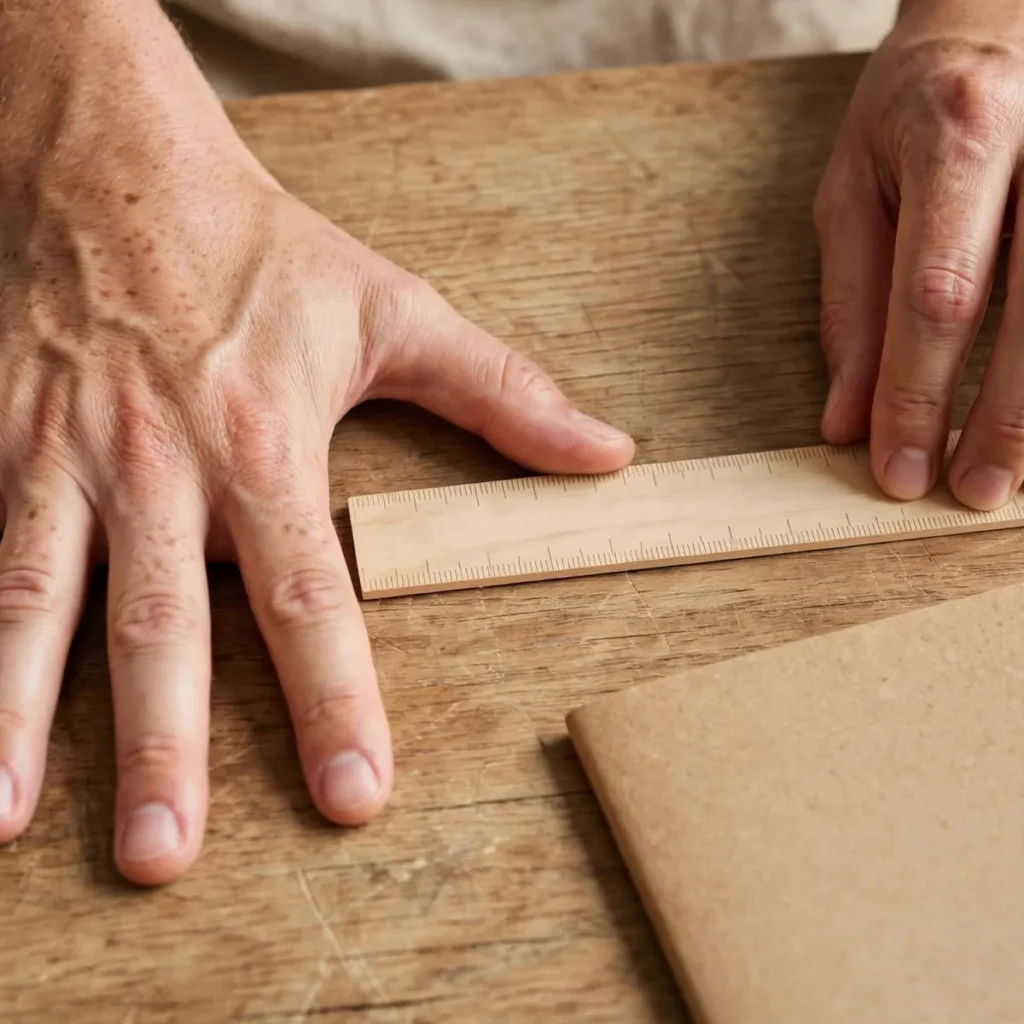
Sometimes you need to estimate a measurement when a ruler or tape measure is unavailable. Although these techniques will not be as accurate as a proper measuring tool, they can help you judge whether an object is approximately 16 inches long.
Use a One-Foot Reference
If you can visualize a standard 12-inch ruler, begin with one foot and add another 4 inches. This is the simplest mental method because it uses an exact relationship between inches and feet.
For example, when looking at a shelf, imagine a 12-inch segment along its edge. The remaining distance needed to reach 16 inches is one-third of that initial foot-long segment.
The result is only an estimate unless you have a known reference nearby. Still, it works well for rough comparisons and preliminary planning.
Compare the Length With a Known Object
Look for an object whose dimensions you know, such as a school ruler, a measured notebook, or a cutting board you have previously checked.
Imagine placing that reference object alongside the item you want to estimate. If the target object is about 4 inches longer than a 12-inch ruler, its total length is close to 16 inches.
Be careful when using memory alone. Objects can appear larger or smaller depending on their distance from your eyes and the angle from which you view them.
Use Your Hand as a Rough Guide
Your hand can serve as an approximate measuring reference, but hand sizes vary considerably. Measure the span from your thumb to your little finger when your hand is spread comfortably, then compare that span with the length you need to estimate.
If your hand span is around 8 inches, two such spans placed end to end would total approximately 16 inches. Someone with a smaller hand span would need more than two spans, while someone with a larger span might need fewer.
This method is convenient when you have no other reference available. However, it is not reliable enough for cutting materials, fitting furniture, or making precise purchases.
Use Forearm Length as a Visual Reference
Some people find it helpful to compare an object with the distance from the wrist to the elbow. That distance varies from person to person, so it should be treated as a personal reference rather than a universal measurement.
If your forearm measures approximately 10 inches, 16 inches would be about one and three-fifths of that length. If it measures 8 inches, the target distance would be twice your forearm length.
You can check your personal reference once with a tape measure and remember it for future estimates. This makes the method more consistent than relying on a general assumption about human proportions.
Break the Distance Into Smaller Sections
Sixteen inches can be divided into manageable segments: eight inches twice, four inches four times, or two inches eight times.
Thinking in smaller increments can help you estimate the length of a countertop, piece of cardboard, or other object. For example, if a surface appears to fit four sections of approximately 4 inches each, its total length is about 16 inches.
This technique is more effective when you have a reference that helps you judge each segment. Without one, small estimation errors can accumulate across the full distance.
Check Your Estimate Before Making a Final Cut
Visual estimation is useful for planning, but it should not replace a measuring tool when accuracy matters. A difference of even half an inch can affect how a shelf fits, whether a board reaches its intended position, or whether an item fits inside a bag.
Whenever possible, confirm the length with a ruler or tape measure before cutting, drilling, assembling, or purchasing materials. Use estimation to get close, then measure to verify.
Frequently Asked Questions About 16 Inches
How many feet is 16 inches?
Sixteen inches equals 1.3333 feet, or exactly 1 foot and 4 inches. Divide 16 by 12 to convert inches into decimal feet.
How many centimeters are in 16 inches?
There are exactly 40.64 centimeters in 16 inches. The calculation is 16 multiplied by 2.54, because one inch equals 2.54 centimeters.
How many millimeters is 16 inches?
Sixteen inches equals 406.4 millimeters. Multiply the inch measurement by 25.4 to convert it into millimeters.
Is 16 inches longer than one foot?
Yes. One foot equals 12 inches, so 16 inches is 4 inches longer than one foot. The total measurement is 1 foot and 4 inches.
Is 16 inches close to half a meter?
Yes, although it is slightly shorter. Half a meter equals 50 centimeters, while 16 inches equals 40.64 centimeters. The difference is 9.36 centimeters.
What everyday object is about 16 inches long?
A large keyboard, a cutting board, a small wall shelf, or the longest edge of a serving tray may measure around 16 inches. Exact dimensions depend on the particular product, so these are visual comparisons rather than guaranteed measurements.
Is a 16-inch laptop actually 16 inches wide?
Not necessarily. A laptop’s advertised screen size is generally measured diagonally across the display. The complete device may be wider or narrower than 16 inches, depending on its design and screen proportions.
How can I measure 16 inches without a measuring tape?
Start with a known 12-inch reference and estimate another 4 inches. You can also compare the target length with a measured object or use your hand span if you know its approximate size. These approaches are suitable for rough estimates, not precision work.
How many yards is 16 inches?
Sixteen inches equals approximately 0.4444 yards. Since one yard contains 36 inches, divide 16 by 36 to obtain the decimal value.
What is 16 inches in meters?
Sixteen inches equals 0.4064 meters. Multiply the inch measurement by 0.0254 to convert it directly into meters.
Why do product dimensions sometimes differ from the advertised size?
Manufacturers may use nominal dimensions, rounded measurements, or different reference points. A product’s stated length might describe its usable surface, exterior dimensions, screen diagonal, or another specific feature. Check the product’s technical specifications to identify exactly what is being measured.
Can I estimate 16 inches using my hand?
Yes, as long as you treat the result as an approximation. If your spread hand measures about 8 inches from thumb to little finger, two hand spans would be close to 16 inches. Individual hand sizes vary, so the method is not universally accurate.
Final Thoughts
Sixteen inches is a practical length that is easy to understand once you connect it with familiar objects and simple conversions. It equals 1 foot and 4 inches, 40.64 centimeters, 406.4 millimeters, or 0.4064 meters. These equivalents make it easier to switch between customary and metric measurements when shopping, planning projects, or interpreting product specifications.
Everyday references such as a large keyboard, a cutting board, a small shelf, or a drawing pad can help you picture the distance. Remember that these objects vary in size, so they work best as visual guides rather than exact standards.
When precision matters, a ruler or tape measure is the most dependable choice. For quick estimates, however, dividing the length into smaller sections or comparing it with a familiar 12-inch ruler can provide a useful starting point.
Learning how measurements relate to the objects around you also builds a better understanding of the wider world of measurement. With a few reliable reference points and basic conversion formulas, estimating 16 inches becomes a straightforward everyday skill.

Grace is a lifestyle writer from California who loves starting mornings with positivity. At Mornetic, she shares uplifting quotes and cheerful messages to brighten your day.