Three inches is a relatively short length, but it is useful in many everyday situations, from measuring small household items to checking the dimensions of gadgets and accessories. If you are wondering how long 3 inches is, it equals 7.62 centimeters (cm), 76.2 millimeters (mm), 0.25 feet (ft), and 0.0762 meters (m). This measurement is also one-quarter of a foot.
Understanding this length becomes easier when you compare it with familiar objects, such as a small sticky note, a standard playing card’s width, or a compact household accessory. Whether you need an accurate measurement for a project or simply want to picture the size, this guide explains what 3 inches looks like and how to estimate it without a ruler.
What Does 3 Inches Look Like as a Length?
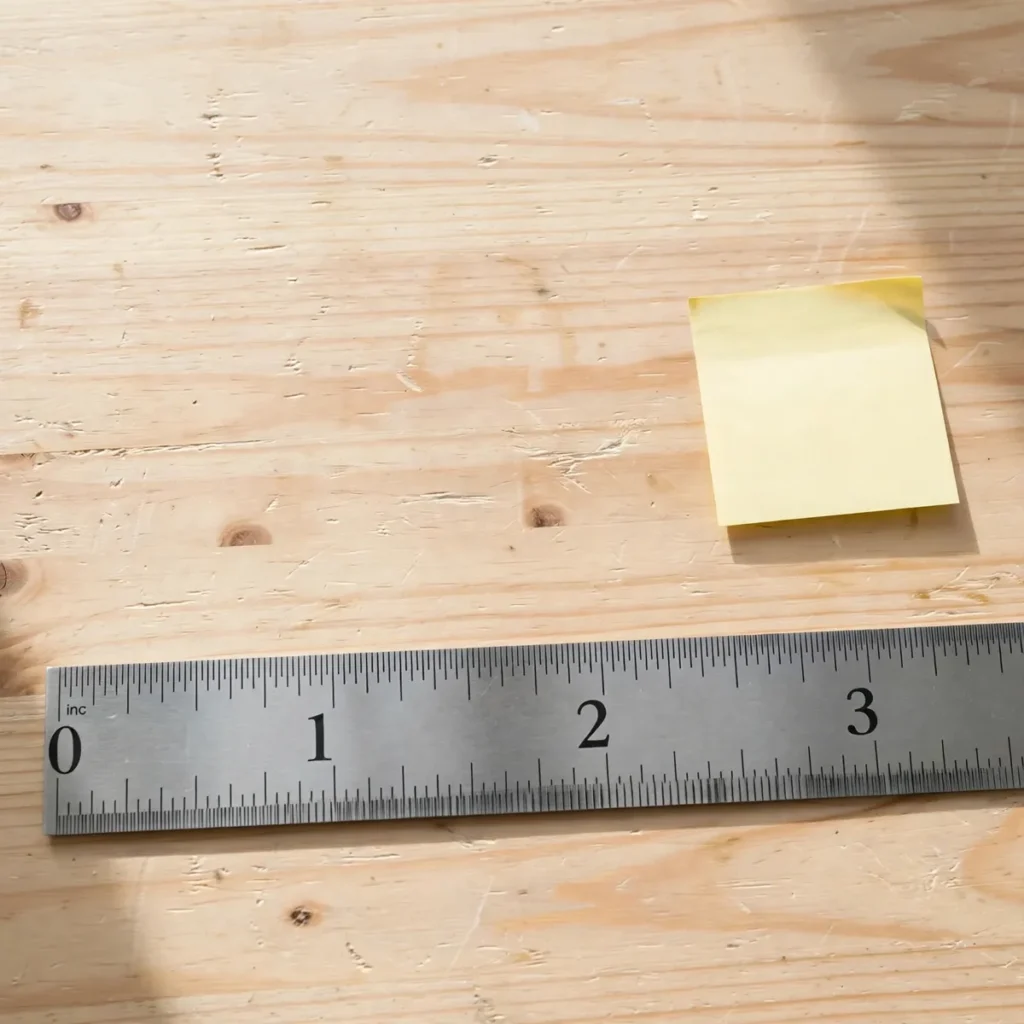
Three inches is a short distance that you can comfortably cover with part of your hand. It is equal to one-quarter of a foot and represents a little less than the width of many adult palms. Although it may seem like a small measurement, three inches can make a noticeable difference when measuring objects, checking product dimensions, or planning how much space something needs.
To visualize this length, imagine a line extending from one end to the other over a distance of 3 inches. It is longer than a typical large paper clip but shorter than the width of many smartphones. It is also approximately the length of a small household accessory or compact office supply.
Here are the main equivalents of 3 inches:
- Centimeters: 7.62 cm
- Millimeters: 76.2 mm
- Feet: 0.25 ft
- Meters: 0.0762 m
- Yards: 0.0833 yd
- Fraction of a foot: One-quarter of a foot
- Fraction of a yard: One-twelfth of a yard
The inch is commonly used in the United States for measuring everyday objects, furniture, clothing, screens, and household products. Centimeters and millimeters are widely used in the metric system and are particularly helpful when greater measurement precision is needed.
Three inches can also be divided into smaller sections. For example, half an inch fits into this length six times, while a quarter of an inch fits into it twelve times. These smaller divisions are useful when measuring objects that do not have perfectly rounded dimensions.
Inches to Feet, Centimeters, Millimeters, Metres, and Yards Conversion Chart
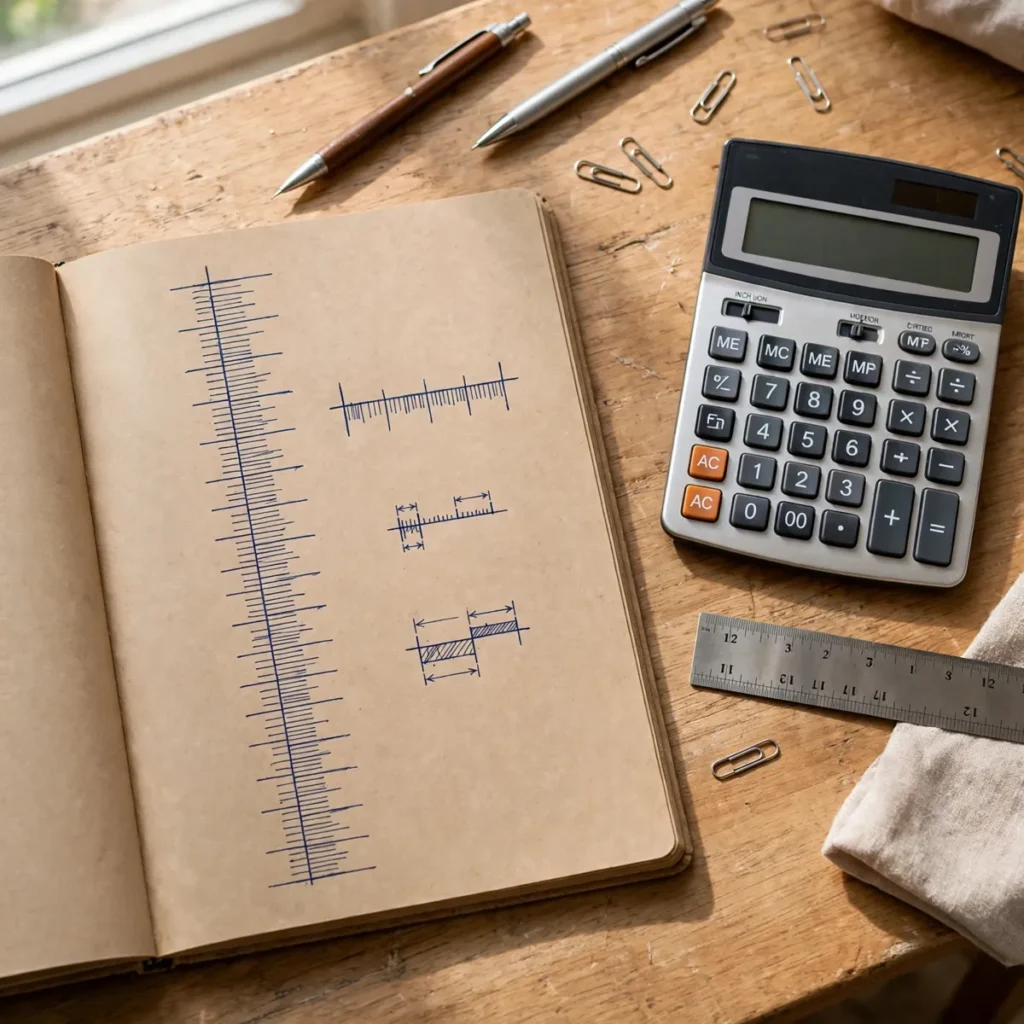
A conversion chart makes it easier to compare inches with other measurement units. The following table includes measurements from 0.5 inches through 12 inches, increasing in half-inch increments.
It covers several commonly used units, including feet, centimeters, millimeters, meters, and yards. You can use it to find the equivalent of 3 inches or check other measurements without calculating each conversion yourself.
| Inches | Feet | Centimeters (cm) | Millimeters (mm) | Metres (m) | Yards |
|---|---|---|---|---|---|
| 0.5 | 0.0417 | 1.27 | 12.7 | 0.0127 | 0.0139 |
| 1.0 | 0.0833 | 2.54 | 25.4 | 0.0254 | 0.0278 |
| 1.5 | 0.1250 | 3.81 | 38.1 | 0.0381 | 0.0417 |
| 2.0 | 0.1667 | 5.08 | 50.8 | 0.0508 | 0.0556 |
| 2.5 | 0.2083 | 6.35 | 63.5 | 0.0635 | 0.0694 |
| 3.0 | 0.2500 | 7.62 | 76.2 | 0.0762 | 0.0833 |
| 3.5 | 0.2917 | 8.89 | 88.9 | 0.0889 | 0.0972 |
| 4.0 | 0.3333 | 10.16 | 101.6 | 0.1016 | 0.1111 |
| 4.5 | 0.3750 | 11.43 | 114.3 | 0.1143 | 0.1250 |
| 5.0 | 0.4167 | 12.70 | 127.0 | 0.1270 | 0.1389 |
| 5.5 | 0.4583 | 13.97 | 139.7 | 0.1397 | 0.1528 |
| 6.0 | 0.5000 | 15.24 | 152.4 | 0.1524 | 0.1667 |
| 6.5 | 0.5417 | 16.51 | 165.1 | 0.1651 | 0.1806 |
| 7.0 | 0.5833 | 17.78 | 177.8 | 0.1778 | 0.1944 |
| 7.5 | 0.6250 | 19.05 | 190.5 | 0.1905 | 0.2083 |
| 8.0 | 0.6667 | 20.32 | 203.2 | 0.2032 | 0.2222 |
| 8.5 | 0.7083 | 21.59 | 215.9 | 0.2159 | 0.2361 |
| 9.0 | 0.7500 | 22.86 | 228.6 | 0.2286 | 0.2500 |
| 9.5 | 0.7917 | 24.13 | 241.3 | 0.2413 | 0.2639 |
| 10.0 | 0.8333 | 25.40 | 254.0 | 0.2540 | 0.2778 |
| 10.5 | 0.8750 | 26.67 | 266.7 | 0.2667 | 0.2917 |
| 11.0 | 0.9167 | 27.94 | 279.4 | 0.2794 | 0.3056 |
| 11.5 | 0.9583 | 29.21 | 292.1 | 0.2921 | 0.3194 |
| 12.0 | 1.0000 | 30.48 | 304.8 | 0.3048 | 0.3333 |
The chart shows that 3 inches is equivalent to 7.62 cm or 76.2 mm. It also demonstrates how inches relate to larger units. For example, 6 inches is half a foot, while 12 inches makes one complete foot.
When using the table, remember that some values have been rounded to four decimal places. This level of precision is generally sufficient for everyday comparisons and basic measurement calculations.
Formulas for Converting Inches Into Other Units
You do not need a conversion chart every time you want to change inches into another measurement unit. A few simple formulas can help you calculate the equivalent yourself.
Here are five useful conversion formulas:
- Inches to centimeters
Multiply the number of inches by 2.54.
Formula: Inches × 2.54 = Centimeters
For example:
3 × 2.54 = 7.62 cm - Inches to millimeters
Multiply the number of inches by 25.4.
Formula: Inches × 25.4 = Millimeters
For example:
3 × 25.4 = 76.2 mm - Inches to meters
Multiply the number of inches by 0.0254.
Formula: Inches × 0.0254 = Meters
For example:
3 × 0.0254 = 0.0762 m - Inches to feet
Divide the number of inches by 12.
Formula: Inches ÷ 12 = Feet
For example:
3 ÷ 12 = 0.25 ft - Inches to yards
Divide the number of inches by 36.
Formula: Inches ÷ 36 = Yards
For example:
3 ÷ 36 = 0.0833 yd (approximately)
These formulas are useful for school assignments, DIY projects, shopping, crafting, and other situations where you need to work with different measurement systems.
Everyday Objects That Are About 3 Inches Long
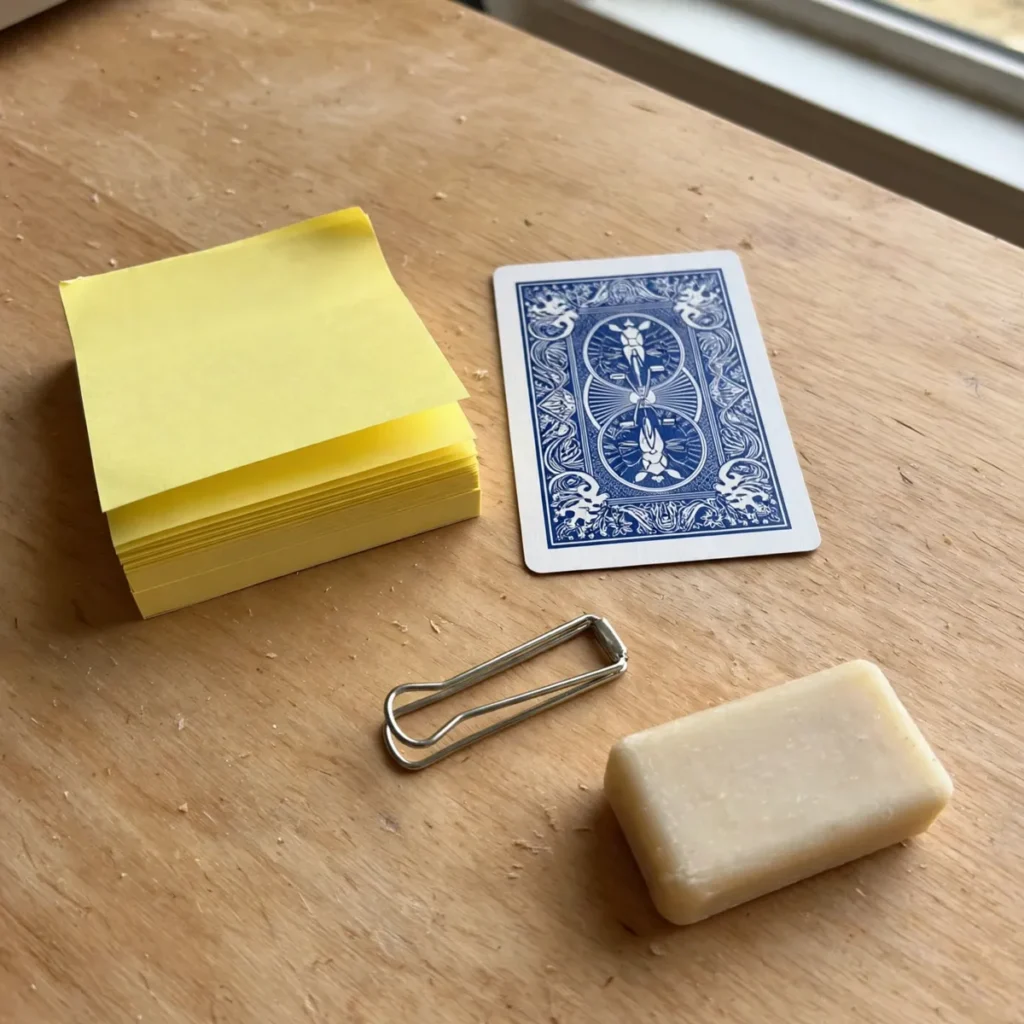
One of the easiest ways to understand a measurement is to compare it with objects you already recognize. Three inches may not be particularly long, but several everyday items have at least one dimension close to this measurement.
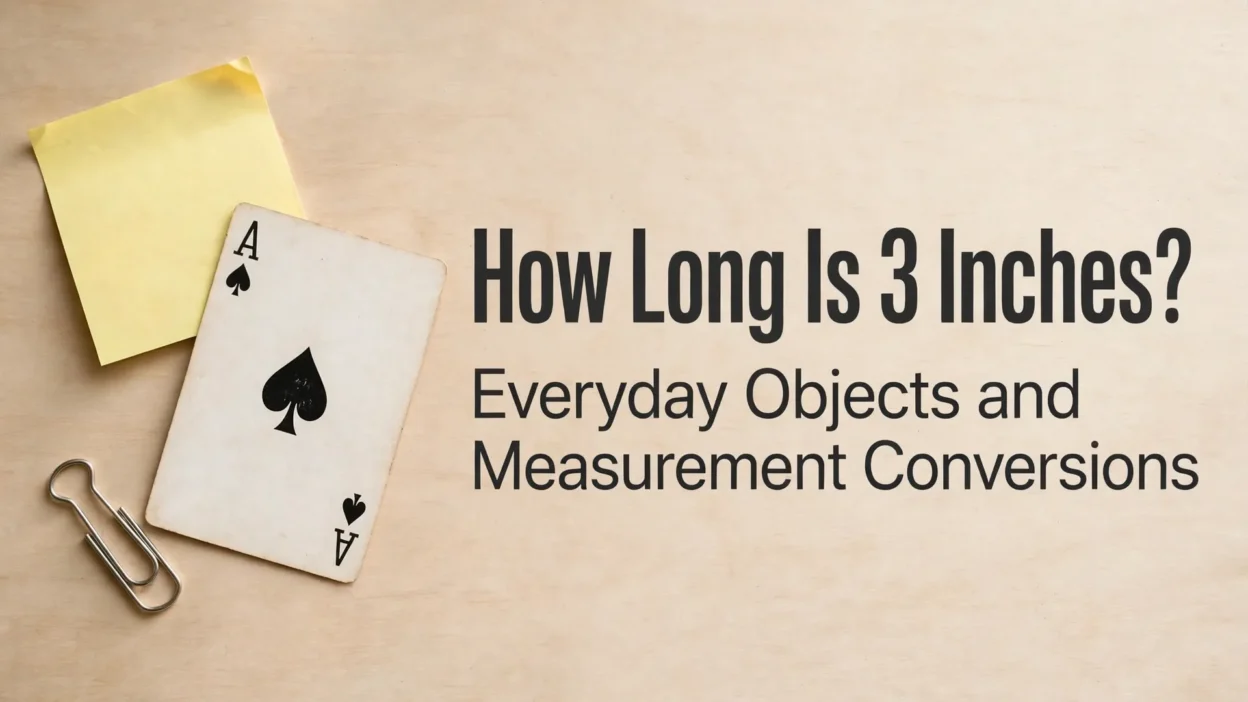
For example, some small sticky notes have sides measuring approximately 3 inches. A standard playing card is also close to 3.5 inches long, making its shorter dimension a useful reference. Small accessories, office supplies, and household items can provide additional comparisons.
These examples are helpful because you can often find them around your home without needing special measuring equipment.
However, it is important to distinguish between an exact measurement and an approximate comparison. Not every object sold under the same product category has identical dimensions. Materials, manufacturers, intended uses, and design choices can all affect size.
When using an everyday object as a reference, consider which side you are comparing. A rectangular object might be 3 inches wide but considerably longer in its other dimension.
The following ten examples provide practical ways to picture a length of approximately 3 inches.
10 Everyday Objects That Are Approximately 3 Inches Long
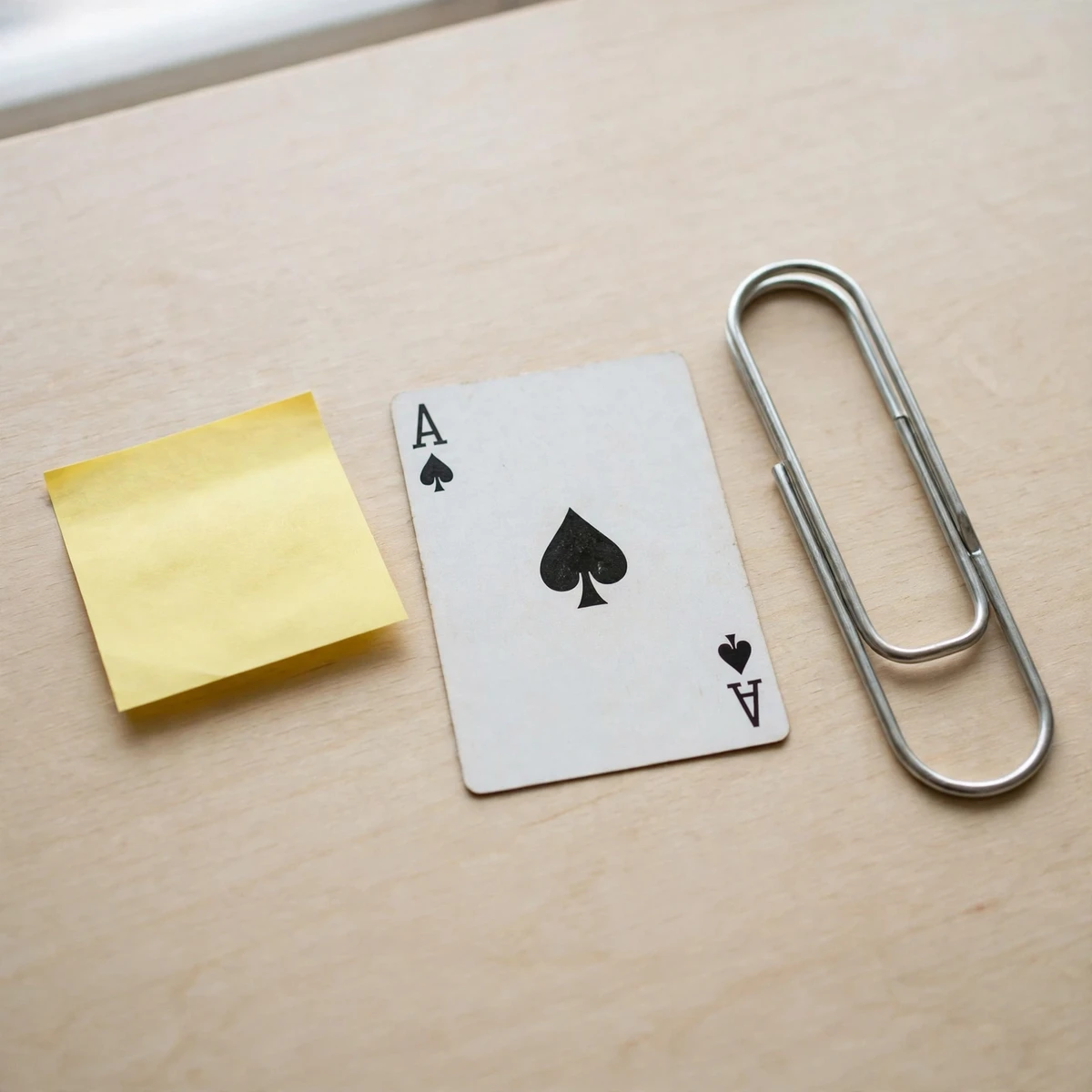
1. Small Sticky Note
A small square sticky note measuring 3 inches on each side is an excellent example of this length. It provides a simple visual reference because its width and height are identical.
To measure it, place a ruler along one edge, starting at the zero mark and extending to the opposite edge. If the sticky note measures approximately 3 inches, its side length matches the measurement you are trying to visualize.
Sticky notes are available in several sizes, including smaller square formats and larger rectangular varieties. Their dimensions can vary by manufacturer, product range, and design, so check the packaging rather than assuming every sticky note has the same measurements.
2. Standard Playing Card Width
A typical playing card measures approximately 2.5 inches wide and 3.5 inches long. Although neither dimension is exactly 3 inches, its width provides a useful reference that is only half an inch shorter.
To compare it with 3 inches, place the card beside a ruler and measure across its shorter edge. You can then imagine extending that width by another half inch.
Playing cards are useful comparison objects because most people recognize their general size. However, specialty cards, oversized playing cards, and miniature decks may have different dimensions depending on their manufacturer and design.
3. Large Paper Clip
A large paper clip can provide another familiar reference for understanding small measurements. Some larger paper clips measure close to 3 inches when measured from one end to the other.
To check its length, straighten the paper clip’s position without bending its shape and measure the longest distance between its two ends. Make sure you measure the overall length rather than following the curved wire.
Paper clips come in several sizes, and their dimensions are not standardized across every brand. Small office clips may be much shorter, while specialty clips can be considerably longer.
4. Small Kitchen Measuring Spoon
Some larger individual measuring spoons have an overall length close to 3 inches. Their handles can provide a useful comparison, particularly when you are trying to picture a short distance in the kitchen.
To measure one, place it on a flat surface and measure from the end of the handle to the furthest point of the spoon bowl. Keep the ruler parallel to the object’s longest dimension.
Measuring spoons are sold in different shapes and sizes. Some have longer handles for easier use, while compact designs are made to fit inside small containers. Their overall dimensions can therefore vary by manufacturer and design.
5. Compact USB Flash Drive
A compact USB flash drive can have a length of approximately 3 inches, although many modern models are shorter. This makes it a useful example of a small electronic accessory.
To measure one, position it on a flat surface and measure from the furthest point of the connector or protective cap to the opposite end. If the drive has a removable cover, measure the complete assembled product.
USB flash drives come in numerous designs. Some have short, low-profile bodies, while others include larger protective housings, key rings, or sliding mechanisms. Their dimensions depend on the manufacturer and product design.
6. Small Bar of Soap
Certain small travel-sized bars of soap have a length close to 3 inches. These products are designed to be compact and convenient, making them a practical household comparison.
Place the soap on a flat surface and measure its longest straight dimension. If it has rounded corners or an irregular shape, measure between the two furthest points along its length.
Soap bars vary significantly depending on their purpose and packaging. Travel-sized versions are often smaller than regular household bars, and different manufacturers use different shapes and dimensions.
7. Pocket-Sized Notebook
Some miniature notebooks have a width or height close to 3 inches. These compact stationery products are commonly used for quick notes, reminders, and short lists.
To measure a notebook, close its cover and place it on a table. Measure the shorter side if you want to compare its width with 3 inches, or measure the longer side if you want to check its overall height.
Notebook sizes vary according to their intended use. Pocket notebooks, miniature journals, and small memo pads can have different dimensions depending on the manufacturer and design.
8. Small Hair Claw Clip
A compact hair claw clip may measure approximately 3 inches from one end to the other. These accessories are designed to hold sections of hair in place and come in several sizes.
To measure one, close the clip and place it on a flat surface. Measure the longest distance across its body, from the outermost point at one end to the opposite end.
Some hair clips are designed for short or fine hair, while others are larger and intended for thicker hair or more secure hairstyles. Their measurements can vary considerably by manufacturer, material, and design.
9. Small Keychain Accessory
Some decorative keychain accessories have an overall length close to 3 inches. These can include small charms, novelty items, and compact accessories attached to a metal key ring.
To measure a keychain, lay it flat and measure its longest dimension. Decide whether you want to include the metal ring and attachment hardware, because these parts can add to the overall length.
Keychains are available in countless shapes and styles. Some are only an inch long, while others extend several inches. Their size depends on the manufacturer, materials, and decorative design.
10. Compact Measuring Tape Case
Some small measuring tape cases have a width or height close to 3 inches. These portable tools are commonly kept in garages, workshops, and household toolboxes.
Place the case on a flat surface and measure its widest straight dimension. If the case is circular or oval, measure across its diameter at the widest point.
Measuring tape cases are available in different sizes depending on the length of tape they contain and the design of the housing. Compact models may be around 3 inches across, while larger professional versions can be noticeably bigger.
How to Estimate 3 Inches Without a Ruler
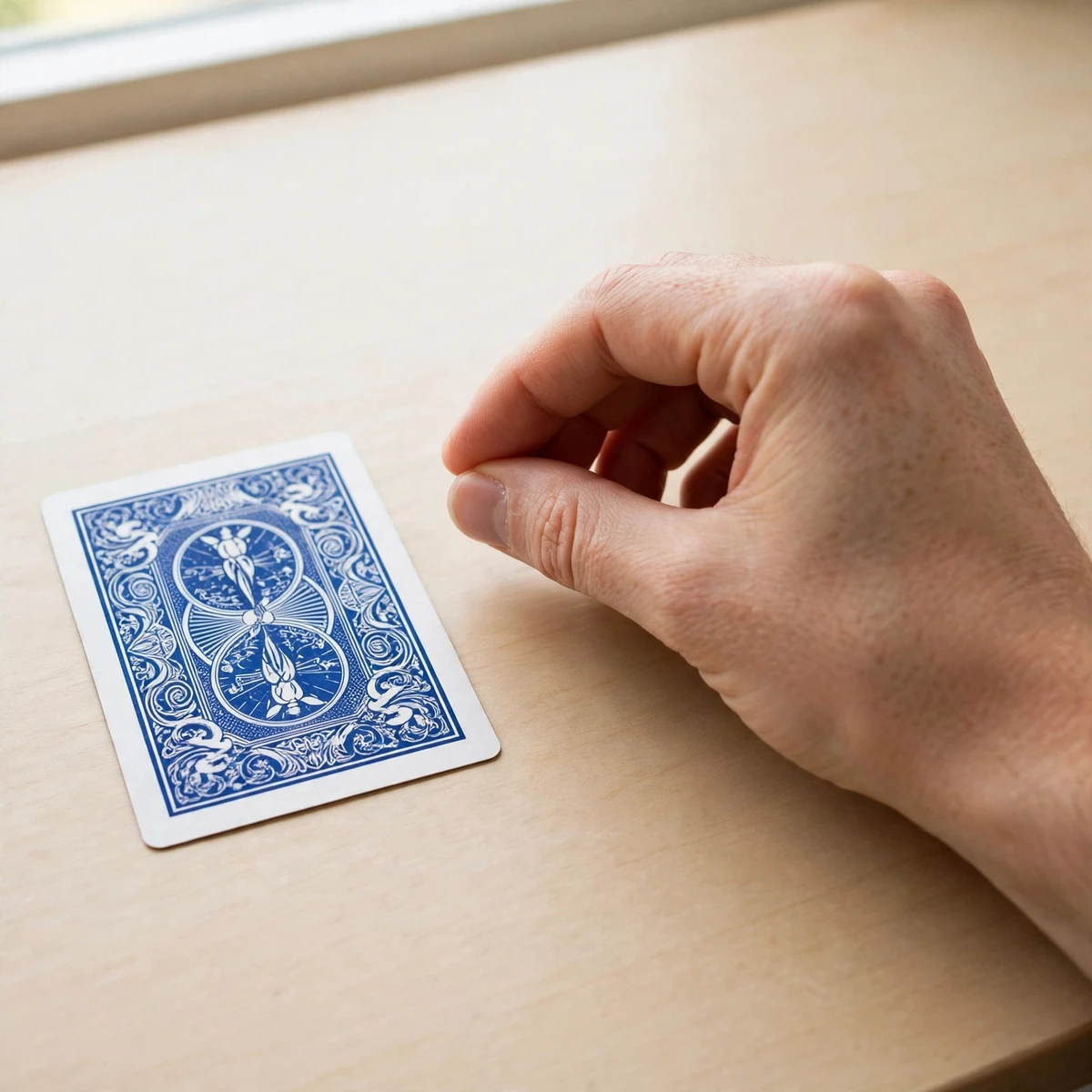
You do not always need a ruler or measuring tape to estimate a short distance. Several everyday methods can help you picture approximately 3 inches when measuring equipment is unavailable.
These techniques are especially useful when shopping, arranging household items, completing small DIY projects, or checking whether an object will fit into a particular space.
However, remember that estimating is not the same as taking an accurate measurement. If precision matters, use a properly marked ruler or measuring tool.
1. Use the Width of Your Fingers
Your fingers can provide a convenient reference for estimating short lengths. Depending on your hand size, the width of two or three fingers placed together may approach 3 inches.
Place your fingers side by side without leaving gaps between them. Compare their combined width with the distance you want to estimate.
For a better result, measure your fingers once using a ruler so you know how their combined width compares with 3 inches.
Finger sizes differ from person to person, so this method should be treated as a rough estimate rather than an exact measurement.
2. Compare the Length With a Playing Card
A standard playing card is approximately 3.5 inches long and 2.5 inches wide. Its shorter side provides a useful reference for estimating 3 inches.
Imagine a distance slightly longer than the card’s width. The additional half inch represents the difference between 2.5 inches and 3 inches.
If you have a playing card nearby, you can place it beside the object and visually compare their dimensions. This works best when both objects are placed on the same flat surface.
3. Use a Three-Inch Sticky Note
If you have square sticky notes at home, check whether their packaging identifies them as 3-inch notes.
A verified 3-inch sticky note can serve as a direct reference. Place it next to the object you want to estimate and compare their corresponding sides.
This is particularly useful because the sticky note provides a square measurement with clearly defined edges. However, always check its actual dimensions, as sticky notes are available in many different sizes.
4. Estimate Using a Smartphone
A smartphone can help you visualize short measurements because its physical dimensions are relatively easy to check.
Some phone models have a width close to 3 inches, although many are narrower. You can look up the manufacturer’s specifications or measure your phone once with a ruler to establish its dimensions.
After you know the width of your device, use it as a comparison when estimating other objects.
Do not assume that every smartphone is the same size. Screen dimensions and overall body measurements also differ, so use the physical width rather than the advertised screen size.
5. Use a Bank Card as a Reference
A typical payment card is approximately 3.37 inches long and 2.125 inches wide. Although its length is slightly greater than 3 inches, it can still help you visualize the measurement.
Place the card beside the object you want to estimate. A distance of 3 inches is slightly shorter than the card’s longest side.
This method is convenient because payment cards are commonly carried in wallets and purses. Just remember that some specialty cards and access cards may have different dimensions.
6. Compare the Distance With Your Thumb
The length of an adult thumb can provide a rough visual reference for estimating a few inches.
Depending on your hand size, the distance from the thumb’s tip to a particular joint may represent a useful fraction of 3 inches. You can also use the entire thumb length as a comparison after checking it against a ruler.
Avoid assuming that everyone’s thumb has the same length. Hand proportions vary, so this method works best when you have already established your own thumb measurement.
7. Use a Printable Measurement Guide
Another option is to use a measurement guide printed on paper. A properly scaled guide can provide an accurate visual reference for several common lengths, including 3 inches.
When printing, make sure the document is set to its actual size rather than being automatically enlarged or reduced to fit the page.
You can check the printed result against a known measurement before relying on it. Printer settings, paper scaling, and document formatting can affect the final dimensions.
Frequently Asked Questions
1. How long is 3 inches in centimeters?
Three inches equals 7.62 centimeters. To convert inches into centimeters, multiply the measurement by 2.54. Therefore, 3 × 2.54 gives 7.62 cm.
2. How many millimeters are in 3 inches?
There are 76.2 millimeters in 3 inches. Since one inch equals 25.4 millimeters, multiplying 25.4 by 3 gives the correct result.
3. How many feet is 3 inches?
Three inches equals 0.25 feet, which is also one-quarter of a foot. There are 12 inches in one foot, so dividing 3 by 12 gives 0.25.
4. How many meters is 3 inches?
Three inches equals 0.0762 meters. This conversion is calculated by multiplying 3 by 0.0254, the number of meters in one inch.
5. Is 3 inches the same as 7.5 centimeters?
Not exactly. Three inches equals 7.62 centimeters, which is slightly longer than 7.5 centimeters. The difference is 0.12 centimeters, or 1.2 millimeters.
6. What common household object is 3 inches long?
Several small household and office objects can have a dimension close to 3 inches. Examples include certain sticky notes, compact accessories, small paper clips, and travel-sized products. Exact measurements depend on the specific item.
7. Is 3 inches considered a long measurement?
No. Three inches is generally considered a short measurement. It is useful for describing small objects, compact accessories, and short distances rather than larger household items or furniture.
8. How can I measure 3 inches without a ruler?
You can estimate 3 inches by comparing the distance with familiar objects, such as a verified 3-inch sticky note or a playing card. Your fingers and smartphone can also provide useful references, although their dimensions vary.
9. How many inches are in half a foot?
There are 6 inches in half a foot because one complete foot contains 12 inches. Therefore, 3 inches is half the length of half a foot.
10. Is 3 inches bigger than 3 centimeters?
Yes. Three inches equals 7.62 centimeters, making it considerably longer than 3 centimeters. The difference between the two measurements is 4.62 centimeters.
11. Why is it useful to know how long 3 inches is?
Knowing this measurement helps with everyday tasks such as comparing product sizes, measuring small household objects, completing crafts, and estimating available space. It also makes it easier to understand measurements when switching between inches and metric units.
Final Thoughts
Three inches is a short but useful measurement that equals 7.62 centimeters, 76.2 millimeters, 0.25 feet, and 0.0762 meters. Comparing it with familiar items, such as small sticky notes, playing cards, compact accessories, and household products, makes the length easier to picture. You can also estimate it using your fingers, a smartphone, or other everyday objects when a ruler is not available. For accurate results, however, always use a properly marked measuring tool rather than relying entirely on visual estimates.
Understanding how to convert inches into other units is helpful for shopping, home improvement, crafting, schoolwork, and everyday measurements. Once you become familiar with these conversions, comparing dimensions becomes much simpler, especially when working with different measurement systems and standard units of length.

Grace is a lifestyle writer from California who loves starting mornings with positivity. At Mornetic, she shares uplifting quotes and cheerful messages to brighten your day.