If you want to know how big 12 inches is, the answer is simple: 12 inches equals 30.48 centimetres, 304.8 millimetres, 1 foot, and 0.3048 metres. It is a common measurement used for everyday objects, household items, furniture, tools, and many other things.
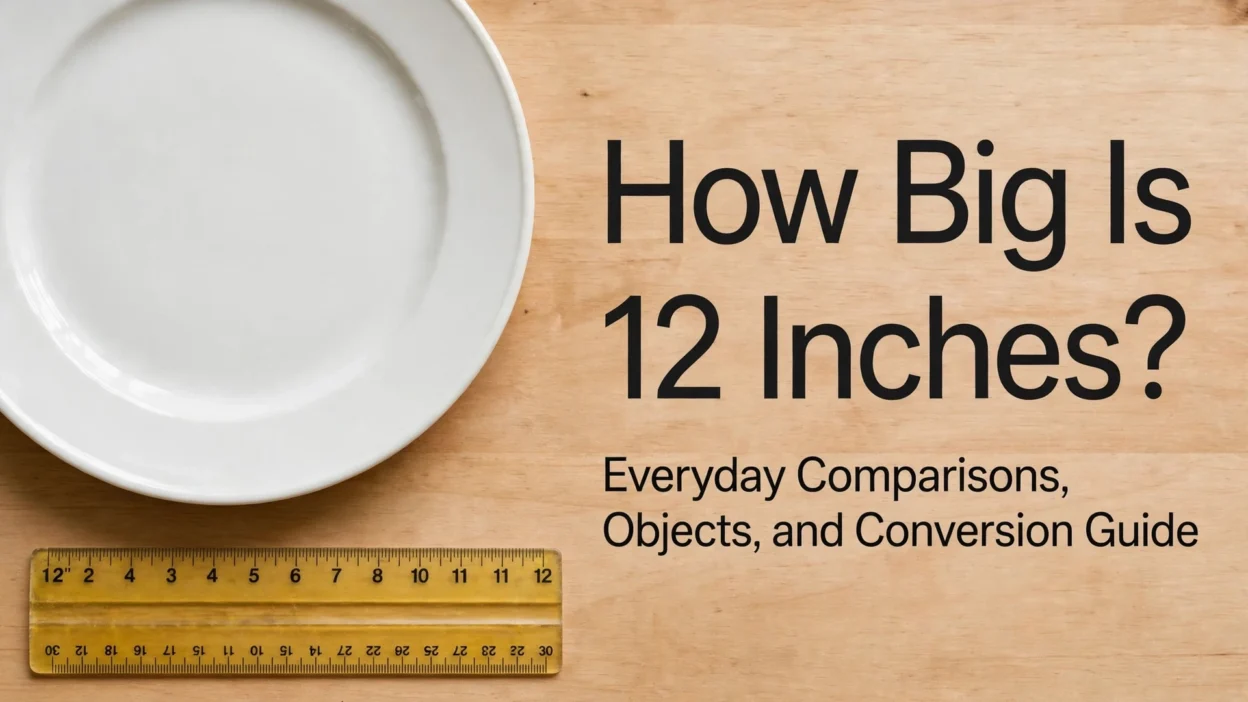
One foot is exactly 12 inches, making this length easy to understand when using the imperial measurement system. For a practical comparison, 12 inches is about the length of a standard school ruler, a typical laptop screen measured diagonally only in some cases, or a large dinner plate’s diameter, depending on the design.
Understanding this measurement becomes easier when you compare it with familiar objects. In this guide, you will learn what 12 inches looks like, how to convert it into other units, which everyday objects are close to this length, and how to estimate it without a ruler.
What Does 12 Inches Mean as a Length?
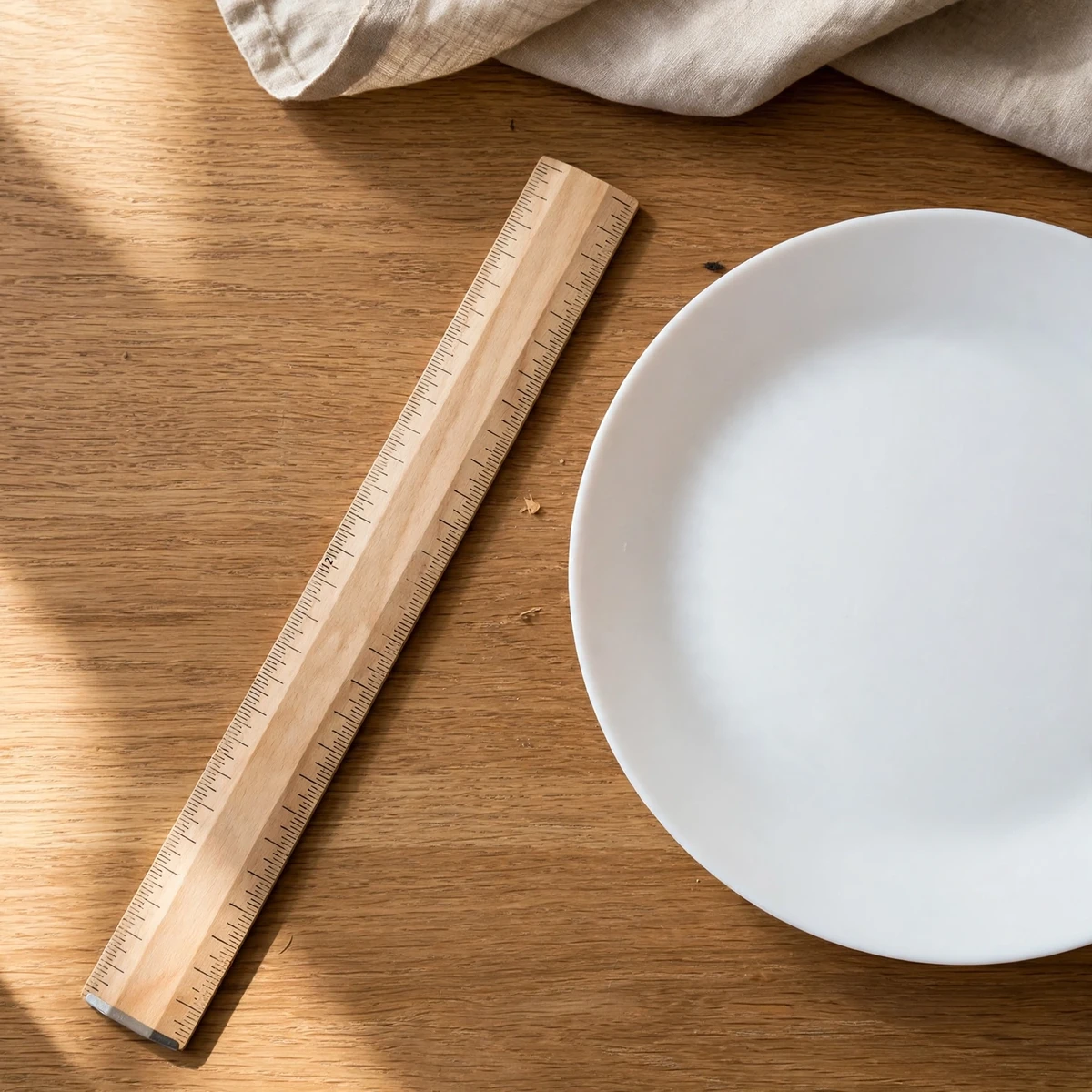
Twelve inches is a standard unit of length in the imperial measurement system. It is equal to exactly one foot, which is why the two measurements are often used interchangeably.
For example, a 12-inch ruler is also called a one-foot ruler. Similarly, an object measuring 24 inches is two feet long, while something measuring 36 inches is three feet long.
Although inches are commonly used in the United States, centimetres and metres are more familiar in many other countries. Knowing the equivalent measurements makes it easier to understand product dimensions, compare sizes, and follow instructions.
Here are the main conversions for 12 inches:
- Centimetres: 30.48 cm
- Millimetres: 304.8 mm
- Feet: 1 ft
- Metres: 0.3048 m
- Yards: 0.3333 yd, or one-third of a yard
These values are exact conversions, apart from the rounded yard figure.
The difference between these units is mainly how they express length. Inches and feet are commonly used for everyday measurements in the United States, while centimetres and metres are part of the metric system.
For a simple mental picture, imagine a standard 12-inch ruler placed flat on a desk. The distance from its zero mark to its 12-inch mark represents exactly one foot.
12 Inches Conversion Chart

A conversion chart helps you compare different measurements without having to calculate each value separately. The following table includes measurements from 0.5 inches to 12 inches in half-inch increments.
It provides the equivalent values in feet, centimetres, millimetres, metres, and yards.
| Inches | Feet | Cm | Mm | Metres | Yards |
|---|---|---|---|---|---|
| 0.5 | 0.0417 | 1.27 | 12.7 | 0.0127 | 0.0139 |
| 1.0 | 0.0833 | 2.54 | 25.4 | 0.0254 | 0.0278 |
| 1.5 | 0.1250 | 3.81 | 38.1 | 0.0381 | 0.0417 |
| 2.0 | 0.1667 | 5.08 | 50.8 | 0.0508 | 0.0556 |
| 2.5 | 0.2083 | 6.35 | 63.5 | 0.0635 | 0.0694 |
| 3.0 | 0.2500 | 7.62 | 76.2 | 0.0762 | 0.0833 |
| 3.5 | 0.2917 | 8.89 | 88.9 | 0.0889 | 0.0972 |
| 4.0 | 0.3333 | 10.16 | 101.6 | 0.1016 | 0.1111 |
| 4.5 | 0.3750 | 11.43 | 114.3 | 0.1143 | 0.1250 |
| 5.0 | 0.4167 | 12.70 | 127.0 | 0.1270 | 0.1389 |
| 5.5 | 0.4583 | 13.97 | 139.7 | 0.1397 | 0.1528 |
| 6.0 | 0.5000 | 15.24 | 152.4 | 0.1524 | 0.1667 |
| 6.5 | 0.5417 | 16.51 | 165.1 | 0.1651 | 0.1806 |
| 7.0 | 0.5833 | 17.78 | 177.8 | 0.1778 | 0.1944 |
| 7.5 | 0.6250 | 19.05 | 190.5 | 0.1905 | 0.2083 |
| 8.0 | 0.6667 | 20.32 | 203.2 | 0.2032 | 0.2222 |
| 8.5 | 0.7083 | 21.59 | 215.9 | 0.2159 | 0.2361 |
| 9.0 | 0.7500 | 22.86 | 228.6 | 0.2286 | 0.2500 |
| 9.5 | 0.7917 | 24.13 | 241.3 | 0.2413 | 0.2639 |
| 10.0 | 0.8333 | 25.40 | 254.0 | 0.2540 | 0.2778 |
| 10.5 | 0.8750 | 26.67 | 266.7 | 0.2667 | 0.2917 |
| 11.0 | 0.9167 | 27.94 | 279.4 | 0.2794 | 0.3056 |
| 11.5 | 0.9583 | 29.21 | 292.1 | 0.2921 | 0.3194 |
| 12.0 | 1.0000 | 30.48 | 304.8 | 0.3048 | 0.3333 |
The chart is useful when you need to work with measurements in different units. For instance, if a product description gives a length of 12 inches but you use metric measurements, you can quickly identify that the object is 30.48 cm long.
Five Simple Conversion Formulas
You can also calculate the equivalent of 12 inches using a few basic formulas. These methods work for other inch measurements as well.
1. Inches to centimetres
Multiply the number of inches by 2.54.
Formula:
Centimetres = Inches × 2.54
For 12 inches:
12 × 2.54 = 30.48 cm
2. Inches to millimetres
Multiply the inch measurement by 25.4.
Formula:
Millimetres = Inches × 25.4
For 12 inches:
12 × 25.4 = 304.8 mm
3. Inches to feet
Divide the number of inches by 12.
Formula:
Feet = Inches ÷ 12
For 12 inches:
12 ÷ 12 = 1 ft
4. Inches to metres
Multiply the inch measurement by 0.0254.
Formula:
Metres = Inches × 0.0254
For 12 inches:
12 × 0.0254 = 0.3048 m
5. Inches to yards
Divide the number of inches by 36.
Formula:
Yards = Inches ÷ 36
For 12 inches:
12 ÷ 36 = 0.3333 yd
These formulas make it easier to switch between measurement systems. Once you remember the basic conversion numbers, you can work out most common measurements with a calculator or even mentally.
Everyday Objects That Are About 12 Inches Long
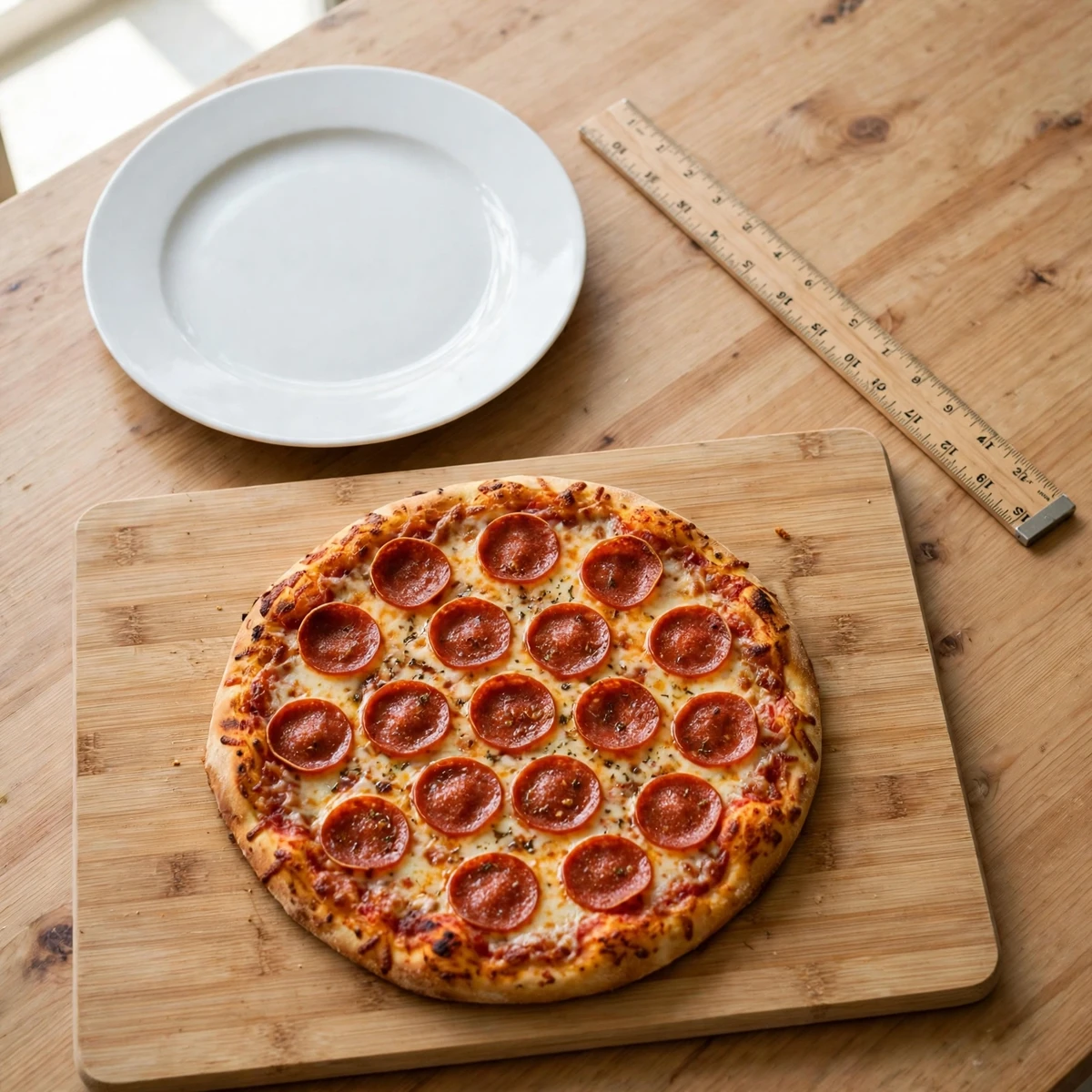
One of the easiest ways to understand a measurement is to compare it with things you already use. Twelve inches is a familiar length because many household, office, school, and kitchen products are made close to one foot.
Some objects are designed to measure exactly 12 inches, while others are only approximately this length. Their dimensions can change depending on the manufacturer, model, material, and intended use.
The following ten examples provide practical ways to picture a length of 12 inches.
10 Everyday Objects That Help You Visualize 12 Inches
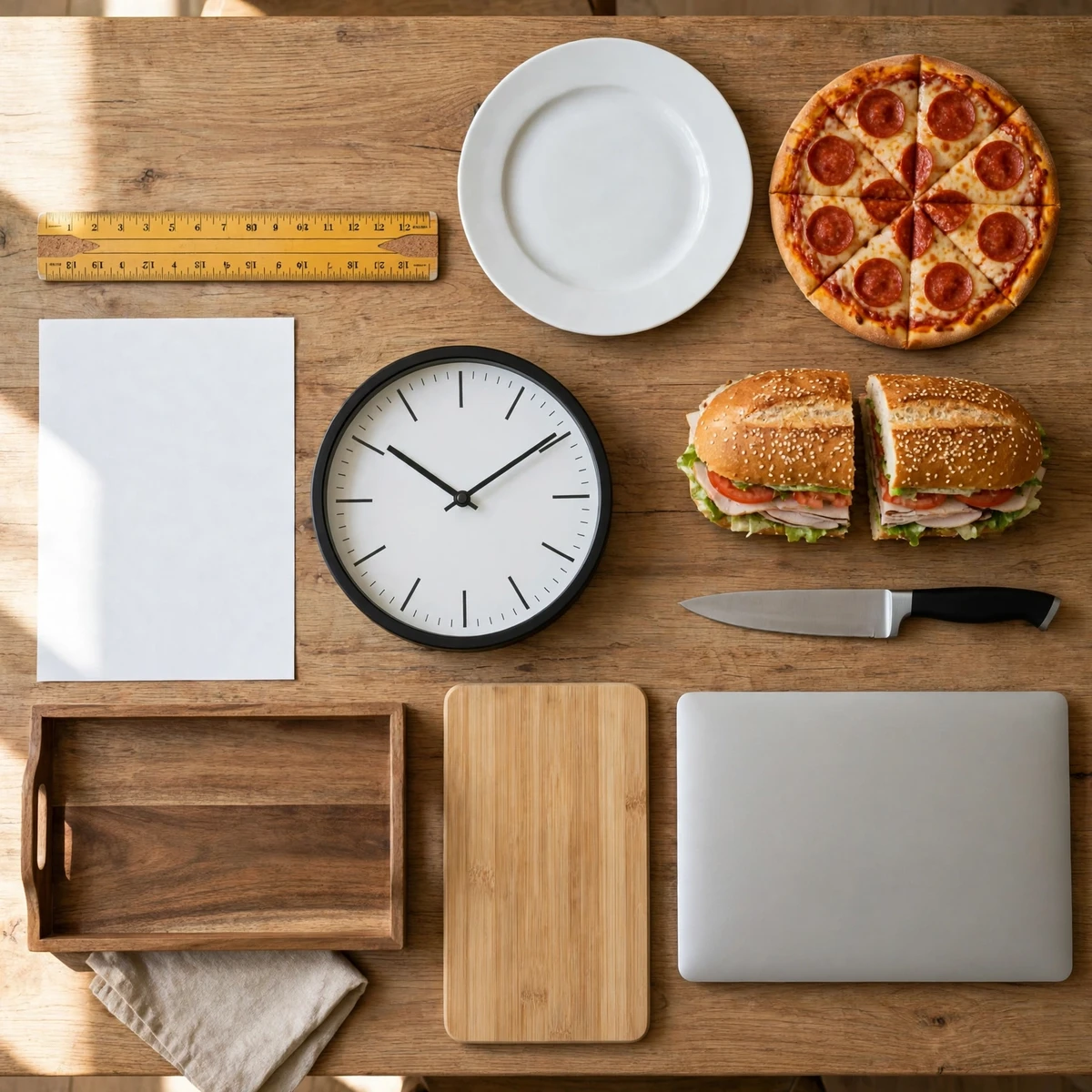
1. Standard School Ruler
A standard 12-inch school ruler is one of the easiest and most accurate ways to understand this measurement. Many rulers used in classrooms and offices have markings from zero to 12 inches along one edge.
Because the ruler is designed around this exact length, it provides a direct comparison. You can place it next to another object to see whether that object is shorter than, equal to, or longer than one foot.
To measure something with a ruler, line up the zero mark with one end of the object. Then, look at the marking that reaches the other end. If it reaches the 12-inch mark, the object is exactly one foot long.
Some rulers are shorter, longer, or designed with both metric and imperial markings. Therefore, check the printed scale before using one as a reference.
2. Large Dinner Plate
A large dinner plate can provide a useful visual comparison for a 12-inch measurement. Some larger dinner plates have a diameter close to one foot, although many everyday plates are smaller.
To understand the comparison, imagine measuring straight across the middle of a plate from one outside edge to the opposite outside edge. This distance is called the diameter.
If the plate measures approximately 12 inches across, it is about as wide as one foot. Make sure you measure through the centre rather than along the curved edge.
Plate sizes vary by manufacturer and design. Some are made for everyday meals, while others are larger serving plates, so the diameter should not be assumed to be exactly 12 inches.
3. Large Pizza
A large pizza is another familiar way to picture a 12-inch measurement. In many pizza restaurants, a 12-inch pizza is considered a medium-sized option, although size labels differ between businesses.
The measurement normally refers to the diameter of the entire pizza. This means the distance across the centre, from one outer crust edge to the opposite edge, is approximately 12 inches.
You can visualize this size by imagining a circular pizza that is one foot wide. It is large enough to share, depending on the number of people eating and the amount of food each person wants.
Pizza sizes vary by manufacturer, restaurant, and design. Some places classify a 12-inch pizza as medium, while others may use a different size category.
4. A Foot-Long Sandwich
A foot-long sandwich is a direct example because its name refers to a length of 12 inches. It is designed to measure approximately one foot from one end to the other.
This makes it particularly useful when trying to visualize the distance without a measuring tool. Imagine placing the sandwich horizontally on a table and measuring from its left end to its right end.
However, the actual bread length may not be perfectly consistent. Baking methods, bread styles, and serving practices can affect the final dimensions.
The size can also vary by manufacturer or design. A sandwich sold as foot-long may be close to 12 inches rather than measuring exactly 12 inches in every case.
5. Large Kitchen Knife
Some large kitchen knives have blades measuring close to 12 inches, although many common kitchen knives are shorter. A long chef’s knife or specialized cutting knife may provide a useful comparison.
When measuring a knife, remember that the blade length and the overall length are two different measurements. Blade length is measured from the tip to the point where the blade meets the handle.
If the blade itself measures 12 inches, the complete knife will be longer because the handle adds extra length.
Knife dimensions vary by manufacturer and design. Always check whether the listed measurement refers to the blade alone or the entire knife.
6. Large Laptop Screen Diagonal
A laptop screen can help you picture a measurement of 12 inches, but it is important to understand how screen sizes are measured.
Laptop displays are usually described by their diagonal measurement, not their horizontal width. Therefore, a screen advertised as 12 inches has a diagonal distance of approximately one foot from one corner of the display to the opposite corner.
The actual screen width and height will be smaller than 12 inches. Their dimensions depend on the screen’s aspect ratio and design.
Laptop sizes vary by manufacturer and model. A 12-inch display does not mean the entire laptop is 12 inches long, because the keyboard, frame, and other parts affect the overall dimensions.
7. A Large Cutting Board
A kitchen cutting board measuring approximately 12 inches across is another useful comparison. Many compact and medium-sized cutting boards have one dimension close to a foot.
For example, a board that measures 12 inches long and 8 inches wide has a length of exactly one foot. This provides a clear visual reference when preparing food or organizing kitchen space.
To measure a cutting board, place a ruler along its longest straight edge. Start at one end and check where the opposite end reaches.
Cutting boards vary by manufacturer and design. Wooden, plastic, and composite boards come in different shapes and sizes, so some may be much longer or shorter than 12 inches.
8. Large Serving Tray
A large serving tray can also be close to 12 inches in one of its dimensions. Many smaller trays used for carrying cups, snacks, or dishes have a length around one foot.
For a rectangular tray, measure along its longest side to determine its length. If that measurement reaches 12 inches, it is approximately the same length as a standard foot ruler.
A tray may also be circular or oval. In that case, measuring straight across the widest point provides a useful comparison.
Serving trays vary by manufacturer and design. Decorative trays, breakfast trays, and restaurant-style trays can all have different dimensions.
9. Standard Sheet of Paper Cut to One Foot
A standard US letter sheet of paper is 11 inches long and 8.5 inches wide. Although it is not exactly 12 inches, its longer side provides a helpful comparison.
The difference between 11 inches and 12 inches is only one inch. Therefore, a letter-sized sheet is a convenient reference when estimating a foot without a ruler.
You can place the paper flat on a desk and imagine adding another inch to its longer side. That gives you a reasonable picture of the 12-inch length.
Paper dimensions vary by manufacturer and design, especially when comparing different paper formats. However, standard US letter paper generally follows the familiar 8.5-by-11-inch format.
10. Large Wall Clock Diameter
Some large wall clocks have a diameter close to 12 inches. This means the clock face measures approximately one foot across from one outside edge to the opposite edge.
A circular clock provides a particularly useful comparison because its diameter is easy to visualize. Imagine drawing a straight line through the centre of the clock face. If the distance between the two outer edges is 12 inches, the clock is one foot wide.
To measure a clock, use a ruler or tape measure across its widest point. Include the outer frame if you want the complete clock diameter rather than just the visible face.
Wall clocks vary by manufacturer and design. Some are compact decorative pieces, while others have much larger faces and frames.
How to Estimate 12 Inches Without a Ruler
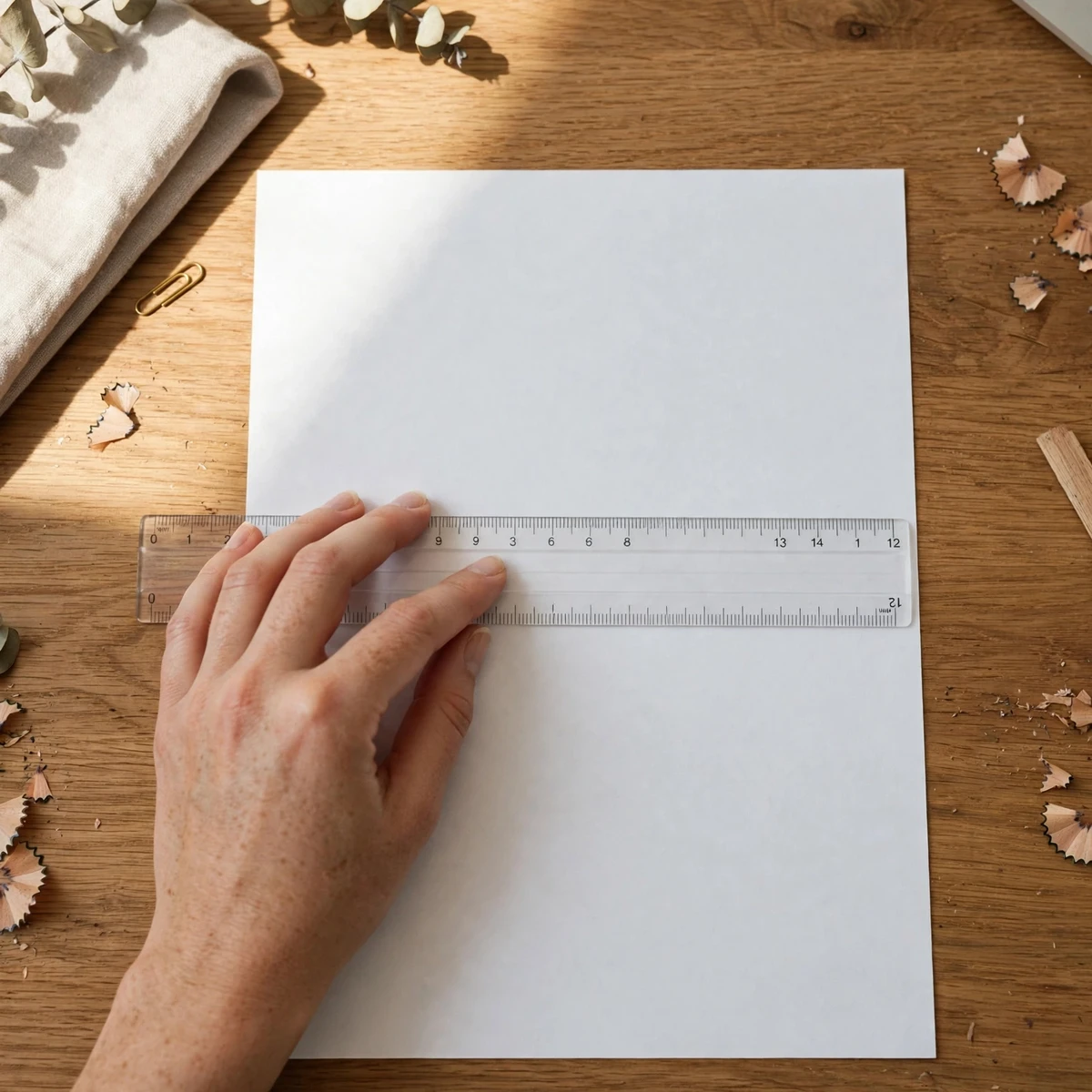
You do not always need a measuring tool to get a reasonable idea of what 12 inches looks like. Several everyday objects and simple techniques can help you estimate one foot when a ruler is unavailable.
These methods are useful for household projects, shopping, arranging furniture, and checking whether something will fit into a particular space. However, remember that estimates are not as accurate as measurements taken with a proper measuring tool.
1. Use the Length of Your Foot as a Reference
Your foot can provide a convenient starting point for estimating 12 inches. However, the length of a person’s foot is not automatically 12 inches.
Take off your shoe and compare the distance from your heel to your longest toe with a one-foot length you already know. If your foot is shorter than 12 inches, you can estimate how much additional space would be needed.
For example, someone with a 10-inch foot would need approximately two additional inches to reach one foot.
This technique is best used for rough comparisons because foot sizes vary from person to person.
2. Compare It With a Foot-Long Sandwich
A sandwich sold as a foot-long is a convenient reference for understanding 12 inches.
Picture the sandwich placed on a flat surface. Its length should be close to one foot, making it easier to visualize the measurement without using a ruler.
You can also compare another object against the sandwich to see whether it appears shorter or longer.
Keep in mind that bread dimensions are not always exact. Baking and preparation can affect the final length.
3. Use a Standard Sheet of Paper
A standard US letter sheet measures 11 inches along its longer side. This makes it a useful reference for estimating 12 inches.
Place the paper flat and imagine extending its long edge by another inch. The resulting length will be approximately one foot.
If you have several sheets available, you can also arrange them end to end and compare their combined length with your target measurement.
This method works well for rough estimates, especially when working at a desk or in an office.
4. Visualize a Standard One-Foot Ruler
If you have used a standard school ruler before, you probably already have a mental picture of its length.
Imagine the distance from the zero mark to the 12-inch mark. That is exactly one foot.
You can use this mental reference when shopping for household items or estimating the size of something in a room.
The more frequently you work with standard measurements, the easier it becomes to recognize familiar lengths without checking a ruler.
5. Estimate Using Your Hand and Forearm
Your hand and forearm can provide another rough reference. However, their measurements differ from person to person.
For example, the distance from your wrist to the tip of your middle finger may be several inches. You can compare this length with a known 12-inch reference and remember the approximate difference.
Another approach is to use the width of your hand several times to estimate a foot. This requires some familiarity with your own hand measurements.
This method is convenient when you are away from measuring tools, but it should not be used for projects that require precision.
6. Use Three Measurements of Four Inches
Another simple method is to divide 12 inches into three equal sections.
Since 4 inches multiplied by 3 equals 12 inches, you can picture three sections of equal length placed end to end.
For example, if you have a familiar object that measures approximately 4 inches, imagine placing three of those objects in a straight line.
This method is particularly helpful because breaking a longer measurement into smaller sections can make it easier to visualize.
7. Compare It With a Large Dinner Plate
A dinner plate with a diameter close to 12 inches can help you estimate one foot.
Imagine the distance across the plate through its centre. This is approximately the same as the length of a one-foot ruler when the plate measures 12 inches across.
However, not all dinner plates have this diameter. Some are considerably smaller, so use a large plate only as a general visual reference.
Frequently Asked Questions About 12 Inches
1. How big is 12 inches in centimetres?
Twelve inches equals exactly 30.48 centimetres. To calculate this, multiply 12 by 2.54, which is the number of centimetres in one inch.
2. Is 12 inches the same as one foot?
Yes. Twelve inches is exactly equal to one foot. This is a standard conversion in the imperial measurement system.
3. How many millimetres are in 12 inches?
There are 304.8 millimetres in 12 inches. Since one inch equals 25.4 millimetres, multiplying 12 by 25.4 gives the result.
4. How many metres is 12 inches?
Twelve inches equals 0.3048 metres. This is slightly more than 0.3 metres and is equivalent to 30.48 centimetres.
5. Is 12 inches considered a long measurement?
Twelve inches is a relatively short measurement when compared with furniture, rooms, or larger household objects. However, it is a useful length for smaller items such as rulers, trays, plates, and tools.
It is also important because it represents one complete foot.
6. What everyday object is exactly 12 inches long?
A standard 12-inch ruler is designed to measure exactly one foot. It is one of the most reliable everyday references for this measurement.
Some products, such as foot-long sandwiches, may also be sold using this measurement, although their actual dimensions can vary.
7. Is a 12-inch pizza one foot wide?
Yes. A 12-inch pizza has a diameter of approximately one foot. This measurement is taken straight across the centre from one outside crust edge to the opposite edge.
The actual size category may differ between restaurants.
8. How many inches are in half a foot?
Half a foot equals 6 inches. Since one foot contains 12 inches, dividing 12 by 2 gives 6.
This means two 6-inch sections placed end to end make 12 inches.
9. How can I measure 12 inches without a ruler?
You can estimate 12 inches by comparing the length with familiar objects, such as a foot-long sandwich, a large dinner plate, or a standard sheet of paper with an extra inch imagined along its longer side.
For a more accurate result, use a measuring tape or a properly marked ruler.
10. How many yards is 12 inches?
Twelve inches equals one-third of a yard, or approximately 0.3333 yards.
There are 36 inches in one yard, so dividing 12 by 36 gives the answer.
11. Is 12 inches bigger than 30 centimetres?
Yes. Twelve inches equals 30.48 centimetres, which is 0.48 centimetres longer than 30 centimetres.
The difference is small, but it matters when precise measurements are needed.
12. Why is 12 inches equal to one foot?
The foot is traditionally divided into 12 inches. This standard relationship makes it easy to convert between the two units.
For example, 24 inches equals 2 feet, while 36 inches equals 3 feet. The same relationship continues for larger measurements.
Final Thoughts
Twelve inches is a simple but useful measurement that equals 30.48 centimetres, 304.8 millimetres, one foot, and 0.3048 metres. It is easy to visualize because many familiar objects, including standard rulers, large plates, serving trays, and some kitchen tools, have dimensions close to this length. Learning these everyday comparisons can make it easier to estimate measurements, understand product sizes, and complete basic household tasks. You can also use the conversion chart and formulas in this guide whenever you need to change inches into metric or other imperial units.
Whether you are measuring an object, planning a project, or comparing product dimensions, understanding how different units relate to each other is a useful everyday skill. The relationship between inches, feet, and yards is part of a wider system of measurement that has developed over many generations. Learning about the history of the yard provides another interesting way to understand how familiar length measurements developed.

Grace is a lifestyle writer from California who loves starting mornings with positivity. At Mornetic, she shares uplifting quotes and cheerful messages to brighten your day.