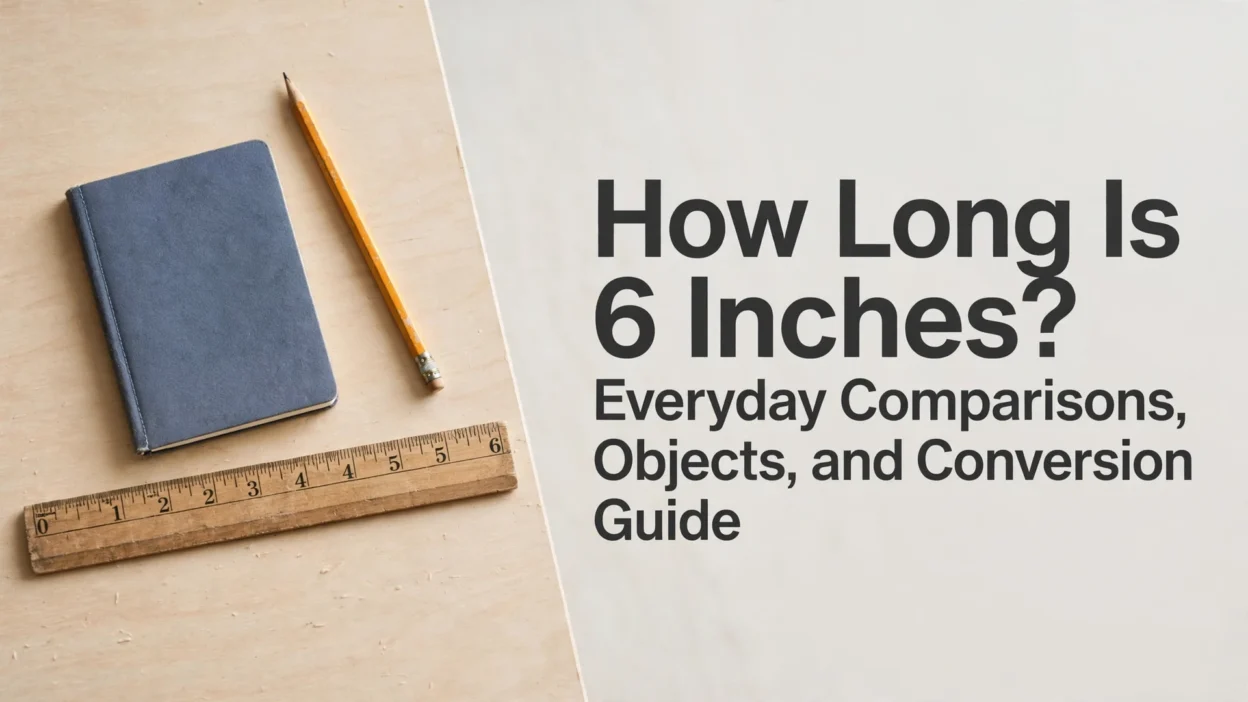
Six inches is a relatively short measurement, but it is longer than many people initially imagine. To put it simply, 6 inches equals 15.24 centimeters, 152.4 millimeters, 0.5 feet, or 0.1524 meters. It is also exactly half a foot, making it an easy measurement to understand when working with everyday objects.
Although six inches might sound like a small distance, it appears in many familiar items around the home, office, kitchen, and school. A standard unsharpened pencil, for example, is often close to this length. Some small kitchen utensils, paperback books, and other household objects can also provide useful comparisons.
Knowing how long six inches is can help when measuring furniture, choosing accessories, completing DIY projects, shopping online, or estimating an object’s dimensions without a measuring tool. It is especially useful when product descriptions provide measurements in inches but you are more comfortable thinking in centimeters.
In this guide, you will learn exactly how long six inches is, how to convert it into other measurement units, and which everyday objects can help you visualize the distance. You will also discover practical ways to estimate six inches without a ruler.
How Long Is 6 Inches Really?
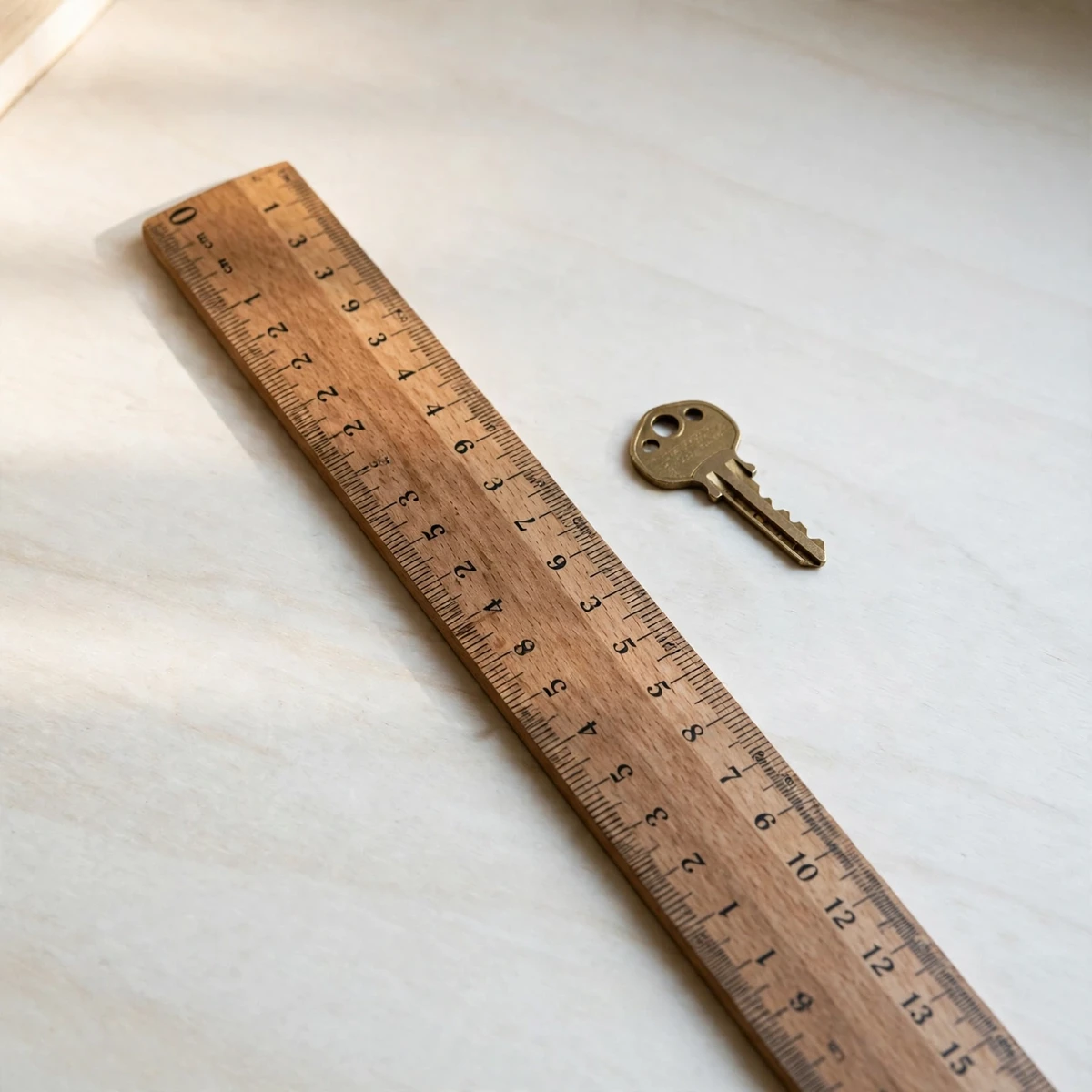
Six inches measures exactly half a foot. Since one foot contains 12 inches, dividing that measurement in half gives you six inches.
In everyday terms, imagine taking a standard 12-inch ruler and looking at the distance between its starting point and the halfway mark. That distance is six inches.
This measurement is useful for understanding the size of smaller household objects and accessories. It can also help you estimate dimensions when shopping for products, organizing storage spaces, or working on small projects.
Here are the most important equivalents for six inches:
- Inches: 6 inches
- Feet: 0.5 feet
- Centimeters: 15.24 cm
- Millimeters: 152.4 mm
- Metres: 0.1524 m
- Yards: 0.1667 yards, approximately
- Fraction of a foot: 1/2 foot
The metric equivalent is particularly straightforward. One inch equals 2.54 centimeters, so multiplying six by 2.54 gives 15.24 centimeters.
You can also think of six inches as slightly longer than the width of many adult hands. However, hand measurements differ considerably from person to person, so this comparison is useful only for estimating.
Another helpful reference is a dollar bill. A US dollar bill measures approximately 6.14 inches long, which makes it just slightly longer than six inches.
These comparisons show that six inches is a manageable distance that can be visualized without complicated calculations.
6 Inches Conversion Chart
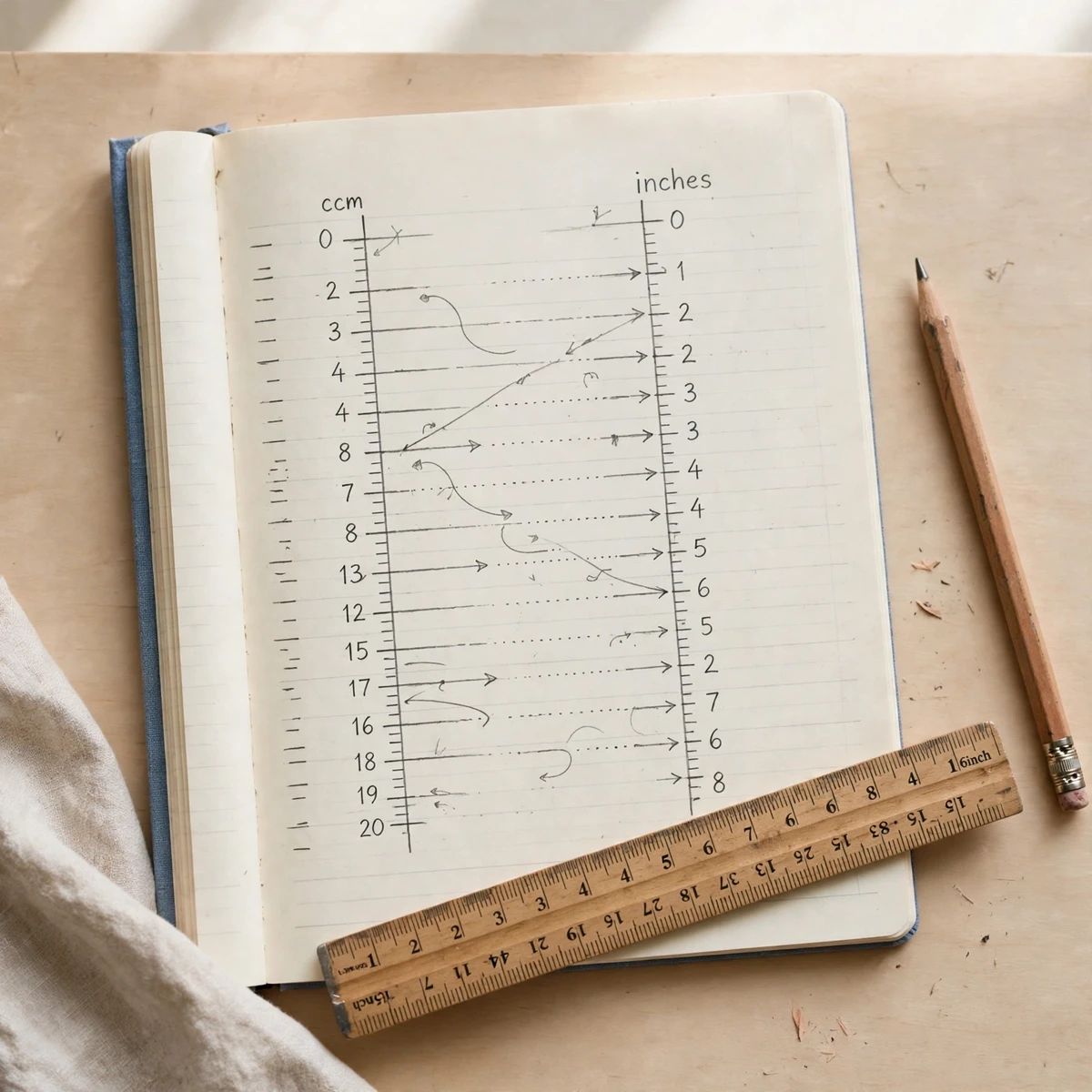
A conversion chart makes it easier to compare six inches with other measurements. It is also helpful when you need to convert different inch measurements into feet, centimeters, millimeters, metres, or yards.
The following table includes measurements from 0.5 inches to 12 inches, increasing in half-inch increments.
| Inches | Feet | Centimeters (cm) | Millimeters (mm) | Metres | Yards |
|---|---|---|---|---|---|
| 0.5 | 0.0417 | 1.27 | 12.7 | 0.0127 | 0.0139 |
| 1.0 | 0.0833 | 2.54 | 25.4 | 0.0254 | 0.0278 |
| 1.5 | 0.1250 | 3.81 | 38.1 | 0.0381 | 0.0417 |
| 2.0 | 0.1667 | 5.08 | 50.8 | 0.0508 | 0.0556 |
| 2.5 | 0.2083 | 6.35 | 63.5 | 0.0635 | 0.0694 |
| 3.0 | 0.2500 | 7.62 | 76.2 | 0.0762 | 0.0833 |
| 3.5 | 0.2917 | 8.89 | 88.9 | 0.0889 | 0.0972 |
| 4.0 | 0.3333 | 10.16 | 101.6 | 0.1016 | 0.1111 |
| 4.5 | 0.3750 | 11.43 | 114.3 | 0.1143 | 0.1250 |
| 5.0 | 0.4167 | 12.70 | 127.0 | 0.1270 | 0.1389 |
| 5.5 | 0.4583 | 13.97 | 139.7 | 0.1397 | 0.1528 |
| 6.0 | 0.5000 | 15.24 | 152.4 | 0.1524 | 0.1667 |
| 6.5 | 0.5417 | 16.51 | 165.1 | 0.1651 | 0.1806 |
| 7.0 | 0.5833 | 17.78 | 177.8 | 0.1778 | 0.1944 |
| 7.5 | 0.6250 | 19.05 | 190.5 | 0.1905 | 0.2083 |
| 8.0 | 0.6667 | 20.32 | 203.2 | 0.2032 | 0.2222 |
| 8.5 | 0.7083 | 21.59 | 215.9 | 0.2159 | 0.2361 |
| 9.0 | 0.7500 | 22.86 | 228.6 | 0.2286 | 0.2500 |
| 9.5 | 0.7917 | 24.13 | 241.3 | 0.2413 | 0.2639 |
| 10.0 | 0.8333 | 25.40 | 254.0 | 0.2540 | 0.2778 |
| 10.5 | 0.8750 | 26.67 | 266.7 | 0.2667 | 0.2917 |
| 11.0 | 0.9167 | 27.94 | 279.4 | 0.2794 | 0.3056 |
| 11.5 | 0.9583 | 29.21 | 292.1 | 0.2921 | 0.3194 |
| 12.0 | 1.0000 | 30.48 | 304.8 | 0.3048 | 0.3333 |
The six-inch row is especially useful because it shows how the same measurement appears across several commonly used units.
For example, if a product measures six inches, you can describe its length as 15.24 centimeters or 152.4 millimeters. Both measurements represent exactly the same distance.
Conversion Formulas for 6 Inches
You do not need a conversion calculator to change six inches into other measurement units. A few straightforward multiplication formulas will give you the correct results.
Here are five useful formulas, each with a worked example using six inches.
1. Inches to centimeters
To convert inches into centimeters, multiply the number of inches by 2.54.
Formula:
Centimeters = Inches × 2.54
Worked example:
6 × 2.54 = 15.24 cm
Therefore, six inches equals 15.24 centimeters.
2. Inches to millimeters
One inch contains exactly 25.4 millimeters. Multiply the inch measurement by 25.4 to calculate the equivalent.
Formula:
Millimeters = Inches × 25.4
Worked example:
6 × 25.4 = 152.4 mm
Therefore, six inches equals 152.4 millimeters.
3. Inches to feet
There are 12 inches in one foot. Divide the inch measurement by 12 to convert it into feet.
Formula:
Feet = Inches ÷ 12
Worked example:
6 ÷ 12 = 0.5 feet
Therefore, six inches equals half a foot.
4. Inches to metres
One inch equals 0.0254 metres. Multiply the inch measurement by this number to get the metric equivalent.
Formula:
Metres = Inches × 0.0254
Worked example:
6 × 0.0254 = 0.1524 metres
Therefore, six inches equals 0.1524 metres.
5. Inches to yards
One yard contains 36 inches. Divide the measurement in inches by 36 to calculate the equivalent in yards.
Formula:
Yards = Inches ÷ 36
Worked example:
6 ÷ 36 = 0.1667 yards, approximately.
Therefore, six inches equals approximately one-sixth of a yard.
These formulas are useful for everyday measurements, school assignments, DIY projects, and product comparisons. Once you understand the conversion factors, you can calculate other inch measurements just as easily.
Everyday Objects That Are About 6 Inches Long
One of the easiest ways to understand a measurement is to compare it with objects you already recognize.
Six inches is close to the length of several familiar household and personal items. You might find examples in your kitchen drawer, office supplies, bathroom cabinet, or wallet.
Some objects are almost exactly six inches, while others are slightly shorter or longer. They are still helpful visual references when you need to estimate a distance.
For example, a US dollar bill is approximately 6.14 inches long. An unsharpened standard pencil can also be close to six inches, depending on its original design.
Other useful comparisons include certain kitchen utensils, small books, and personal-care products.
The following ten objects offer practical ways to picture a six-inch measurement.

10 Everyday Objects That Are Approximately 6 Inches Long
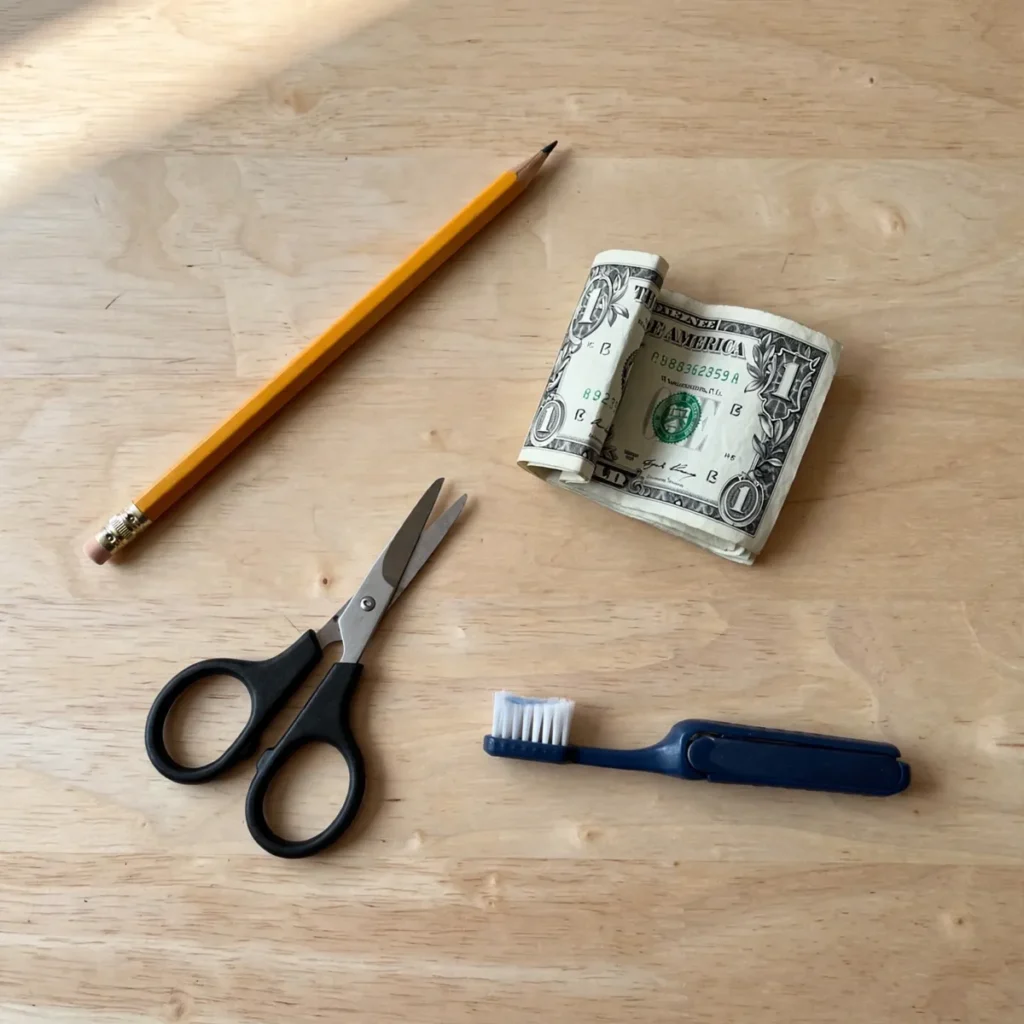
1. Standard Unsharpened Pencil
Approximate length: Around 6 inches for some short or compact pencils.
A standard pencil is a familiar object that can help you visualize a six-inch measurement. Many full-length wooden pencils are longer than six inches, but shorter pencils and compact varieties can measure close to this distance.
To check the length, place the pencil on a flat surface and measure from its eraser end to its opposite tip. If the pencil is sharpened, remember that sharpening reduces its original length.
Pencil sizes vary by manufacturer, design, and intended use. Some school pencils are longer, while shorter pencils are common in travel kits, promotional products, and compact stationery sets.
2. US Dollar Bill
Approximate length: 6.14 inches.
A US dollar bill is one of the most useful everyday comparisons for six inches. It measures approximately 6.14 inches from one short end to the other, making it just 0.14 inches longer than the measurement you are trying to visualize.
To measure it, place the bill flat on a table and measure along its longest edge. You can also use it directly as a reference when estimating a small object that is close to six inches long.
US currency has standardized dimensions, so different denominations share the same basic size. However, worn, folded, or damaged bills may be less convenient for making accurate measurements.
3. Compact Smartphone
Approximate length: Around 6 inches for certain compact smartphone models.
Some compact smartphones have an overall body length close to six inches. This makes them useful references when comparing the dimensions of small electronic devices or accessories.
To measure a phone, place it screen-side up on a flat surface and measure from the top edge to the bottom edge. Make sure you measure the physical body rather than the diagonal screen size, which is a different measurement.
Smartphone dimensions vary significantly by brand, model, and design. Some phones are considerably longer than six inches, while compact models may be close to this measurement.
4. Small Kitchen Knife Handle
Approximate length: Around 4 to 6 inches for some knife handles.
The handle of a kitchen knife can provide another useful reference. Some larger kitchen knife handles approach six inches, particularly on knives designed for comfortable gripping and controlled cutting.
To measure the handle, start where the handle meets the blade and continue to the opposite end. Avoid including the blade itself, since the goal is to measure the handle separately.
Handle dimensions vary according to the knife type, manufacturer, and intended purpose. A small utility knife may have a shorter handle, while some larger kitchen knives have longer handles for better balance and grip.
5. Standard Soda Can
Approximate length: Around 4.8 to 5 inches for many standard cans.
A standard soda can is slightly shorter than six inches, but it provides a useful comparison. Its height is generally close enough to help you visualize the difference between five and six inches.
To measure it, place the can upright on a level surface. Measure vertically from the bottom of the can to its highest point, including the top rim.
Soda can dimensions vary by manufacturer, capacity, and packaging design. Standard cans are usually shorter than six inches, while taller beverage containers may approach or exceed that measurement.
6. Small Paperback Book Width
Approximate width: Around 4 to 6 inches for many compact paperbacks.
A compact paperback book can help you understand how wide six inches looks in practice. Some smaller books have a width approaching six inches, although many standard paperbacks are narrower.
To measure the width, close the book and place it on a flat surface. Measure horizontally across the front cover from one side to the other, rather than measuring the spine or the book’s height.
Paperback dimensions vary by publisher, printing format, and design. Pocket-sized editions are generally smaller, while larger trade paperbacks can have widths closer to six inches.
7. Large Serving Spoon
Approximate length: Around 6 inches for some compact serving spoons.
A large serving spoon or compact kitchen spoon can provide a convenient visual comparison. Certain designs measure close to six inches from the end of the handle to the tip of the bowl.
To measure the spoon, place it horizontally on a table. Start at the far end of the handle and measure along its longest dimension to the opposite edge of the spoon bowl.
Spoon dimensions depend on the intended use, manufacturer, and design. Teaspoons are generally shorter, while some serving spoons are considerably longer than six inches.
8. Compact Toothbrush
Approximate length: Around 6 inches for some travel and compact toothbrushes.
A compact toothbrush can be close to six inches long, making it another familiar household comparison. Travel toothbrushes and smaller personal-care designs are particularly useful for visualizing this measurement.
To check its length, place the toothbrush flat and measure from the end of the handle to the farthest point of the bristles. Keep the measuring line straight along the toothbrush’s longest dimension.
Toothbrush sizes vary according to brand, model, age group, and intended use. Children’s toothbrushes are often shorter, while many full-size adult toothbrushes are longer than six inches.
9. Small Pair of Scissors
Approximate length: Around 5 to 6 inches for compact scissors.
Small household scissors can provide a close comparison to six inches. Many compact stationery scissors and travel scissors are designed with an overall length near this measurement.
To measure a pair of scissors, close the blades and place the scissors flat on a surface. Measure from the outermost point of one handle to the farthest blade tip.
Scissors come in many different sizes and styles. Children’s scissors, sewing scissors, office scissors, and kitchen scissors can all have different dimensions depending on their manufacturer and design.
10. Half of a Standard 12-Inch Ruler
Exact length: 6 inches when measured from the zero mark to the 6-inch mark.
A standard 12-inch ruler is probably the most reliable reference for understanding six inches. Since its total length is divided into 12 inches, the halfway point represents exactly six inches.
To check the measurement, place the ruler on a flat surface and locate the zero mark. Follow the measurement markings until you reach the six-inch line. The distance between these two points is exactly six inches.
Rulers vary in their overall design, material, and markings. However, a ruler with a clearly marked inch scale uses the same standard inch measurement regardless of whether it is made from plastic, wood, or metal.
How to Estimate 6 Inches Without a Ruler
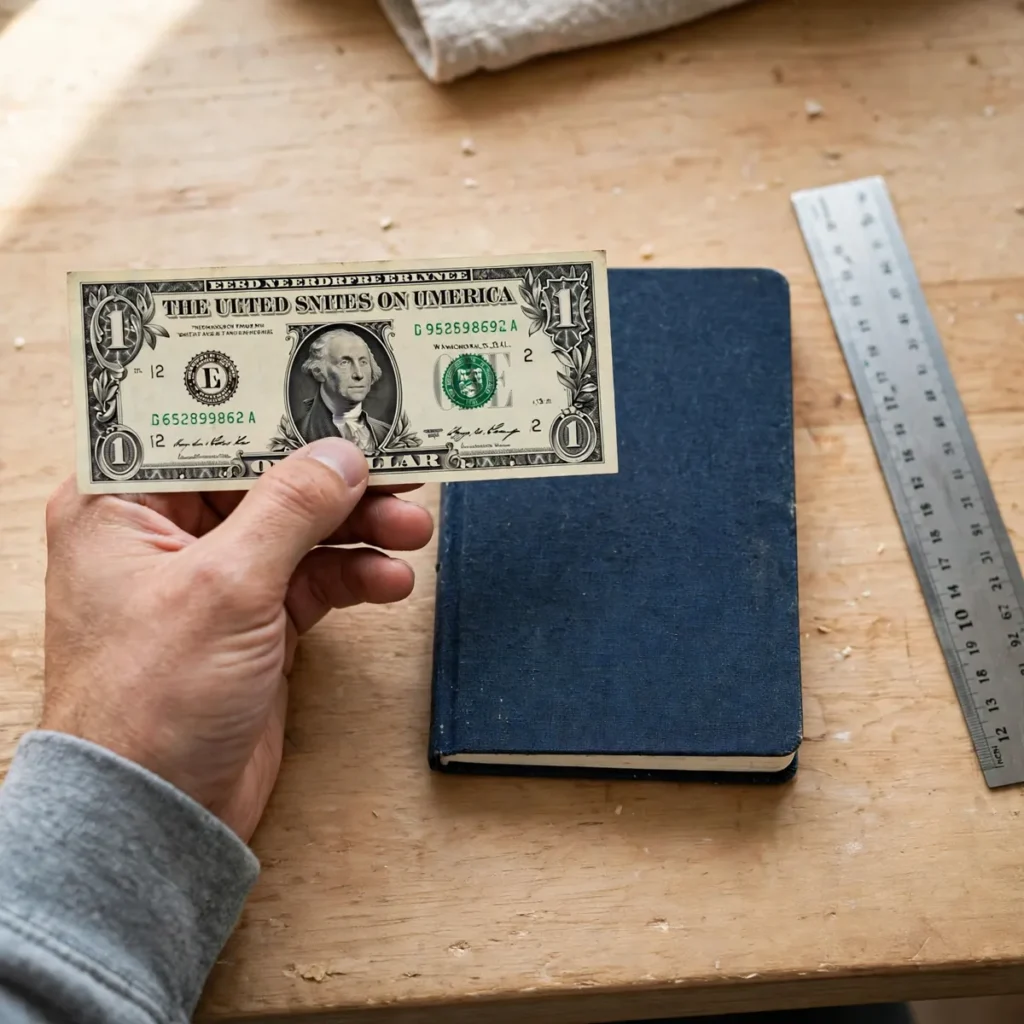
You do not always need a measuring tool to estimate six inches. Several everyday references can help you approximate this distance when you are working at home, shopping, or completing a small project.
These methods are useful when precision is not essential. However, if you are cutting materials, installing equipment, or checking product dimensions, a proper measuring tool is always the better choice.
1. Use a US Dollar Bill
A US dollar bill is approximately 6.14 inches long, making it one of the easiest references for estimating six inches.
Simply place the bill beside the object you want to measure. If the object is almost the same length as the bill, it is probably close to six inches.
The difference is only about 0.14 inches, so this method works well for rough estimates. Make sure the bill is unfolded and placed flat to avoid distorting the comparison.
2. Use Half of a Foot
Since one foot contains 12 inches, half a foot is exactly six inches.
If you have a known 12-inch measurement available, imagine dividing it into two equal sections. Each section represents six inches.
This method is particularly helpful when estimating furniture dimensions, storage spaces, and small distances. It also makes mental calculations easier because you do not need to convert between different units.
3. Compare It With Your Hand
Your hand can serve as a convenient measuring reference when you do not have a ruler.
For some adults, the distance across the palm or the length of part of the hand may be reasonably close to six inches. However, hand dimensions vary considerably, so this method should only be used for rough estimates.
To make it more useful, measure your own hand once when a ruler is available. You can then use that familiar measurement as a personal reference in the future.
4. Use a Smartphone as a Reference
A smartphone can help you estimate six inches if you already know its dimensions.
Check the manufacturer’s specifications for your phone’s height or width. If one of those measurements is close to six inches, you can use the device to compare other objects.
Place the phone beside the item you want to estimate and compare their lengths. Remember that a phone’s screen size is measured diagonally, so use its physical body dimensions rather than the advertised screen measurement.
5. Use a Printable or Marked Measuring Surface
If you regularly work with measurements, a printed inch scale or a marked work surface can be useful.
Some notebooks, craft mats, and cutting surfaces include measurement markings. Locate the zero point and count to the six-inch mark.
Before relying on a printed measurement, make sure the page or surface has not been resized during printing. Printer settings such as fit-to-page can change the dimensions of a measurement guide.
6. Estimate Using Familiar Household Objects
You can also combine several familiar objects to create a rough six-inch reference.
For example, a standard soda can is approximately five inches tall. Adding roughly another inch gives you a reasonable visual estimate of six inches.
Alternatively, compare the object with a compact utensil or another item whose dimensions you already know.
This approach is less accurate than using a ruler, but it can be useful when you only need to understand whether an object is approximately six inches long.
Frequently Asked Questions About 6 Inches
1. How long is 6 inches in centimeters?
Six inches equals exactly 15.24 centimeters. To calculate this measurement, multiply six by 2.54, because one inch equals 2.54 centimeters.
2. How many millimeters are in 6 inches?
Six inches equals 152.4 millimeters. Since one inch contains 25.4 millimeters, multiplying 25.4 by six gives the correct result.
3. Is 6 inches half a foot?
Yes. Six inches is exactly half a foot because one foot contains 12 inches. Dividing 12 by two gives six inches.
4. How many metres is 6 inches?
Six inches equals 0.1524 metres. This is the same distance as 15.24 centimeters, expressed using a larger metric unit.
5. Is a dollar bill 6 inches long?
A US dollar bill measures approximately 6.14 inches long. It is slightly longer than six inches, making it a convenient everyday comparison for estimating this measurement.
6. What household object is closest to 6 inches?
A US dollar bill is one of the closest familiar household references because it measures approximately 6.14 inches. Some compact pencils, toothbrushes, and kitchen utensils can also be close to six inches.
7. Is 6 inches considered a long measurement?
Six inches is generally considered a short measurement. It is half a foot and is commonly used when describing small household items, accessories, tools, and electronic devices.
8. How many inches are in half a foot?
There are exactly six inches in half a foot. Since a full foot contains 12 inches, dividing that measurement by two gives six inches.
9. How can I measure 6 inches without a ruler?
You can estimate six inches by comparing an object with a US dollar bill, which is approximately 6.14 inches long. You can also use a smartphone with known dimensions or a familiar household object.
10. Is 15 cm the same as 6 inches?
Not exactly. Six inches equals 15.24 centimeters, while 15 centimeters equals approximately 5.91 inches. The difference is small, but it can matter when accurate measurements are required.
11. Why is knowing the length of 6 inches useful?
Knowing this measurement can help with shopping, DIY projects, school assignments, crafting, and household organization. It also makes it easier to understand product dimensions when measurements are provided in inches instead of centimeters.
Final Thoughts
Six inches is a simple measurement that becomes much easier to understand when compared with familiar everyday objects. It equals 15.24 centimeters, 152.4 millimeters, 0.5 feet, and 0.1524 metres. A US dollar bill, compact household items, and half of a standard 12-inch ruler can all help you visualize this distance. Whether you are measuring an object, comparing product dimensions, or completing a small home project, understanding these equivalents makes everyday measurements more convenient.
The easiest way to remember six inches is to think of half a foot or approximately the length of a US dollar bill. You can also use the conversion formulas and comparison methods in this guide whenever you need a quick estimate. A basic understanding of measurements makes it easier to compare dimensions, work with different units, and understand the concept of length.

Grace is a lifestyle writer from California who loves starting mornings with positivity. At Mornetic, she shares uplifting quotes and cheerful messages to brighten your day.