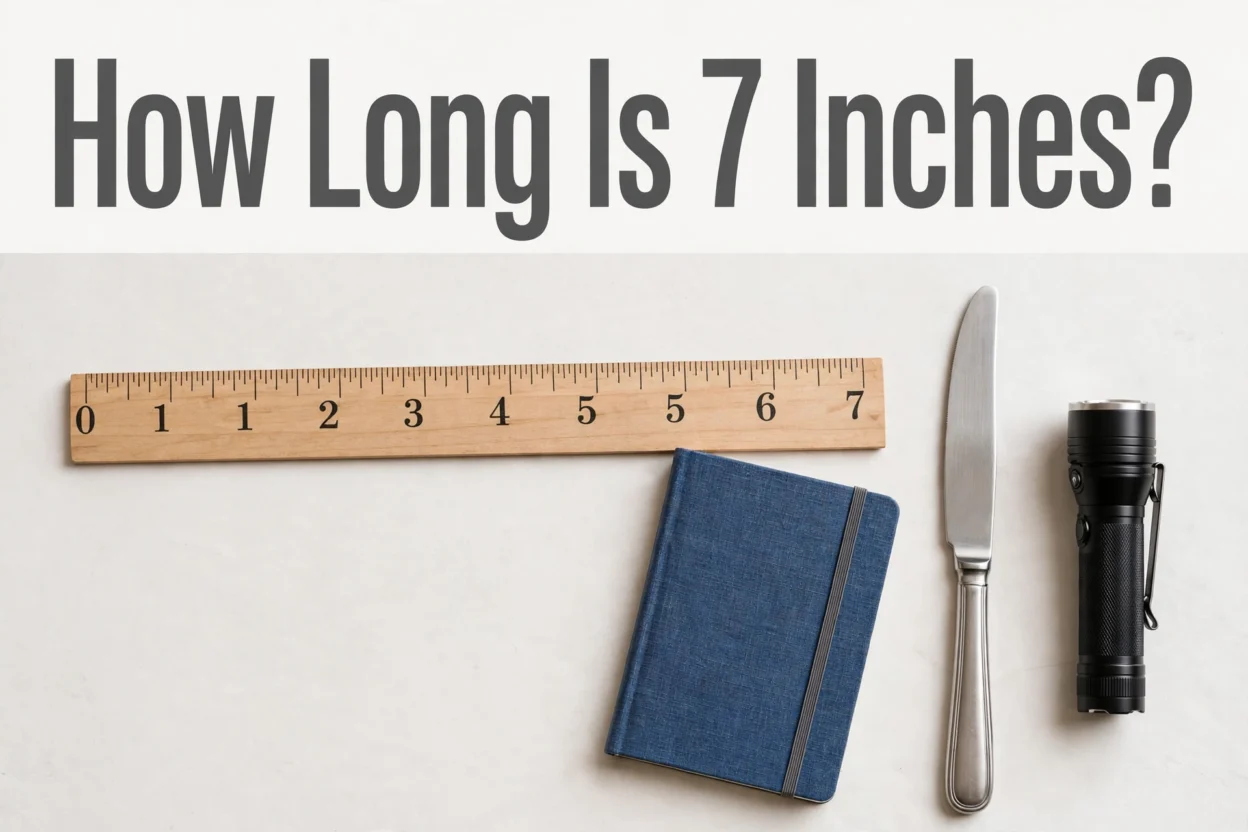
Seven inches is a length commonly encountered in everyday objects, from small kitchen tools to personal accessories and handheld devices. It equals 17.78 centimetres, 177.8 millimetres, 0.5833 feet, or 0.1778 metres. Understanding this measurement becomes easier when you compare it with familiar items and learn a few simple conversion methods. This guide explains how long 7 inches is, provides a measurement conversion chart, explores everyday objects that are approximately this size, and shares practical ways to estimate the length without a ruler.
How long is 7 inches?
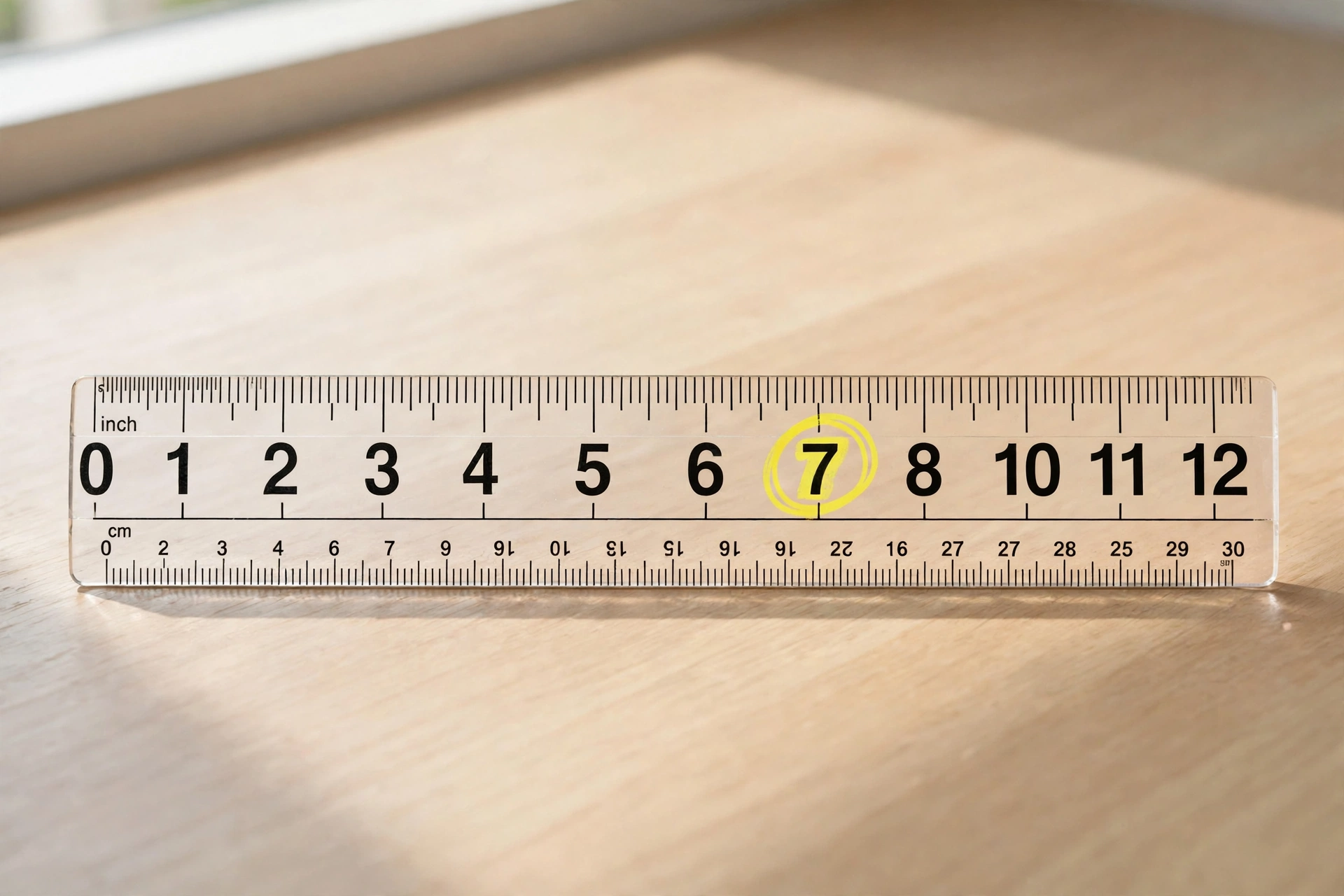
Seven inches measures exactly 7 inches on a standard measuring scale. In the imperial system, an inch is one-twelfth of a foot, so 7 inches is a little more than half a foot.
In the metric system, 7 inches equals 17.78 centimetres or 177.8 millimetres. Expressed in metres, the same length is 0.1778 metres.
To picture this measurement, imagine a straight line that stretches across a typical adult hand from near the wrist toward the fingertips. The exact comparison depends on the person’s hand size, but it provides a useful starting point.
Seven inches is also a practical reference when estimating the dimensions of small household items, stationery, grooming tools, and certain electronic accessories. Keep in mind that an object’s overall length, height, and width are different measurements, so an item described as 7 inches long may not be 7 inches tall or wide.
7-inch measurement conversion chart
The table below shows how 7 inches translates into several common units of length. These values are useful when following instructions, comparing product dimensions, or working with measurements from different systems.
| Unit of measurement | Equivalent of 7 inches |
|---|---|
| Inches | 7 in |
| Feet | 0.5833 ft |
| Centimetres | 17.78 cm |
| Millimetres | 177.8 mm |
| Metres | 0.1778 m |
| Yards | 0.1944 yd |
The inch-to-metric conversions are exact when using the standard definition of an inch. The feet and yards figures are rounded to four decimal places.
Simple conversion formulas
You can convert 7 inches into other units by multiplying or dividing by a standard conversion factor.
Inches to centimetres: Multiply inches by 2.54. For example, 7 × 2.54 = 17.78 cm.
Inches to millimetres: Multiply inches by 25.4. Therefore, 7 × 25.4 = 177.8 mm.
Inches to feet: Divide inches by 12. Therefore, 7 ÷ 12 = 0.5833 feet, rounded to four decimal places.
Inches to metres: Multiply inches by 0.0254. Therefore, 7 × 0.0254 = 0.1778 metres.
Inches to yards: Divide inches by 36. Therefore, 7 ÷ 36 = 0.1944 yards, rounded to four decimal places.
For the reverse calculation, divide centimetres by 2.54 to get inches. For example, 17.78 ÷ 2.54 = 7 inches.
Everyday objects that help visualise 7 inches
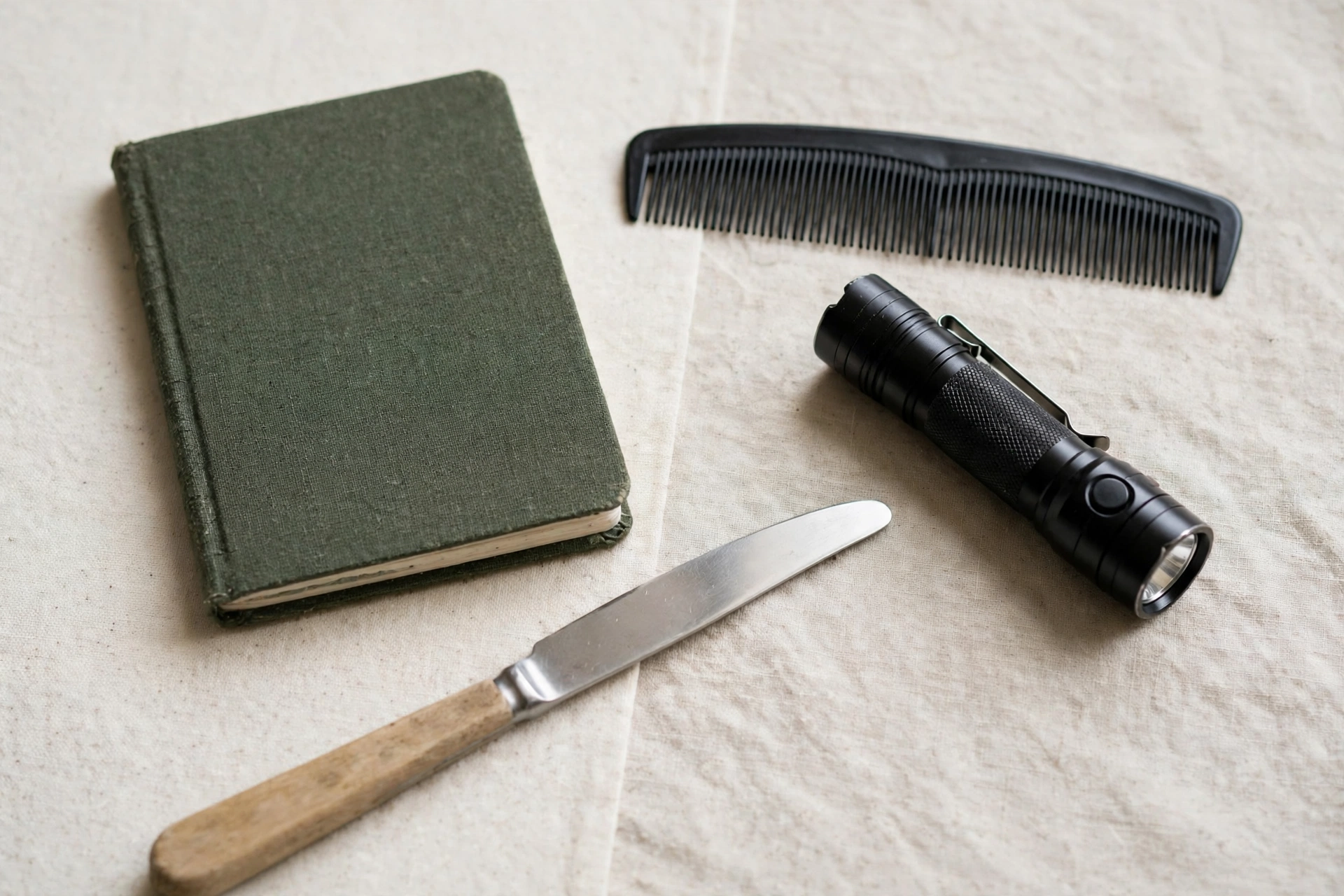
Comparing a measurement with familiar objects can make an unfamiliar length easier to understand. Although not every item comes in an exact 7-inch size, several everyday products have common dimensions that approach this length.
A small notebook, a dinner knife, a compact grooming tool, or a handheld accessory may provide a useful visual reference. Before using an object as a measuring guide, check which dimension is being compared. The length of a tool is not the same as the width of its handle, and the height of a container is not necessarily its diameter.
You can also picture 7 inches as a line measuring just under 18 centimetres. This mental image is helpful when shopping online, organising storage, choosing accessories, or checking whether a small item will fit inside a drawer or bag.
10 everyday objects that measure around 7 inches
The following objects can help you develop a better sense of what 7 inches looks like. Their dimensions are approximate examples, not guaranteed measurements. Actual sizes vary by model, manufacturer, design, and product type.
1. A Dinner Knife
Some dinner knives measure approximately 7 inches in total length, particularly compact designs. A knife of this size can serve as a convenient reference when estimating the length of a small household item. Other dinner knives are longer, especially formal table knives and steak knives. Compare the full length from the tip to the end of the handle rather than measuring only the blade.
2. A Small Notebook
Certain pocket notebooks and compact journals measure around 7 inches along their longer edge. They are common stationery items that can provide a quick visual comparison when placed beside another object. Notebooks come in many formats, including square, rectangular, and miniature designs. Check the listed height and width if you need a more accurate reference.
3. A Short Ruler
A short ruler designed for pencil cases, craft kits, or compact stationery sets may measure approximately 7 inches long. It offers a particularly useful reference because its straight edges make the length easy to compare with another item. Many standard school rulers measure 12 inches, while some miniature rulers are shorter. A ruler should only be treated as a 7-inch reference when its actual length has been verified.
4. A Hairbrush
Some compact hairbrushes, especially travel-friendly or handbag-sized models, measure close to 7 inches from the end of the handle to the opposite edge of the brush head. Larger paddle brushes can be substantially longer. The shape of the brush also affects its width, so its overall length is the most relevant dimension for this comparison.
5. A Comb
A full-size pocket comb or compact styling comb can be around 7 inches long. This makes it a useful everyday reference for visualising a measurement that is slightly shorter than 18 centimetres. Small folding combs and travel combs are often considerably shorter. Choose a full-length model if you want a comparison close to 7 inches.
6. A Kitchen Spatula
Certain compact kitchen spatulas and small silicone turners measure approximately 7 inches in total length. They are useful examples because their handles and working ends form one easily recognisable object. Many cooking spatulas are longer than this, especially models intended for deep cookware or outdoor grilling. Product dimensions are the best way to confirm the total length.
7. A Small Flashlight
A compact handheld flashlight may measure around 7 inches long, depending on its intended use and battery design. Some models are designed for drawers, emergency kits, camping equipment, or general household tasks. Pocket flashlights can be much shorter, while heavy-duty flashlights may be considerably longer. Use the body length rather than the beam distance or packaging dimensions when making a comparison.
8. A Travel Hairbrush with Handle
Some small handled travel brushes measure close to 7 inches from end to end. Their compact design makes them easy to carry in a handbag, gym bag, or overnight luggage. The size depends on whether the brush has a folding handle, a wide head, or a narrow profile. Check the complete dimensions rather than relying on the product description alone.
9. A Small Kitchen Tongs
Compact kitchen tongs intended for serving snacks, handling small foods, or working with a small pan may be around 7 inches long. They provide another familiar example of a tool with an elongated shape. Many cooking tongs are 9 inches or longer because extra length helps keep hands away from heat. Only shorter serving or cooking models should be considered close comparisons.
10. A Compact Cosmetic Brush
Some larger makeup brushes, such as powder brushes or handled face brushes, measure approximately 7 inches in overall length. Their long handles and brush heads make them easy to recognise as examples of this general size. Smaller eye brushes and travel brushes are often shorter. The total length can also change depending on the brush head, handle material, and intended application.
Important note: All these examples are approximate. Dimensions vary by model and manufacturer, and even products with similar names can differ noticeably in size. If precision matters, measure the item directly or consult its published specifications.
How to estimate 7 inches without a ruler
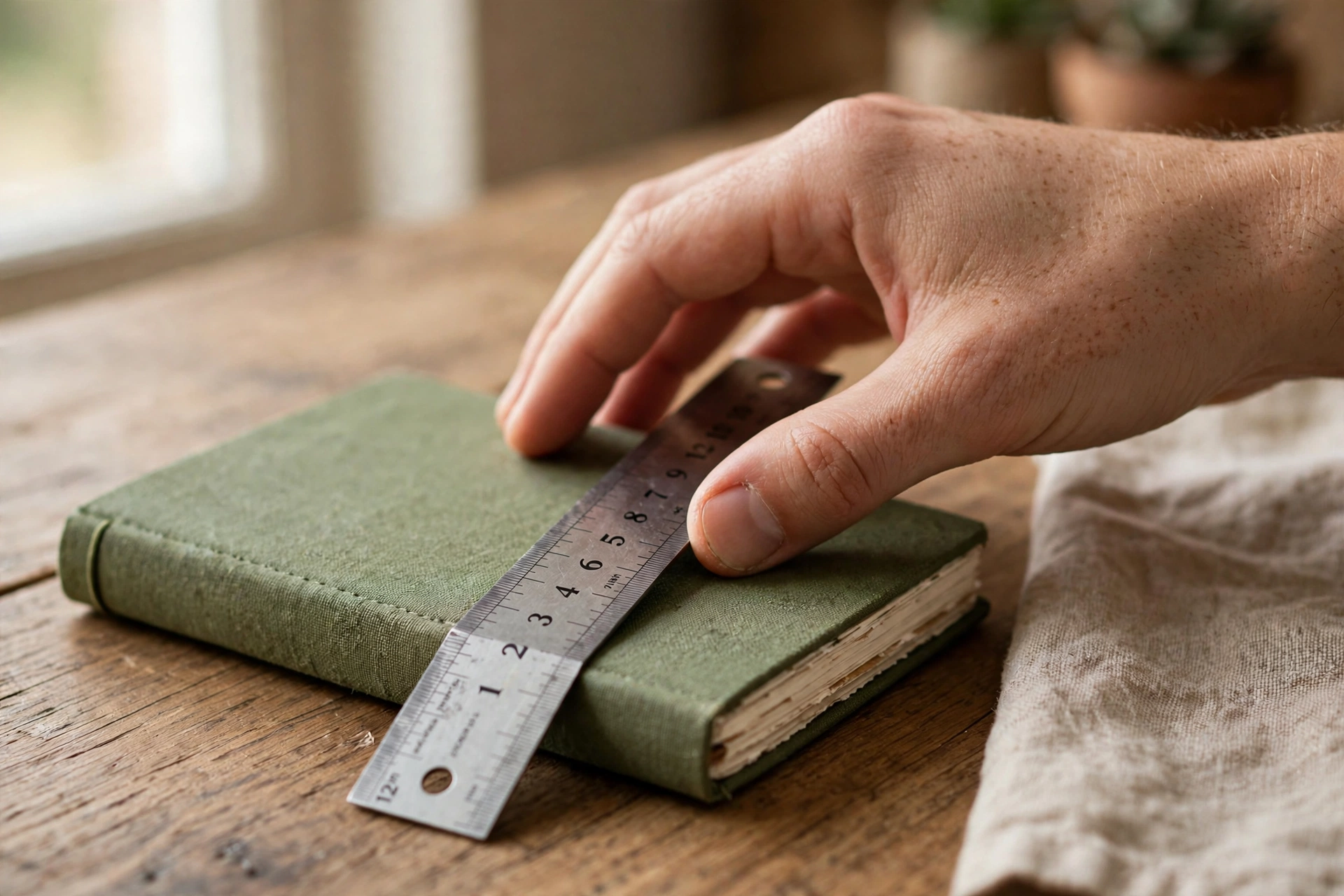
You do not always need a measuring tool to make a reasonable estimate. Familiar reference points, repeated hand measurements, and simple comparisons can help you judge a length of approximately 7 inches.
Use your hand as a reference
The width of an adult hand or the distance across part of the palm can help you estimate a longer measurement. However, hand sizes differ significantly, so this method is more useful after you have compared your hand with a ruler at least once. For a better estimate, remember how much of your hand corresponds to a known length. You can then use that reference when measuring small objects informally.
Compare the object with a familiar item
Choose a household object whose length you already know. A verified 7-inch ruler, for example, provides a much more dependable reference than guessing from an object that merely looks about the right size. Place the two items side by side and align their starting points. If the object being measured extends beyond the reference, it is longer; if it falls short, it is shorter.
Use a paper strip
A paper strip can help you create a temporary measurement guide. If you have access to a ruler once, mark a 7-inch segment on the paper and keep it for future comparisons. Without any measuring tool or known reference, a paper strip alone cannot establish an exact 7-inch length. It becomes useful when you have marked the correct length beforehand.
Estimate using a standard sheet of paper
In the United States, standard letter paper measures 8.5 inches by 11 inches. Seven inches is shorter than the paper’s 8.5-inch width, making that edge a useful reference when estimating by sight. You can compare the target length with the width of the sheet and judge how much shorter it is. This remains an estimate unless you mark or measure the exact distance.
Divide a known length into smaller sections
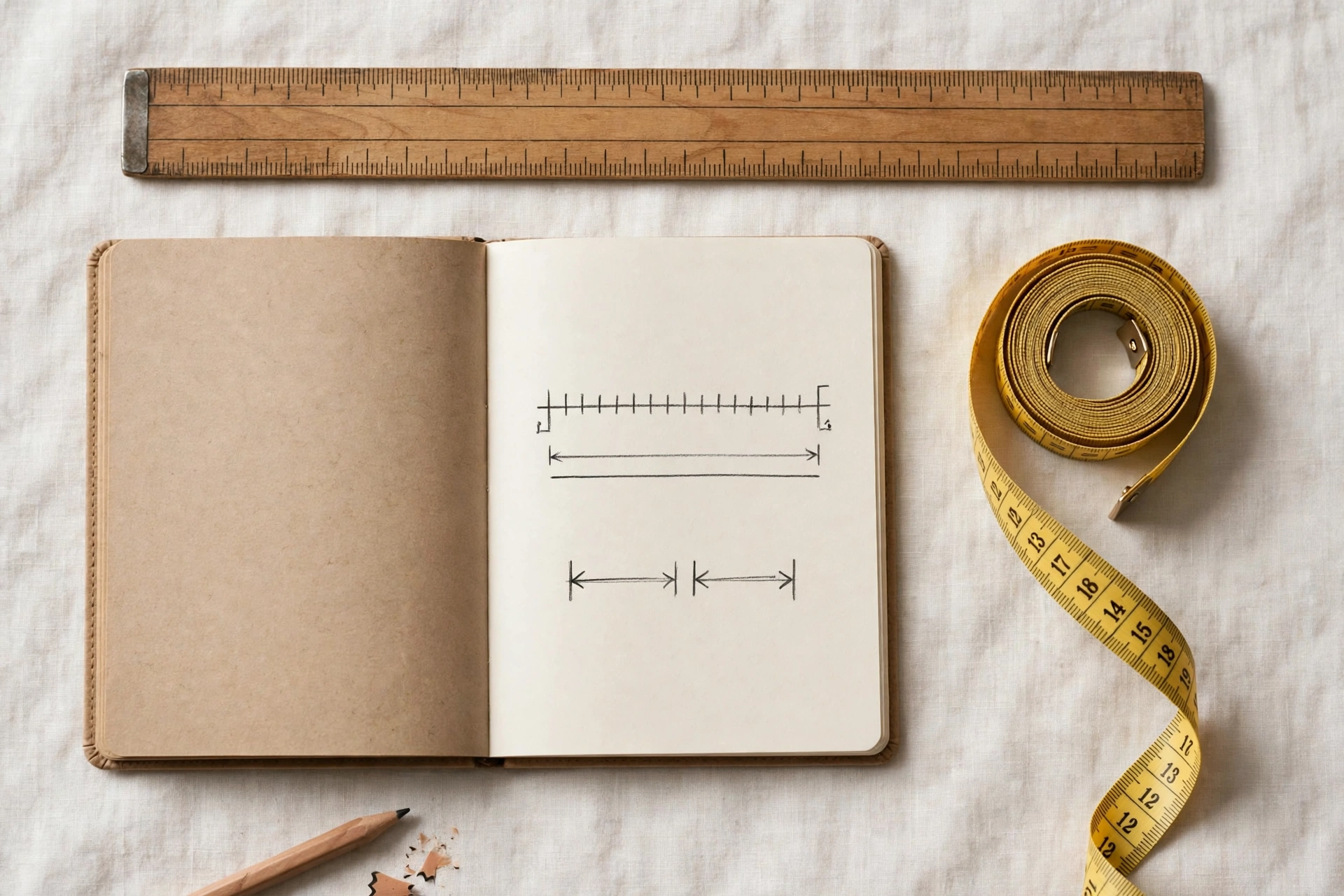
If you have a known 12-inch length, such as a standard ruler, you can estimate 7 inches by identifying seven of its twelve one-inch intervals. You can also use a tape measure to mark the desired point directly. This approach is generally more reliable than estimating from hand size because the reference length is defined and the divisions are consistent.
Frequently Asked Questions
Is 7 inches longer than half a foot?
Yes. Half a foot equals 6 inches, so 7 inches is 1 inch longer than half a foot.
How many centimetres are in 7 inches?
Seven inches equals exactly 17.78 centimetres. The conversion uses the standard relationship of 1 inch to 2.54 centimetres.
How many millimetres is 7 inches?
Seven inches equals 177.8 millimetres. To convert inches into millimetres, multiply the number of inches by 25.4.
Is 7 inches close to 18 centimetres?
Yes. Seven inches equals 17.78 centimetres, which is 0.22 centimetres less than 18 centimetres. For a rough visual estimate, the two lengths are very close.
How many feet is 7 inches?
Seven inches equals 7/12 of a foot, or approximately 0.5833 feet. It is slightly more than half a foot.
How many yards is 7 inches?
Seven inches equals approximately 0.1944 yards. Since one yard contains 36 inches, you divide 7 by 36 to make the conversion.
Can I measure 7 inches with my hand?
You can estimate 7 inches using your hand, but the result depends on your hand size. For better accuracy, compare your hand with a ruler or tape measure first.
What everyday object is closest to 7 inches?
There is no single object that is always exactly 7 inches long. A compact notebook, a short ruler, a full-size comb, or a small flashlight may be close, depending on the particular model.
Why is knowing a 7-inch measurement useful?
Knowing this length can help when comparing product dimensions, checking storage space, selecting household accessories, following craft instructions, and converting measurements between imperial and metric units.
Final Thoughts
Seven inches is a practical everyday measurement that becomes easier to understand when expressed in different units and compared with familiar objects. It equals 17.78 centimetres, 177.8 millimetres, 0.5833 feet, 0.1778 metres, and approximately 0.1944 yards.
Although common household items can provide a helpful visual reference, their sizes are not standardised. Use a ruler or tape measure whenever accuracy is important, and treat object comparisons as estimates rather than exact measurements.
For a broader introduction to measurement systems and how lengths are expressed, explore the international system of units.

Grace is a lifestyle writer from California who loves starting mornings with positivity. At Mornetic, she shares uplifting quotes and cheerful messages to brighten your day.