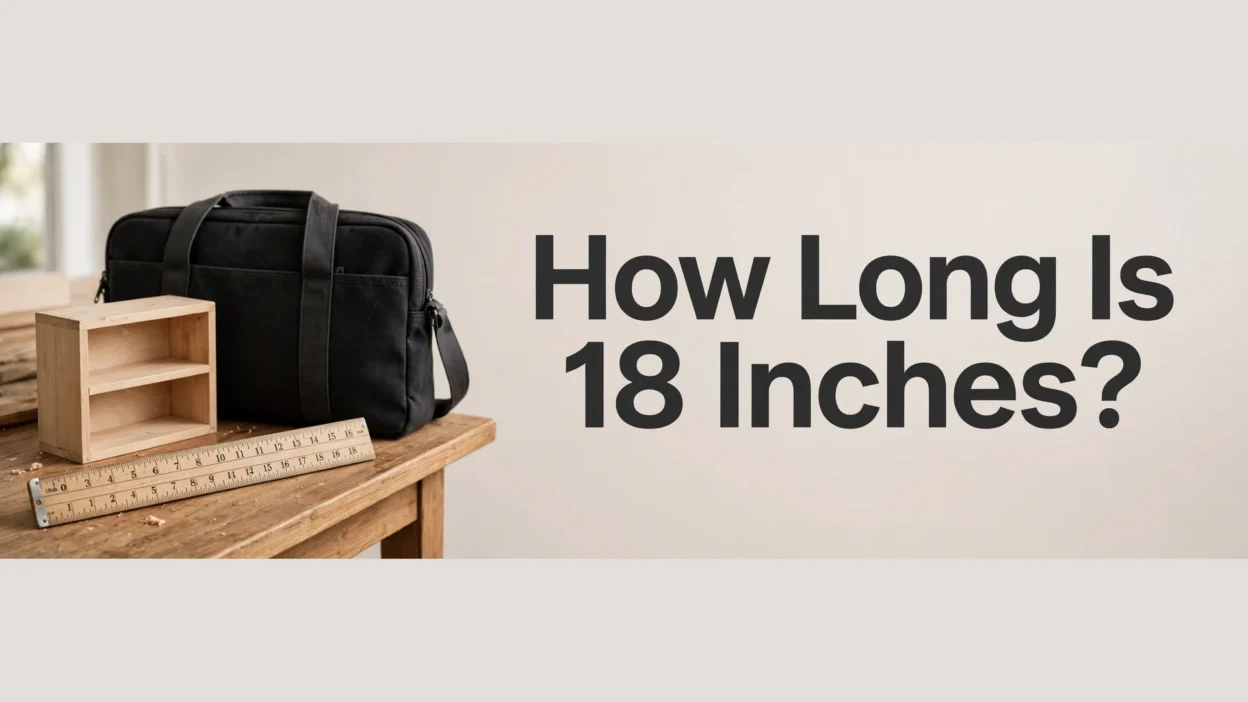
Eighteen inches is equal to 45.72 centimeters, 457.2 millimeters, 1.5 feet, or 0.4572 meters. It is one and a half feet long, making it a useful measurement for estimating the size of household items, school supplies, small pieces of furniture, and everyday objects. Although 18 inches may be difficult to visualize without a ruler, familiar items can help you understand this length.
Whether you are measuring a shelf, checking the dimensions of a package, planning a home improvement project, or comparing the length of an object, knowing what 18 inches looks like makes estimating easier. You can also convert this measurement into other units when working with metric specifications or product dimensions.
This guide explains how long 18 inches is, provides a conversion chart, and compares the measurement with 10 everyday objects. You will also learn practical ways to estimate this length without a ruler and find answers to common measurement questions.
How Long Is 18 Inches?
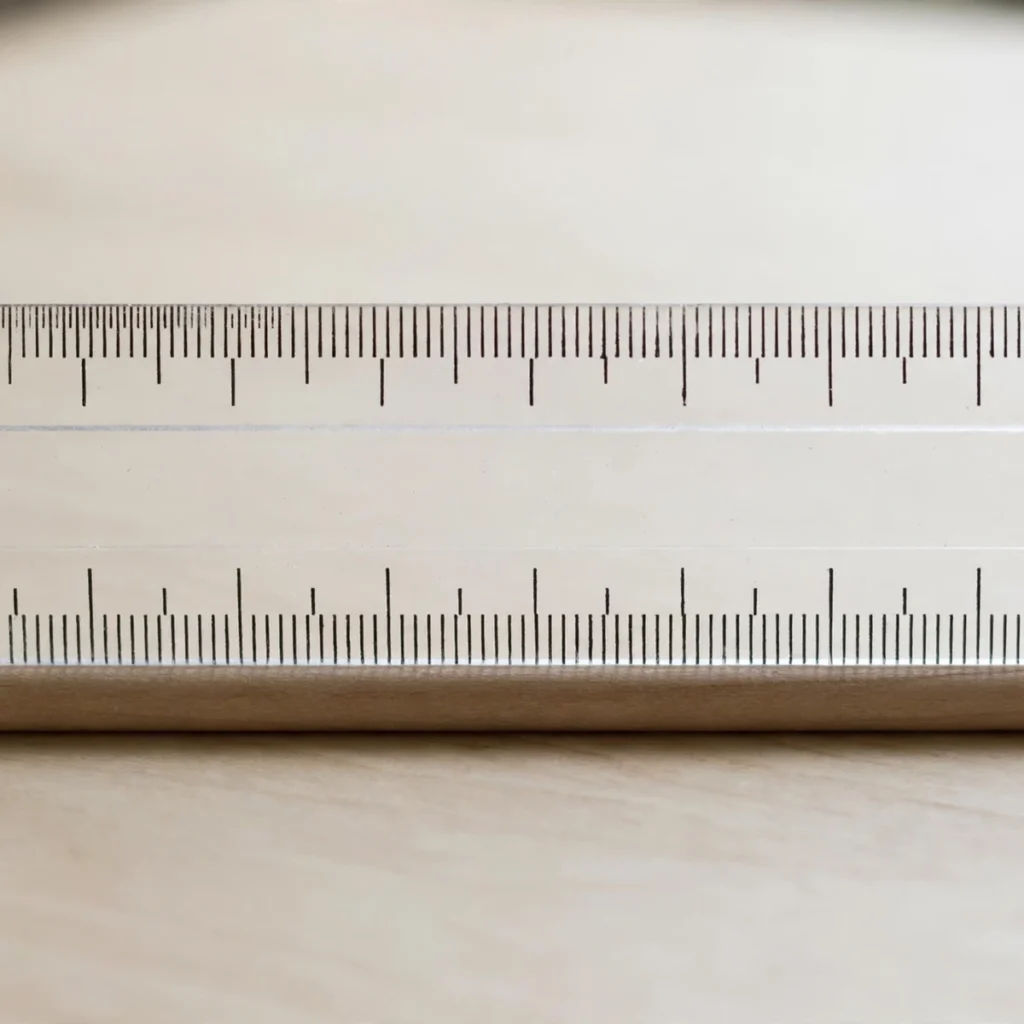
Eighteen inches measures exactly 1.5 feet. Imagine a standard 12-inch ruler and add another 6 inches to its length. Together, those two lengths create an 18-inch measurement.
In metric units, 18 inches equals 45.72 centimeters or 457.2 millimeters. It is also 0.4572 meters, which is slightly less than half a meter. These equivalents make the measurement useful when comparing products described in different unit systems.
Here are the essential conversions for 18 inches:
- Inches: 18 inches
- Feet: 1.5 feet
- Centimeters: 45.72 cm
- Millimeters: 457.2 mm
- Meters: 0.4572 m
- Yards: 0.5 yards
To visualize the length, picture a medium-sized laptop bag, a short section of a countertop, or a typical adult forearm measured from the elbow toward the fingertips. These objects and body-based comparisons can help you estimate the distance, although their actual dimensions vary.
An 18-inch measurement is also useful for planning small projects. For example, it can describe the width of a compact shelf, the length of a decorative item, or one dimension of a storage container. Always check the manufacturer’s specifications when precise measurements matter.
18 Inches Conversion Chart
Converting inches into other units is straightforward once you know the basic relationships. One foot contains 12 inches, one inch equals 2.54 centimeters, and one yard contains 36 inches.
The following chart covers measurements from 0.5 inch to 24 inches. It includes feet, centimeters, millimeters, meters, and yards so you can compare common lengths without performing each calculation yourself.
| Inches | Feet | Centimeters | Millimeters | Meters | Yards |
|---|---|---|---|---|---|
| 0.5 | 0.0417 | 1.27 | 12.7 | 0.0127 | 0.0139 |
| 1 | 0.0833 | 2.54 | 25.4 | 0.0254 | 0.0278 |
| 2 | 0.1667 | 5.08 | 50.8 | 0.0508 | 0.0556 |
| 3 | 0.25 | 7.62 | 76.2 | 0.0762 | 0.0833 |
| 4 | 0.3333 | 10.16 | 101.6 | 0.1016 | 0.1111 |
| 5 | 0.4167 | 12.7 | 127 | 0.127 | 0.1389 |
| 6 | 0.5 | 15.24 | 152.4 | 0.1524 | 0.1667 |
| 7 | 0.5833 | 17.78 | 177.8 | 0.1778 | 0.1944 |
| 8 | 0.6667 | 20.32 | 203.2 | 0.2032 | 0.2222 |
| 9 | 0.75 | 22.86 | 228.6 | 0.2286 | 0.25 |
| 10 | 0.8333 | 25.4 | 254 | 0.254 | 0.2778 |
| 11 | 0.9167 | 27.94 | 279.4 | 0.2794 | 0.3056 |
| 12 | 1 | 30.48 | 304.8 | 0.3048 | 0.3333 |
| 13 | 1.0833 | 33.02 | 330.2 | 0.3302 | 0.3611 |
| 14 | 1.1667 | 35.56 | 355.6 | 0.3556 | 0.3889 |
| 15 | 1.25 | 38.1 | 381 | 0.381 | 0.4167 |
| 16 | 1.3333 | 40.64 | 406.4 | 0.4064 | 0.4444 |
| 17 | 1.4167 | 43.18 | 431.8 | 0.4318 | 0.4722 |
| 18 | 1.5 | 45.72 | 457.2 | 0.4572 | 0.5 |
| 19 | 1.5833 | 48.26 | 482.6 | 0.4826 | 0.5278 |
| 20 | 1.6667 | 50.8 | 508 | 0.508 | 0.5556 |
| 21 | 1.75 | 53.34 | 533.4 | 0.5334 | 0.5833 |
| 22 | 1.8333 | 55.88 | 558.8 | 0.5588 | 0.6111 |
| 23 | 1.9167 | 58.42 | 584.2 | 0.5842 | 0.6389 |
| 24 | 2 | 60.96 | 609.6 | 0.6096 | 0.6667 |
Values are rounded to four decimal places where necessary. Metric conversions are exact for the listed inch measurements.
Simple Conversion Formulas
You can calculate the equivalent of 18 inches in several units using a few simple formulas.
Inches to feet: Divide the number of inches by 12.
18 ÷ 12 = 1.5 feet
Inches to centimeters: Multiply the number of inches by 2.54.
18 × 2.54 = 45.72 cm
Inches to millimeters: Multiply the number of inches by 25.4.
18 × 25.4 = 457.2 mm
Inches to meters: Multiply the number of inches by 0.0254.
18 × 0.0254 = 0.4572 m
Inches to yards: Divide the number of inches by 36.
18 ÷ 36 = 0.5 yards
For reverse conversions, divide centimeters by 2.54 to get inches, multiply feet by 12 to get inches, or multiply meters by approximately 39.37 to get inches. These formulas are helpful when reading international product listings or following instructions that use different measurement systems.
Everyday Objects That Help You Visualize 18 Inches
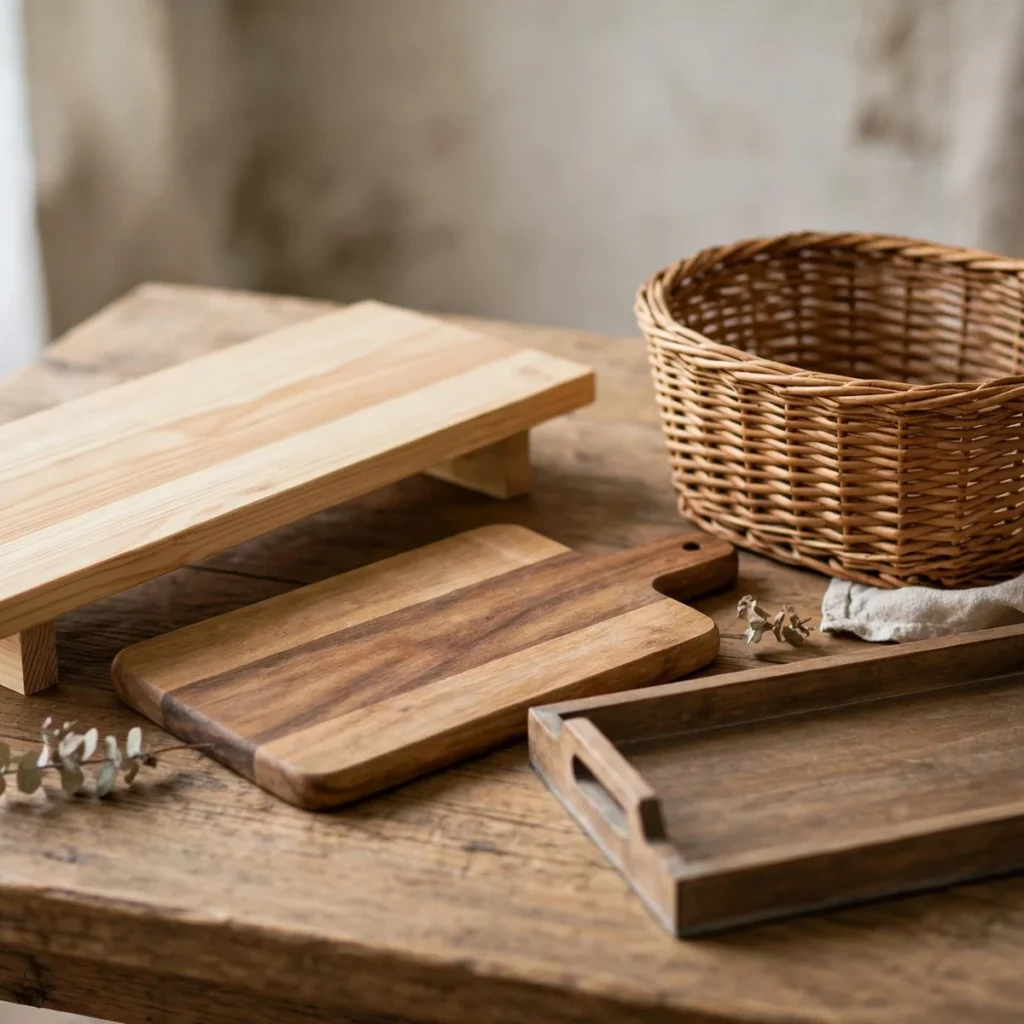
Comparing a measurement with familiar objects is an easy way to develop a better sense of length. Although few everyday items measure exactly 18 inches, several common objects can provide useful reference points.
The key is to distinguish between an object’s approximate size and its verified dimensions. A laptop, a cutting board, or a storage basket might be close to 18 inches in one direction, but its dimensions can vary by model and design.
Consider these types of comparisons when estimating the length:
- Household items: Shelves, trays, and small storage containers may have dimensions near 18 inches.
- School and office supplies: Some rulers, craft materials, and desk accessories are designed around convenient inch measurements.
- Personal items: Bags, cases, and certain accessories may have a side measuring approximately 18 inches.
- Furniture components: Small shelves, drawers, and decorative panels often use dimensions in this general range.
- Body-based references: An individual’s forearm or hand span can provide a rough comparison after being measured once.
The following 10 examples explain how you can use everyday objects to understand an 18-inch length. Treat them as visual guides rather than universal standards, because the dimensions of manufactured products and natural objects are not identical.
10 Everyday Objects That Are About 18 Inches Long
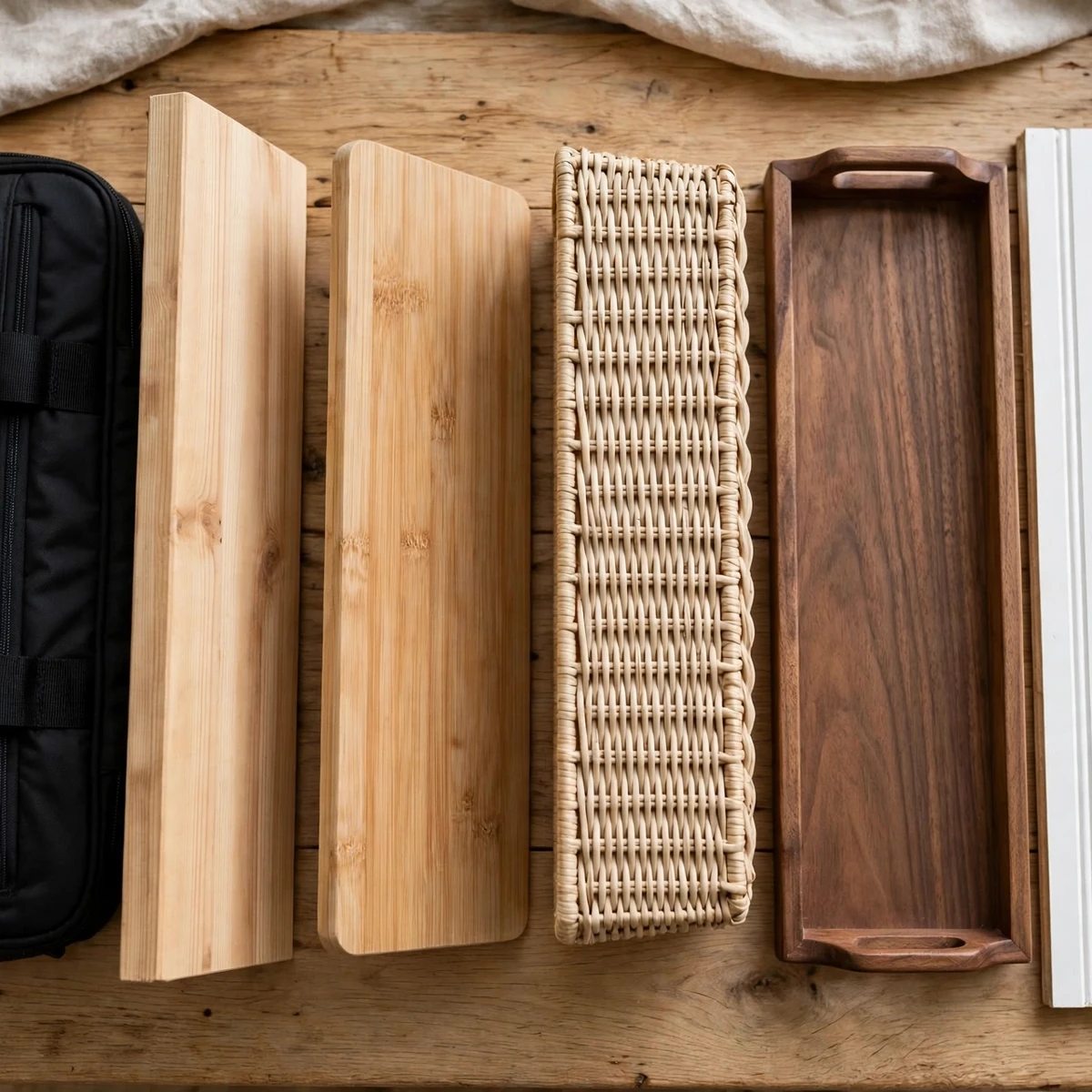
1. A Standard School Ruler and Half of Another
A common school ruler measures 12 inches, or one foot. Adding another 6 inches gives you a total length of 18 inches. This is one of the simplest ways to visualize the measurement because rulers are specifically designed to provide consistent references.
Imagine placing a 12-inch ruler on a desk and extending the line another half of its length. The combined distance represents exactly 18 inches if the second section measures 6 inches.
How to measure it: Place a 12-inch ruler on a flat surface. Mark its endpoint, then measure another 6 inches from that point. The distance from the original starting point to the second mark is 18 inches.
If you have two rulers, check their actual markings and align the second ruler carefully. Avoid leaving gaps or overlapping sections, as either mistake can change the total measurement.
Variation to consider: School rulers are available in several lengths, including 6, 12, and 18 inches. Some plastic rulers have rounded edges or protective end caps that extend beyond the marked scale. Always use the measurement markings rather than the physical edge if you need accuracy.
2. A Medium-Sized Laptop Bag
A medium-sized laptop bag may measure close to 18 inches along its longest side. Bags designed for laptops, documents, or everyday commuting often have dimensions in this general range, especially when they accommodate larger devices and accessories.
The length of a bag can be helpful when estimating 18 inches because its rectangular shape creates a clear visual reference. Picture a bag resting horizontally on a table, with its long edge extending approximately one and a half feet.
How to measure it: Place the empty bag on a flat surface and measure from one outer end to the other along its longest dimension. Keep the measuring tape straight rather than following the curved surface.
Check whether the product listing specifies external dimensions or internal capacity. The two measurements serve different purposes, particularly when determining whether a laptop or document will fit inside.
Variation to consider: Laptop bags differ in length, width, padding, handle placement, and overall shape. A bag marketed for a particular laptop screen size does not necessarily have an 18-inch exterior dimension. Flexible fabric can also change shape when the bag is filled, so measure the actual item before relying on it as a reference.
3. A Small Shelf Board
A short shelf board can provide a useful example of an 18-inch length. Compact shelves are common in bathrooms, closets, kitchens, workshops, and home offices. An 18-inch board is long enough to hold a few small items without requiring a large amount of wall space.
For visualization, picture a shelf extending across a small section of wall. Its length is approximately 45.72 centimeters, which is slightly less than half a meter.
How to measure it: Lay the board flat and place a tape measure at one end. Extend the tape along the board’s longest straight edge until it reaches the opposite end. Read the measurement at the board’s outer edge.
If you are installing a shelf, measure the available space separately. The board’s length should not be confused with the width or depth of the shelf.
Variation to consider: Shelf boards come in many standard and custom lengths. Some are sold with nominal dimensions that differ slightly from their actual finished sizes, while decorative end caps or brackets can increase the overall footprint. For installation, rely on the product’s specified finished dimensions and verify the available space before cutting or mounting anything.
4. A Large Cutting Board
A large cutting board may have a long side near 18 inches, making it another useful household comparison. Such boards provide a broad surface for preparing vegetables, slicing bread, or organizing ingredients.
The rectangular outline makes the length relatively easy to imagine. If you picture a cutting board with a shorter side around 12 inches and a longer side around 18 inches, the long edge offers a practical visual reference for the measurement.
How to measure it: Set the cutting board on a level countertop. Measure across the longest dimension, from the farthest point on one end to the corresponding point on the opposite end. If the corners are rounded, measure between the outermost points rather than along the curved corners.
For an irregular or circular board, use a straight line across its greatest dimension instead.
Variation to consider: Cutting boards are manufactured from wood, plastic, bamboo, and composite materials. Their dimensions vary considerably, and some products have handles or juice grooves that affect how the usable surface compares with the overall size. A board that looks large in a photograph may be shorter or longer than 18 inches. Check the listed dimensions or measure it directly.
5. A Compact Keyboard Tray
Some compact keyboard trays and desk accessories have a dimension close to 18 inches. This is especially plausible for narrow trays, small pullout organizers, and accessories intended for limited desk space.
Although a keyboard itself is not a reliable universal reference, the tray underneath it can offer a useful comparison. A tray measuring 18 inches from end to end is exactly 1.5 feet long.
How to measure it: If the tray is removable, place it on a flat surface and measure the longest horizontal edge. For a fixed tray, extend a tape measure from one outer side to the other without bending it around the corners.
Make sure you distinguish the tray’s external length from the width of the usable flat surface. Raised side edges and mounting hardware can affect those dimensions.
Variation to consider: Keyboard trays are designed around different desks, keyboard sizes, and mounting systems. Some measure considerably more than 18 inches, while others are shorter. Product photographs may also distort proportions. Use the manufacturer’s dimension diagram when selecting an accessory or planning a desk layout.
6. A Storage Basket
A rectangular storage basket may measure approximately 18 inches along one side. Baskets of this size can hold folded towels, toys, craft supplies, cleaning products, or miscellaneous household objects.
Because baskets often have visible edges and a clearly defined outline, they are convenient for estimating the length. Imagine a basket placed lengthwise beneath a table or on a shelf, with its longer side spanning one and a half feet.
How to measure it: Empty the basket if necessary and place it on a flat surface. Measure along the outside of its longest side, from one end to the other. For flexible baskets, gently restore the sides to their normal shape before taking the measurement.
If you are checking whether the basket will fit into a cabinet, measure the cabinet opening separately and allow for any handles or protruding edges.
Variation to consider: Storage baskets may be woven, molded, collapsible, or made from fabric. Their sides can bow outward or inward, changing the measured dimensions. Handles may extend beyond the body, and advertised dimensions sometimes refer to the top rather than the base. Measure the specific section relevant to your needs instead of assuming every basket has a standard size.
7. A Small Decorative Wall Panel
Decorative wall panels, framed prints, and other rectangular home accessories can have a side measuring around 18 inches. Their dimensions are particularly useful when planning a gallery wall, arranging artwork, or comparing decorative pieces.
A panel that is 18 inches wide spans 45.72 centimeters across. When viewed beside smaller frames, this width can help illustrate the difference between compact and medium-sized wall decorations.
How to measure it: Place the panel on a flat surface or measure it while it is mounted. Start at the outermost edge of the frame and extend the tape measure to the opposite edge. If the frame is not included in the listed artwork dimensions, account for it separately.
For wall planning, mark the proposed width with removable tape to see how the panel will fit before installing it.
Variation to consider: Decorative panels and framed prints come in numerous sizes, shapes, and frame thicknesses. The artwork itself may be 18 inches wide even when the complete framed piece is larger. Perspective can also make a mounted panel appear shorter or longer than it is. Use actual measurements when positioning multiple pieces or checking available wall space.
8. A Short Yoga or Exercise Accessory
Some exercise accessories, including compact stretching supports, foam blocks with extended dimensions, and small workout platforms, may have a side near 18 inches. Their exact size depends on the product’s intended purpose and design.
This example works best when you use a specific accessory with a verified dimension. It is less useful to assume that an entire exercise mat or piece of gym equipment is 18 inches long, since many of these products are substantially larger.
How to measure it: Place the accessory on the floor and identify its longest straight dimension. Extend a tape measure from one end to the other, keeping the tape level and straight. If the object has a curved surface, measure the straight-line distance between its outermost endpoints.
For a piece of equipment that cannot be moved safely, measure it in place without disturbing its supports or moving components.
Variation to consider: Fitness products vary by brand, model, intended user, and exercise type. Foam may compress under pressure, while molded accessories may include raised sections that extend beyond the central body. Check whether the listed dimensions describe the unloaded product, its usable surface, or its packaging. These distinctions matter when selecting storage or arranging workout space.
9. A Small Pet Bed
A small pet bed may have a dimension around 18 inches, particularly when it is designed for a compact animal or intended for use inside a carrier. The actual fit depends on the animal, the bed’s shape, and the amount of cushioning.
As a visual comparison, picture a small rectangular cushion on the floor. An 18-inch side extends just under half a meter, offering a useful reference when arranging a pet corner or comparing compact accessories.
How to measure it: Lay the bed in its normal resting position and measure across the longest outside dimension. Avoid pressing down on the cushion, because compression can change its apparent size. For a round bed, measure straight across the widest part.
When checking whether it will fit inside a carrier, compare the bed’s external dimensions with the carrier’s usable interior dimensions.
Variation to consider: Pet beds differ in padding, bolsters, shapes, and construction. A soft bed can expand when fluffed or flatten when used, and its external length may be greater than the sleeping area. Product size labels also vary between manufacturers. Choose a bed using the actual measurements and your pet’s needs rather than relying on a general size category.
10. A Long Serving Tray
A serving tray may measure approximately 18 inches along its longest side. Trays in this range can be useful for carrying drinks, organizing condiments, serving snacks, or displaying small decorative items.
Their flat surfaces and defined edges make them convenient visual examples. Imagine a tray placed on a dining table, extending from one end to the other across a distance of 45.72 centimeters.
How to measure it: Place the tray on a level surface and measure along its longest outer edge. If it has handles, determine whether the handles are included in the overall length. For a rounded tray, measure the greatest straight-line distance across it.
If you are comparing trays for a cabinet, also measure the available storage opening and account for any raised edges.
Variation to consider: Serving trays come in oval, rectangular, circular, and irregular designs. Some have handles that add several inches to the overall footprint, while others feature raised rims that make the usable surface smaller than the exterior. Materials and decorative borders also affect the dimensions. Check the manufacturer’s measurements to establish whether the stated length includes handles and other protrusions.
How to Estimate 18 Inches Without a Ruler

You do not always need a ruler to estimate a length of 18 inches. Everyday references, simple arithmetic, and a few practical techniques can help you get close enough for many informal tasks.
However, an estimate is not the same as an exact measurement. If you are cutting building materials, installing furniture, or checking whether an item will fit in a tight space, use a properly calibrated measuring tool.
Use a 12-Inch Reference
A standard 12-inch ruler provides a convenient starting point. Add another 6 inches to reach 18 inches.
If you have a ruler marked in inches but no measuring tape, you can measure the first foot and then add half of that foot’s length. The second section must be exactly 6 inches for the total to be accurate.
This method is particularly useful for measuring books, small boards, craft materials, and desk accessories.
Compare the Length With a Known Object
Find an object whose dimensions you already know. A 12-inch ruler, for example, can help you estimate the required distance by visualizing an additional half-ruler.
Another approach is to use a household object you have measured previously. A shelf or tray can provide a useful reference if you know its exact length.
Avoid assuming that an unfamiliar object has standard dimensions simply because it resembles something you have seen before.
Use Your Forearm as a Personal Reference
Your forearm can provide a rough estimate after you measure it once. Measure from the elbow to the wrist, or from the elbow toward the fingertips, and record the distance.
Depending on your body proportions, one of these measurements may be close to 18 inches. However, forearm lengths differ significantly among individuals, so this method should not be treated as a universal standard.
For better results, establish your personal reference using a tape measure and remember which points you used.
Mark the Distance on a Flat Surface
If you need to estimate 18 inches while arranging furniture or planning a craft project, use a piece of string, removable tape, or a strip of paper.
Start with a known length and mark the endpoint. Add the remaining distance until the total reaches 18 inches. You can then transfer the mark to the surface or compare it with the space available.
This approach is practical for informal planning, but a flexible material can stretch or shift. Check the final distance with a ruler or tape measure whenever precision is important.
Count Repeated Short Measurements
When you have a short ruler or a measuring tool with a limited range, divide the distance into manageable sections.
For example, three consecutive 6-inch sections add up to 18 inches. Alternatively, one 12-inch section plus one 6-inch section produces the same total.
Keep each starting point aligned with the previous endpoint. Gaps and overlaps introduce errors that can accumulate over several measurements.
Frequently Asked Questions About 18 Inches
Is 18 Inches the Same as 1.5 Feet?
Yes. Eighteen inches equals exactly 1.5 feet because one foot contains 12 inches. Dividing 18 by 12 gives 1.5.
This is also described as one foot and six inches, which is often easier to visualize when measuring furniture or household objects.
How Many Centimeters Is 18 Inches?
Eighteen inches equals 45.72 centimeters. To calculate the conversion, multiply 18 by 2.54, the exact number of centimeters in one inch.
This conversion is useful when comparing product dimensions from manufacturers that use metric measurements.
How Many Millimeters Are in 18 Inches?
There are exactly 457.2 millimeters in 18 inches. Since one inch equals 25.4 millimeters, multiplying 18 by 25.4 gives 457.2.
Millimeters are useful when working with small parts, detailed craft projects, and technical specifications.
Is 18 Inches Almost Half a Meter?
Yes. Eighteen inches is 0.4572 meters, while half a meter is 0.5 meters. Therefore, 18 inches is 0.0428 meters, or 4.28 centimeters, shorter than half a meter.
The difference is small enough for a rough visual comparison, but it matters when precise dimensions are required.
What Common Objects Are About 18 Inches Long?
Some laptop bags, small shelf boards, cutting boards, serving trays, storage baskets, and decorative panels may have a dimension close to 18 inches.
These are examples rather than guaranteed standards. Products differ in shape and size, so check the dimensions of the particular item before using it as a measurement reference.
How Can I Measure 18 Inches Without a Tape Measure?
Use a 12-inch ruler and add another 6 inches, or combine three verified 6-inch sections. You can also use a known-length object as a visual reference.
For informal estimates, a previously measured forearm or a marked strip of paper may help. Use a proper measuring tool for projects that require accuracy.
Is 18 Inches Longer Than a Foot?
Yes. A foot contains 12 inches, so 18 inches is 6 inches longer than one foot. It is also 1.5 times the length of a foot.
Thinking of 18 inches as one full foot plus half a foot makes the measurement easier to picture.
How Many Yards Is 18 Inches?
Eighteen inches equals 0.5 yards, or half a yard. Since one yard contains 36 inches, dividing 18 by 36 gives 0.5.
This conversion can be helpful when estimating fabric lengths or comparing measurements expressed in yards.
Why Might an Object Advertised as 18 Inches Measure Differently?
A product’s listed dimensions may refer to its external size, internal space, usable surface, or nominal manufacturing dimensions. Rounded corners, handles, padding, and decorative edges can also affect how an object is measured.
For the most reliable result, check the manufacturer’s dimension diagram and measure the specific part that matters to your project.
Final Thoughts
Eighteen inches is a practical length to recognize because it appears in many household, office, storage, and home improvement contexts. The measurement equals 1.5 feet, 45.72 centimeters, 457.2 millimeters, 0.4572 meters, and half a yard.
Visual comparisons can make the length easier to understand. A small shelf board, a large cutting board, a laptop bag, or a serving tray may provide a useful reference when one of its dimensions is close to 18 inches. Nevertheless, these objects vary by design, so their actual measurements should always be checked when accuracy matters.
For quick estimates, remember that 18 inches is one foot plus another 6 inches. You can also use the conversion chart and formulas in this guide to switch between customary and metric units. Understanding these relationships makes everyday measuring easier, whether you are organizing a room, comparing products, or working on a simple DIY project.
For additional background on how standardized units relate to one another, explore this overview of the scientific study of the natural world.

Grace is a lifestyle writer from California who loves starting mornings with positivity. At Mornetic, she shares uplifting quotes and cheerful messages to brighten your day.