
Last Updated: April 2, 2026
Learning how to say “good morning” opens doors to warmer interactions in Chinese. While it begins with memorizing phrases, true mastery comes from understanding pronunciation nuances and cultural context.
This comprehensive guide explores common morning greetings, breaks down essential tones, and reveals the cultural etiquette that makes your greetings authentic. Whether you’re preparing for travel, connecting with Chinese-speaking colleagues, or exploring the language, you’ll find everything you need here.
How to Say Good Morning in Chinese

The most common way to say good morning in Chinese is:
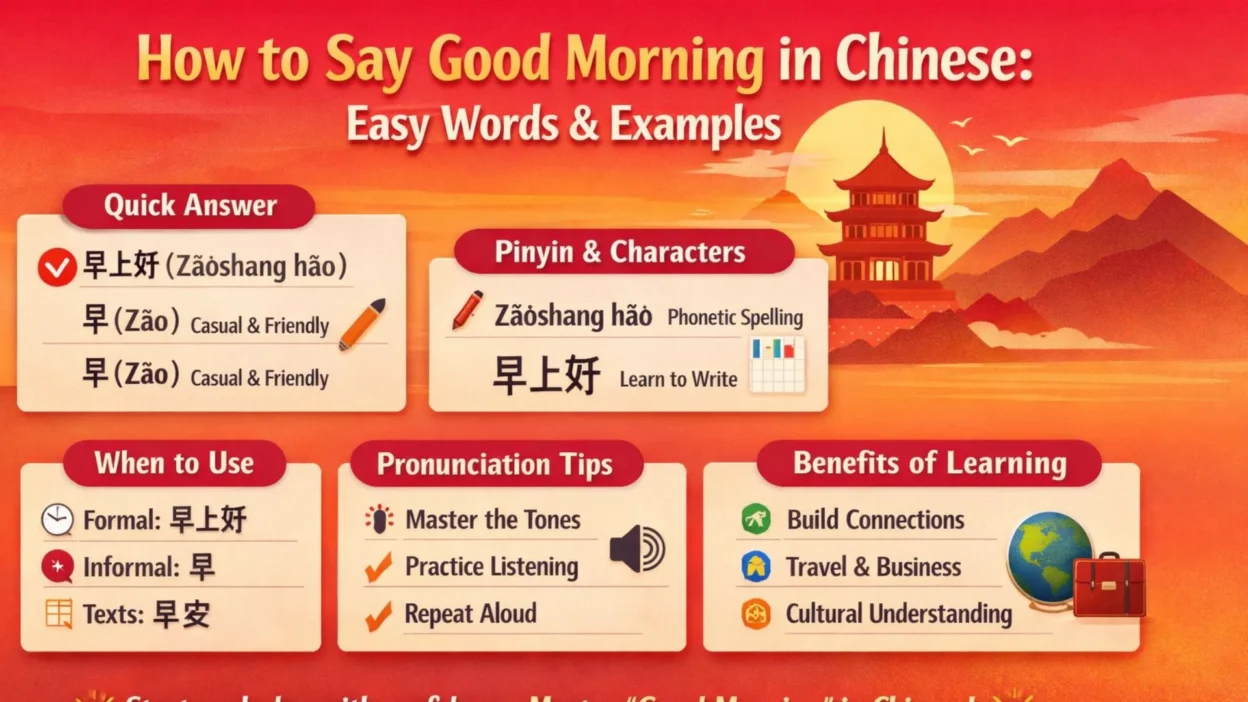
- 早上好 (Zǎoshang hǎo) – formal and standard
- 早 (Zǎo) – casual and friendly
- 早安 (Zǎo ān) – softer, often used in texts
- 早晨 (Jóusàhn) – Cantonese version
These greetings vary depending on context, relationship, and region.
The Standard “Good Morning” in Mandarin
The universal way to say “good morning” is 早上好 (Zǎoshang hǎo). Understanding its components helps with retention and proper usage:
- 早 (Zǎo): Means “early” or “morning”
- 上 (shang): Means “up” or “above”
- 好 (hǎo): Means “good”
Together, they create the literal translation “morning good”—the direct equivalent of “Good morning” that works in most situations.
👉 Example:
早上好!今天怎么样? (Good morning! How are you today?)
Different Ways to Say Good Morning in Chinese
- 早上好 (Zǎoshang hǎo) – formal standard greeting
- 早 (Zǎo) – casual and friendly
- 早安 (Zǎo ān) – soft and caring tone
- 早晨 (Zǎochén) – formal/literary use
- 上午好 (Shàngwǔ hǎo) – late morning greeting
- 哈喽 (Hā lóu) – informal “hello” style
- 嗨 (Hāi) – modern casual greeting
- 各位早 (Gèwèi zǎo) – group greeting
- 老师早 (Lǎoshī zǎo) – “Good morning teacher”
- 大家早 (Dàjiā zǎo) – “Good morning everyone”
Formal vs Informal Chinese Morning Greetings
Formal Situations
- Workplace meetings
- Meeting new people
- Customer interactions
- Teachers or bosses
👉 Use: 早上好
Informal Situations
- Friends
- Family
- Classmates
- Close colleagues
👉 Use: 早
How to Pronounce Chinese Greetings Correctly (Step-by-Step)
- Understand tone system first
- Practice 4 main tones
- Learn tone changes (sandhi)
- Break words into syllables
- Practice slowly first
- Listen and repeat
- Record your voice
- Focus on clarity
- Avoid flat pronunciation
- Practice daily
Good Morning in Chinese Pinyin Explained
- Zǎoshang hǎo = phonetic spelling
- Helps beginners pronounce correctly
- Shows tones clearly
- Useful for practice
- Learn tone marks
- Practice reading aloud
- Compare with native audio
- Helps avoid mistakes
- Build pronunciation confidence
- Essential for beginners
Chinese Morning Greetings for Different Situations
- Office → 早上好
- Friends → 早
- Teacher → 老师早
- Group → 大家早
- Online chat → 早安
- Hotel → polite formal greeting
- Travel → simple phrases
- Business → respectful tone
- Family → relaxed greeting
- Social events → flexible use
Best Chinese Greetings for Beginners
- Start with 早 (Zǎo)
- Learn 早上好 next
- Practice 早安 for texting
- Focus on pronunciation
- Avoid complex phrases initially
- Learn basic vocabulary
- Use daily repetition
- Watch Chinese content
- Use language apps
- Build confidence gradually
How Chinese Culture Influences Greetings
- Respect for elders is important
- Formality matters in communication
- Tone shows politeness
- Non-verbal gestures matter
- Hierarchy affects language
- Indirect communication style
- Harmony is valued
- Greetings show respect
- Context is always important
- Simplicity is appreciated
Daily Chinese Conversation Using Morning Greetings
- Start conversation with 早
- Add question: 你好吗?
- Talk about weather
- Ask about sleep
- Discuss daily plans
- Keep sentences simple
- Practice natural flow
- Use polite tone
- Smile while speaking
- Build confidence
Chinese Morning Greetings for Travel

- Learn basic phrases
- Use polite tone
- Speak slowly
- Use gestures if needed
- Respect local culture
- Practice before travel
- Use translation apps
- Keep phrases simple
- Listen carefully
- Stay confident
Advanced Tips to Sound Like a Native Chinese Speaker
- Use correct tones naturally
- Avoid overthinking
- Listen to natives daily
- Mimic pronunciation
- Practice real conversations
- Use short sentences
- Speak confidently
- Learn slang gradually
- Improve listening skills
- Stay consistent
Why Learning Chinese Greetings Is Important
- Builds first impression
- Shows respect
- Improves communication
- Helps in travel
- Useful in business
- Boosts confidence
- Opens cultural understanding
- Strengthens relationships
- Makes learning easier
- Creates connection
Benefits of Learning Basic Chinese Phrases
- Quick communication
- Easy to remember
- Useful daily
- Builds foundation
- Improves pronunciation
- Increases confidence
- Helps in real situations
- Makes learning fun
- Encourages practice
- Saves time
When to Use Each Morning Greeting in Chinese
- Use 早上好 in formal situations
- Use 早 with friends and close colleagues
- Use 早安 in messages or in Taiwan
- Use Cantonese greeting in Hong Kong
- Match greeting with relationship
- Use polite tone with strangers
- Office = semi-formal
- Family = casual
- Online chats = flexible
Mastering Chinese Pronunciation and Tones
Tones distinguish word meanings in Chinese, making proper pronunciation crucial.
Here’s how to handle 早上好 (Zǎoshang hǎo):
- Zǎo: Third tone (dip then rise)
- shang: Neutral tone (light)
- hǎo: Changes to second tone in flow
Pro Tip: Listen to native speakers through apps like HelloChinese or Pleco.
Chinese Pronunciation Tips for Beginners
- Practice tones daily
- Listen to native speakers
- Repeat aloud consistently
- Record your voice
- Break words into parts
- Focus on mouth movement
- Avoid rushing
- Use language apps
- Practice real conversations
- Stay consistent
Alternative Morning Greetings
The Casual 早 (Zǎo)
This one-character greeting works like “Mornin’!”
Use it with:
- Friends
- Classmates
- Close coworkers
The Gentle 早安 (Zǎo ān)
Meaning “peaceful morning,” this version is softer and more expressive.
Common in:
- Taiwan
- Text messages
- Social media
Common Daily Chinese Greetings Beyond Morning
- 你好 (Nǐ hǎo) = Hello
- 晚上好 = Good evening
- 再见 = Goodbye
- 谢谢 = Thank you
- 不客气 = You’re welcome
- These build conversation
- Useful daily
- Easy to learn
- Improve fluency
- Expand vocabulary
⭐ Common Mistakes When Saying Good Morning in Chinese
- Mispronouncing tones
- Saying flat “Zao” instead of Zǎo
- Using casual greeting in formal setting
- Ignoring cultural etiquette
- Translating directly from English
- Speaking too fast
- Not practicing tones
- Using wrong regional greeting
- Forgetting context
- Lack of confidence
Chinese Greeting Culture and Etiquette

Choosing the right greeting depends on social context.
Formal vs Informal
- Formal: elders, bosses → 早上好
- Informal: friends → 早
Non-Verbal Communication
- Smile and nod
- Slight bow in formal settings
- Maintain polite eye contact
⭐ Real-Life Situations to Use Chinese Greetings
- Office meetings
- School interactions
- Hotel conversations
- Meeting strangers
- Talking to friends
- Messaging online
- Traveling in China
- Customer service
- Social gatherings
- Daily routine
Essential Morning Vocabulary
Daily Routine Terms 🛌
- 早餐 (Zǎocān): Breakfast
- 早晨 (Zǎochén): Early morning
- 上午 (Shàngwǔ): Late morning
- 起床 (Qǐchuáng): Wake up
Useful Morning Phrases 🗣️
- 睡得好吗? → Did you sleep well?
- 今天天气真好! → Nice weather today!
- 祝你今天愉快! → Have a happy day!
⭐ Daily Practice Routine to Learn Chinese Greetings Faster
- Practice 5–10 minutes daily
- Repeat greetings multiple times
- Watch Chinese videos
- Use flashcards
- Talk to native speakers
- Use apps daily
- Write phrases
- Practice in mirror
- Learn 1 phrase daily
- Stay consistent
Responding to Morning Greetings
- Repeat greeting back
- Casual reply: 早 → 早
- Add follow-up question
- Stay polite and natural
Cantonese Morning Greetings
In Cantonese-speaking regions:
- 早晨 (Jóusàhn) = Good morning
- Sounds different from Mandarin
- Common in Hong Kong
⭐ Differences Between Mandarin and Cantonese Greetings
- Mandarin = Mainland China
- Cantonese = Hong Kong
- Pronunciation differs
- Writing may be similar
- Usage depends on region
- Mandarin is more common
- Cantonese sounds sharper
- Choose based on need
Why Chinese Language Is Important Globally
- Spoken by over a billion people
- Useful for international business
- Helps in travel and networking
- Opens career opportunities
- Builds cultural understanding
- One of the most in-demand languages
- Enhances communication skills
- Useful in global markets
- Expands knowledge
- Future-proof skill
Tips to Sound Like a Native Chinese Speaker
- Focus on tones
- Listen to native speakers
- Speak slowly and clearly
- Practice daily
- Use real conversations
- Avoid translating in your head
- Learn natural expressions
- Improve listening skills
- Stay confident
- Be consistent
Frequently Asked Questions
What’s the most common way to say good morning?
早上好 (Zǎoshang hǎo) is the standard greeting.
Is 早 (Zǎo) okay to use?
Yes, but only in informal situations.
Difference between 早上好 and 早安?
- 早上好 = general use
- 早安 = softer, more common in Taiwan
How to pronounce it correctly?
Use correct tones: dipping + neutral + rising.
Is Chinese hard to learn?
It can be challenging, but greetings are easy to start with.
🌟 Conclusion
Mastering how to say “good morning” in Chinese may seem like a small step, but it plays a powerful role in building meaningful connections and showing cultural respect. By understanding not only the phrases—such as 早 (Zǎo) and 早上好 (Zǎoshang hǎo)—but also their proper usage, pronunciation, and context, you develop a strong foundation in real-life communication.
Consistency is key. Regular practice, active listening, and applying these greetings in daily interactions will gradually improve both your confidence and fluency. As you continue your learning journey, these simple expressions will become second nature.
Ultimately, language learning is not just about words—it’s about connection. Start each day with intention, practice with purpose, and let your progress grow naturally over time.
Keep learning, stay consistent, and begin every morning with confidence. 🌅

Grace is a lifestyle writer from California who loves starting mornings with positivity. At Mornetic, she shares uplifting quotes and cheerful messages to brighten your day.