

Introduction
Imagine a fluffy, bright-eyed companion small enough to fit comfortably in your hands, with a personality that believes it’s ten times its size. The teacup Pomeranian embodies this enchanting contradiction, capturing hearts with its diminutive stature and lion-like confidence. However, the journey to welcoming one of these tiny dogs into your home is paved with more than just adorable pictures. It involves navigating a complex landscape of specialized care, significant financial commitment, and important ethical considerations. Whether you’re smitten by their charm or seriously considering adding one to your family, this comprehensive guide will provide the honest, in-depth information you need. We’ll move beyond the social media glamour to explore the real-world realities of life with a teacup Pomeranian, ensuring you can make a fully informed and responsible decision.
What Exactly is a Teacup Pomeranian?

Let’s start with the most critical fact: “Teacup” is not a breed recognized by any major kennel club like the American Kennel Club (AKC). It is a marketing term used by some breeders to describe Pomeranians that are significantly smaller than the official breed standard. A standard Pomeranian typically weighs between 3 to 7 pounds. A so-called teacup Pomeranian usually weighs under 3 pounds, often between 2 to 4 pounds when fully grown. These ultra-small dogs are the result of selectively breeding the runts of litters over multiple generations. Understanding this distinction is your first step in becoming a savvy potential owner, as the “teacup” label comes with a unique set of promises and challenges not found in standard-sized Poms.
The Allure and the Appeal: Why Are They So Popular?
The popularity of the teacup Pomeranian is undeniable. Their appeal is multifaceted:
- Portability: Their tiny size makes them perfect travel companions for those with pet-friendly lifestyles.
- Adaptability: They can thrive in apartments and smaller homes where larger dogs would struggle.
- Personality: Don’t let the size fool you. They are known for being intelligent, curious, and fiercely loyal, often forming an incredibly strong bond with their primary person.
- Aesthetic: Their luxurious, fox-like coat and expressive eyes create an undeniably cute and photogenic package that performs exceptionally well in our digital age.
The Significant Health Considerations You Must Know
This is the most crucial section for any prospective owner. The extreme miniaturization of the teacup Pomeranian predisposes them to several serious health issues. Being aware of these is non-negotiable.
- Fragility: Their tiny bones are incredibly delicate, making them prone to fractures from seemingly minor incidents like jumping off a couch or being stepped on.
- Hypoglycemia: Low blood sugar is a common and life-threatening emergency in very small puppies. They have fast metabolisms and tiny stomachs, requiring frequent, scheduled meals.
- Tracheal Collapse: A chronic condition where the windpipe weakens and flattens, causing a characteristic “honking” cough. It is exacerbated by stress, excitement, or even a regular collar (a harness is mandatory).
- Dental Issues: Their mouths are often too small for their teeth, leading to severe overcrowding, accelerated plaque buildup, and the need for professional dental cleanings under anesthesia at a young age.
- Luxating Patellas: A condition where the kneecap slips out of place, causing pain and lameness.
- Heart Problems: Congenital heart defects are more prevalent in many toy breeds.
Proactive, preventative veterinary care with a professional experienced in toy breeds is essential. Investing in pet insurance before any conditions are diagnosed is one of the most financially savvy decisions you can make.
A Realistic Breakdown of Teacup Pomeranian Cost (2026 Update)

The price tag of a teacup Pomeranian is often the first shock. It’s a lifelong financial commitment that starts with the purchase and continues for their entire life.
- Initial Purchase Price: From a breeder marketing them as “teacup,” prices typically range from $1,500 to $5,000+ in 2026. Extremely small sizes, rare colors, or “show potential” can drive prices even higher. A price that seems too good to be true is a major red flag for puppy mills or unethical backyard breeders.
- Initial Setup Costs: This includes a crate, playpen, harness, leashes, high-quality food, grooming tools, dental care products, toys, and puppy-proofing supplies. Budget at least $500 – $1,000.
- Ongoing Annual Costs:
- Premium Food & Supplements: $300 – $600
- Routine Veterinary Care (check-ups, vaccines): $400 – $800
- Professional Grooming (every 4-6 weeks): $600 – $1,200
- Pet Insurance Premiums: $500 – $1,000
- Unexpected Medical Costs: This is the variable that can spiral. Emergency visits, surgery for a broken bone, or dental extractions can easily cost $2,000 – $7,000 per incident.
The Ethical Controversy: Navigating the Breeding Debate
This is where we must address the elephant in the room. Reputable breeders who prioritize health, temperament, and adherence to the breed standard often avoid the term “teacup.” They breed for healthy, well-structured dogs within the standard weight range.
The pursuit of ever-smaller sizes can involve unethical practices:
- Breeding from runts with inherent health weaknesses.
- Inbreeding to “set” the tiny size, amplifying genetic problems.
- Malnourishing puppies to stunt their growth.
Your responsibility is to find a source that prioritizes the dog’s welfare over profit. Ask breeders pointed questions about genetic health testing (OFA for patellas, cardiac exams), the size of the parents, and their philosophy on breeding for extreme miniaturization. A good breeder will be transparent, ask you just as many questions, and offer a health guarantee.
Considering Adoption: Check breed-specific rescues like the Pomeranian Rescue Group. While a true “teacup” is rare in rescue, many wonderful standard Pomeranians and mixes are in desperate need of loving homes.
A Day in the Life: Caring for Your Teacup Pom
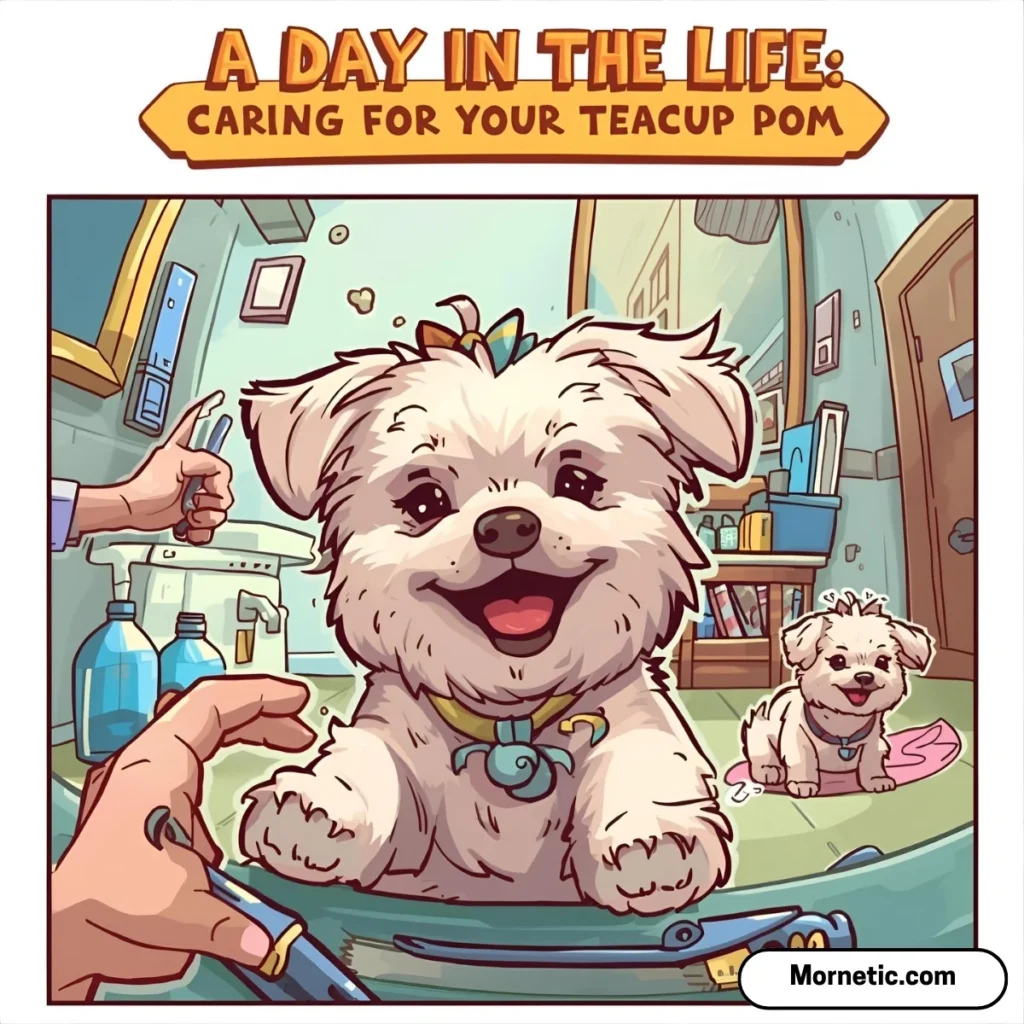
Caring for a teacup Pomeranian is intensive. Here’s what a responsible routine looks like:
- Feeding: 3-4 small, high-protein meals a day to prevent hypoglycemia. Never free-feed.
- Potty Training: Requires immense patience. Their tiny bladders need outdoor trips every 1-2 hours initially. Many owners use indoor pee pads as a supplement.
- Exercise: Short, controlled walks (with a harness!) and indoor play sessions are sufficient. They are not endurance athletes.
- Mental Stimulation: They are smart! Puzzle toys, short training sessions (5 minutes), and learning new tricks are vital to prevent boredom.
- Safety: A playpen or gated area is a must to create a safe zone when unsupervised. Always be vigilant when they are on furniture or near stairs.
Grooming: More Than Just Looking Good
That stunning double coat isn’t low-maintenance. It requires consistent care:
- Brushing: A thorough brush-out 2-3 times per week is essential to prevent painful mats and tangles, especially around the ruff, legs, and tail.
- Bathing: Every 3-4 weeks with a quality dog shampoo and conditioner.
- Professional Grooming: Regular visits every 4-6 weeks for a trim, nail clipping, ear cleaning, and an expert brush-out are highly recommended to maintain coat and skin health.
- Dental Care: Daily teeth brushing with canine toothpaste is the best defense against periodontal disease, which can affect their overall health.
Training Your Tiny Titan: It’s Possible and Necessary!
Yes, you can and must train a teacup Pomeranian. The “small dog syndrome” (nippiness, barking, stubbornness) often stems from a lack of boundaries.
- Use Positive Reinforcement: Tiny treats, praise, and play are your best tools. Never use harsh physical corrections.
- Socialization: Carefully and positively expose your puppy to various people, sights, and sounds during their critical socialization period (before 16 weeks) to build a confident, well-adjusted adult dog. Avoid dog parks until they are fully vaccinated and even then, be extremely cautious due to their size.
- Key Commands: Focus on “sit,” “stay,” “come,” and most importantly, a solid potty training cue.
Are Teacup Pomeranians Good with Children and Other Pets?
This requires a major caution. Teacup Pomeranians are not ideal for families with young children. A toddler’s innocent grab, trip, or fall can seriously injure or even be fatal to such a fragile dog. They are best suited for homes with older, respectful children or adults-only households.
With other pets, introductions must be slow and supervised. Their bold nature can lead them to challenge much larger dogs, with dangerous consequences. They can do well with other calm, small dogs or cats if properly introduced.
Life Stages: From Puppy to Senior
Your care will evolve as your teacup Pomeranian ages:
- Puppy (0-1 year): The most fragile and labor-intensive stage. Focus on socialization, routine vet visits, and establishing safe habits.
- Adult (1-7 years): Enjoy their peak energy and companionship. Maintain preventive health care and watch for early signs of common issues like tracheal cough or dental discomfort.
- Senior (8+ years): They may require dietary changes, more frequent vet monitoring for arthritis or organ function, and adjustments to their environment for comfort. Their lifespan is typically 12-16 years, though health issues can impact this.
Preparing Your Home: The Ultimate Safety Checklist
Before bringing your puppy home, puppy-proof meticulously:
- Block off all gaps behind appliances or under furniture.
- Secure electrical cords.
- Remove toxic plants (lilies, sago palm, etc.).
- Ensure all small objects (coins, jewelry, children’s toys) are off the floor to prevent choking.
- Install baby gates at the top and bottom of stairs.
- Consider using a playpen as their designated safe zone.
Finding a Reputable Source: Red Flags vs. Green Flags

Red Flags (Walk Away):
- Multiple litters always available.
- Willing to ship the puppy without any questions.
- No health testing on parents.
- Pressure to pay via irreversible methods (wire transfer, gift cards).
- Avoids letting you see the mother or breeding facility.
- Puppies are priced significantly below market average.
Green Flags (Good Signs):
- Breeder is registered with the Pomeranian Club of America or similar national club.
- They ask you detailed questions about your home, lifestyle, and experience.
- They provide verified health clearances for both parents.
- They offer a comprehensive health guarantee and contract, often requiring the dog be returned to them if you can no longer care for it.
- They encourage you to visit and meet the puppy and its mother.
- They are a resource for you throughout the dog’s life.
FAQ Section
Q: How big does a teacup Pomeranian get?
A: A full-grown teacup Pomeranian typically weighs under 3 pounds (often 2-4 lbs) and stands about 6-10 inches tall at the shoulder. They are significantly smaller than the standard Pomeranian breed.
Q: What is the lifespan of a teacup Pomeranian?
A: With excellent, proactive care, a teacup Pomeranian can live between 12 to 16 years. However, their lifespan can be negatively impacted by the severe health issues associated with their ultra-small size.
Q: Are teacup Pomeranians hypoallergenic?
A: No dog is truly hypoallergenic. Pomeranians have a double coat and shed, especially seasonally. While they may produce less dander than some breeds, they are not a safe choice for individuals with severe dog allergies.
Q: How can I tell if a teacup Pomeranian breeder is ethical?
A: An ethical breeder prioritizes health over size, performs and shares genetic health tests on the parents, raises puppies in a home environment, asks you detailed questions, and offers a lifelong health guarantee and support. They are often involved in the breed club community.
Q: Can teacup Pomeranians be left alone?
A: They are companion dogs that bond intensely and can develop separation anxiety. While an adult can be left alone for 4-6 hours if properly exercised and with safe distractions, they thrive best in homes where someone is present for much of the day.
Conclusion: Is a Teacup Pomeranian Right For You?
The decision to welcome a teacup Pomeranian into your life should not be made on a whim or based solely on their adorable appearance. It is a commitment to being a vigilant, proactive, and financially prepared guardian for a vulnerable yet spirited animal. They offer immense love and joy but demand an equally immense level of care and responsibility. If your lifestyle can accommodate their fragility, your budget can support their needs, and your heart is set on finding an ethical source, then you may just find a wonderfully loyal companion. If the challenges give you pause, consider the countless standard Pomeranians or other small breeds in need of homes. Responsible pet ownership always begins with education, and by reading this guide, you’ve taken the most important first step.
What do you think? Are you ready for the teacup Pomeranian journey, or does another furry friend seem like a better fit? Share your thoughts or questions in the comments below—we love hearing from fellow dog lovers!

Grace is a lifestyle writer from California who loves starting mornings with positivity. At Mornetic, she shares uplifting quotes and cheerful messages to brighten your day.